


Here at The Daily Duffer, I’ve seen my fair share of golf innovations, from drivers promising 20 extra yards to putters that claim to guarantee a perfect roll every time. And let’s be honest, sunglasses designed for golf often fall into that category of “nice to have, but do they *really* make a difference?” For years, I just accepted that wearing shades on the course meant a compromise: sun protection versus the ability to read greens or track my ball effectively. Many golfers, myself included, have just learned to take them off for key shots, especially around the greens. It’s an inconvenience we just dealt with.
So, when I first heard about TITE Eyewear, my initial thought was, “Okay, another company trying to crack the golf eyewear code.” But after diving into their approach and getting these on the course, I’m genuinely intrigued. TITE isn’t just slapping a golf-friendly tint on existing lenses; they’re talking about specific wavelengths, contrast enhancement, and even adjustability for your address position. This isn’t just marketing fluff; it’s a technical approach to a common golfing problem.
The core of TITE’s pitch revolves around their patent-pending lens technology. As a club fitter who stares at launch monitor data all day, I appreciate a company that understands the science behind performance. TITE’s claim to fame is filtering specific light wavelengths, particularly emphasizing the green spectrum. This immediately resonated with my understanding of how our eyes perceive depth and contrast. If you’ve ever had a lesson where your pro stresses the nuances of reading a green – the subtle breaks, the grain, the elevation changes – you know how critical visual information is.
“Human vision processes three primary color wavelengths: blue, green, and red. TITE’s lens system selectively filters light before and after the green spectrum, allowing green wavelengths to remain more prominent. The idea is that by emphasizing the green spectrum, golfers can more easily see subtle contours, slopes, and surface changes across the course.”
This isn’t unlike how some rangefinders use specific optics to cut through haze, or how certain grip materials are designed to optimize feel and feedback. It’s about optimizing perception for a specific task. In my fitting bay, I’m constantly analyzing how small adjustments to loft or lie angle translate into significant changes in ball flight metrics like spin loft or angle of attack. Similarly, optimizing how our eyes perceive the course could genuinely shave strokes.
A key differentiator TITE highlights is their intentional avoidance of polarized lenses. This is a bold move, as polarization is often touted as a premium feature in sports eyewear. However, from a performance perspective, I’ve always had reservations. In my experience, while polarized lenses excel at glare reduction, they can indeed flatten visual depth. This flattening effect, especially noticeable on inconsistent surfaces like a golf green, can make subtle undulations harder to discern. For a game that relies so heavily on reading the terrain, TITE’s choice to prioritize high visible light transmission and nuanced contrast over heavy polarization is a sound one, at least on paper.
On-Course Performance and the “TITE-TILT”
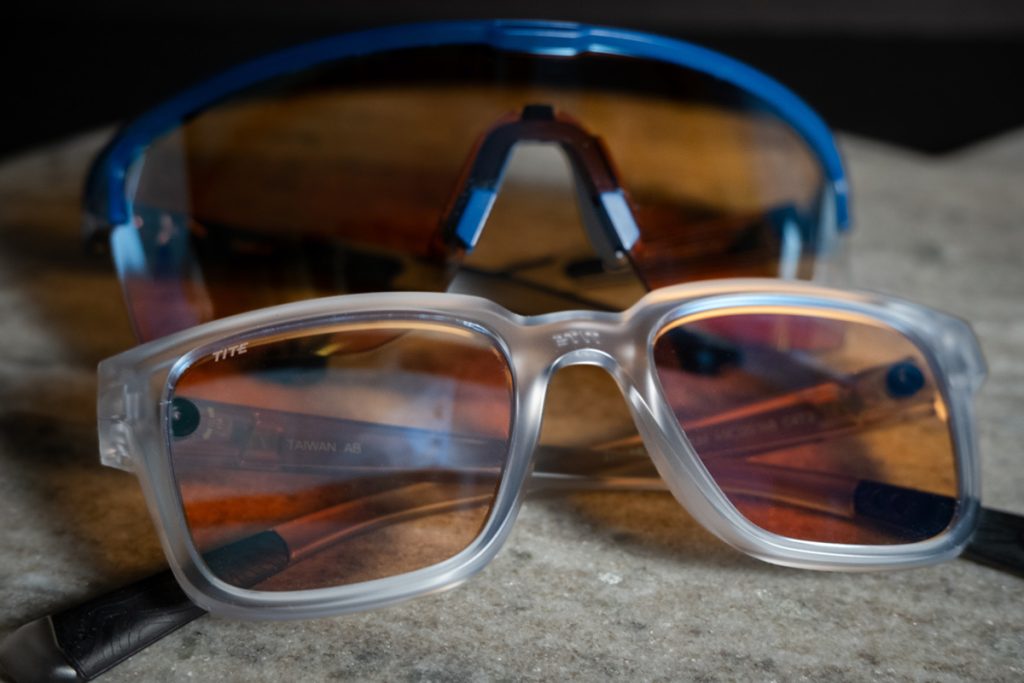
I took both the TITE 01 (shield design) and TITE 05 (more traditional square frame) onto the course, both fitted with the Core Golf lens with Blue Mirror coating. My first impression was indeed the contrast. The world viewed through these lenses takes on a slight amber hue, but the trade-off is a noticeable sharpening of detail. Even on our early spring fairways that still have that winter dormancy brown, the green in the grass popped, and contours became significantly more defined. It’s not just a darker view; it’s a *richer* view.

One of the most immediate and tangible benefits I experienced was ball tracking. I’ve fit golfers across the handicap spectrum, and one of the most common complaints, especially with higher handicappers or those with aging eyes, is losing the ball in flight. The increased contrast made it remarkably easier to follow shots from impact to apex and then down to landing. For anyone who’s ever spent precious minutes searching for a ball that should have been easy to spot, this feature alone could be a game-changer.
“The lenses made it easy to follow shots in the air and locate the ball once it landed. Golfers who struggle to track shots in bright conditions will appreciate that difference.”
Then there’s the TITE-TILT feature. It’s a subtle adjustment to the temple angle, designed to keep the lenses optically centered when your head is down over the ball – essentially, in your golf posture. This isn’t groundbreaking, but it’s a smart piece of ergonomic design. Think about it: when you address the ball or squat to read a putt, your head tilts. Many sunglasses suddenly sit at an awkward angle, or your vision is partially obscured by the frame. The TITE-TILT helps mitigate this. While not something you’d adjust mid-round, dialing it in for optimal fit before a round certainly contributes to comfort and consistent visual clarity.

The Data vs. Perception
Unlike a driver where I can give you precise ball speed, spin rate, or launch angle numbers, eyewear performance is harder to quantify with launch monitors. There’s no “contrast enhancement score” or “depth perception MOI.” However, what I can tell you from countless hours of fitting is that perception directly impacts performance. If a player *perceives* a read better, they’re more likely to execute it. If they can track their ball without strain, they’re less likely to lose focus or rhythm. This isn’t about adding 5 mph to your swing speed; it’s about improving the visual inputs that drive your decision-making and execution on the course, which ultimately leads to better scores.
The TITE 01, with its large shield design, clearly prioritizes an unobstructed field of view. It’s akin to a high-MOI driver – maximum forgiveness and stability in a package designed for pure performance. The TITE 05, with a more traditional look, offers a blend of performance and everyday aesthetic. For me, as someone who values every edge on the course, the 01’s expansive view was preferable, minimizing any peripheral frame distractions. But if you want a pair that transitions seamlessly from the 18th green to the 19th hole, the 05 is a solid choice.
“The TITE 01 delivers the cleanest field of view and feels purpose-built for golf. The TITE 05 offers a more traditional look that works both on and off the course.”
The Verdict: Are They Worth It?
Priced starting at $199, TITE Eyewear sits in the premium segment of the market. Is it worth the investment? For the serious golfer who wants every possible advantage, I unequivocally say yes. These aren’t just stylish sunglasses; they are purpose-built tools designed to enhance your visual experience on the golf course. The improved contrast and depth perception translate directly to better green reading and easier ball tracking, two areas where even slight improvements can have a significant impact on your score.
For mid-to-low handicappers who are already meticulous about their equipment and course management, the TITE lenses could provide that marginal gain in visual clarity that makes a difference on crucial putts or identifying landing zones. For high handicappers or those who frequently lose sight of their shots, the ball tracking enhancement alone is a huge benefit, saving time and frustration. The availability of various frame sizes and styles also means you’re likely to find a comfortable fit, which is crucial for anything you wear for a four-hour round.
Ultimately, TITE Eyewear represents a genuine attempt to address the unique visual demands of golf with a scientific approach. It’s not a silver bullet that will magically fix your slice, but it’s a thoughtful piece of equipment that, in my testing, delivers on its promise of enhancing your view of the course. And in a game of millimeters and subtle nuances, that’s a performance advantage worth considering.
