


Hello, Daily Duffer readers! Sarah Chen here, your golf instruction editor. For years, the conversation around golf equipment, especially iron shafts, has often felt like a closed book for many amateur golfers. We usually hear about what the pros are using – super heavy, super stiff shafts designed for extreme power. But what if I told you that some of those hard-and-fast rules are now being challenged, even at the highest levels of the game?
I’ve always believed that every golfer is unique, and what works for one won’t necessarily work for another. My philosophy, whether I’m working with a tour player or a weekend warrior, is that anyone can improve with the right instruction and, crucially, the right equipment tailored to *their* swing. That’s why a recent development on the PGA Tour has really caught my eye, and it brings a fantastic lesson for all of us.
Rethinking Shaft Flex: Lessons from the Pros
You might have seen articles or heard discussions about how most tour pros use shafts like Dynamic Gold X100s or Project X 6.5s – incredibly stout and heavy steel shafts. The assumption has always been that only these super-stiff options can handle the immense swing speeds of the world’s best.
But what if that’s not always the case? What if a lighter, softer shaft could actually unlock more speed and efficiency, even for a professional?
“But could lightweight and softer graphite shafts eventually capture some of the market share on Tour? Given the fast swings at the game’s highest level, it seems unlikely, but you never know until you try.”
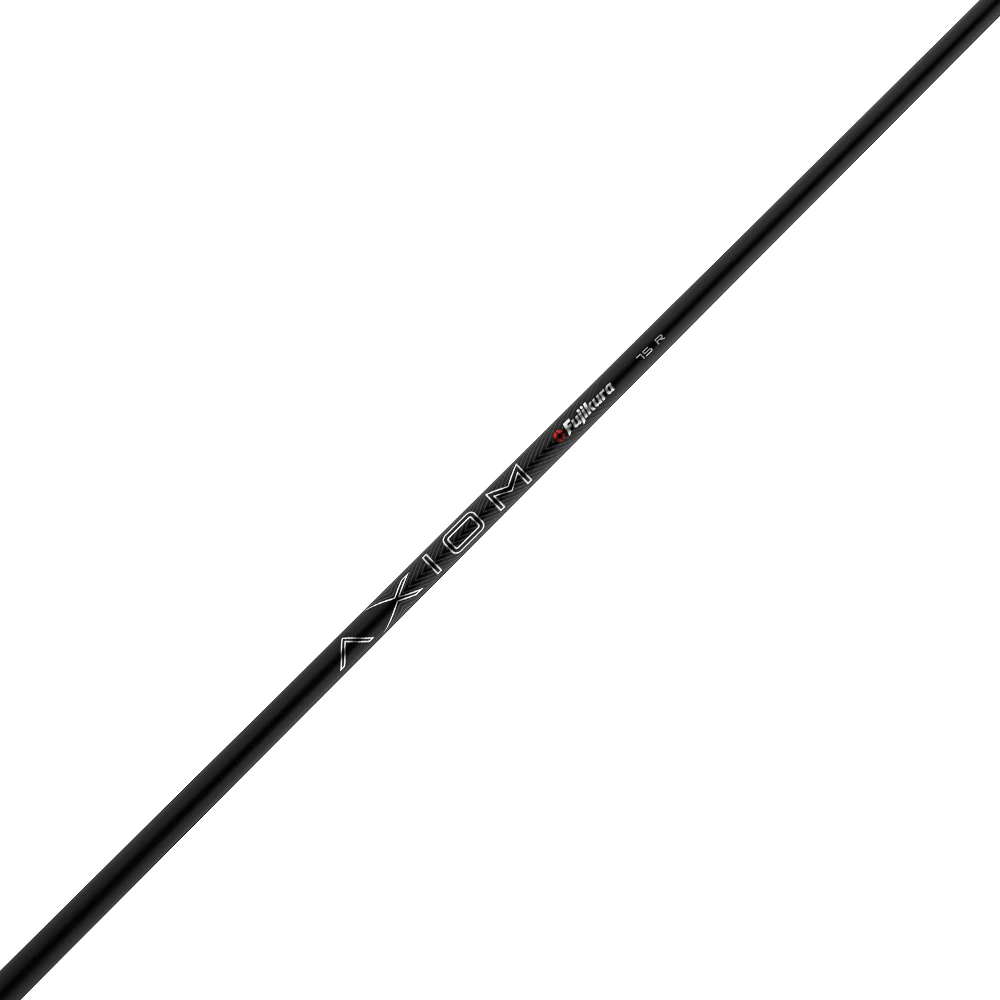
This is exactly what 2016 PGA Championship winner Jimmy Walker has been exploring. He’s been testing Fujikura’s Axiom 75R iron shafts – and the “R” there stands for Regular flex! This is a significant departure from what we typically see from pros.
The results he’s seeing are quite remarkable. According to Johnny Wunder, co-host of GOLF’s Fully Equipped:
“He’s getting 135, 136 out of these regular shafts, but the ball’s still spinning 7-iron at 6,600, launching high. He’s like, I can turn them over, but I’m swinging 80 percent. I don’t have to work hard.”
Think about that for a moment. He’s gaining ball speed (from his normal 128-130 mph to 135-136 mph with his 7-iron) while swinging with *less* effort. The spin and launch are also optimized. This isn’t just a quirk; it’s a testament to the fact that optimal equipment can help you achieve more with less strain.
Walker’s journey to this discovery is also fascinating. He tried his father’s driver, which had a regular flex Fujikura Ventus shaft, and realized he wasn’t losing ball speed. This dispelled his initial fears about going too soft. Then, a golf shop suggested the Axiom iron shafts.
Here’s a look at the Fujikura Axiom iron shaft:

Fujikura Axiom Iron Shaft
AXIOM introduces an unparalleled level of iron shaft performance. For the first time, Fujikura’s proprietary VELOCORE TECHNOLOGY has been integrated into an iron shaft that delivers the same industry-leading performance gains initially introduced in VENTUS and VENTUS TR. Extreme accuracy and consistency combined with unmatched workability provide golfers the same level of confidence they’ve come to expect from VeloCore-powered products. Whatever the shot requires, AXIOM delivers.
VeloCore Technology is the engine that drives AXIOM iron performance. An extremely stable platform delivers optimized results on every shot through tightened dispersion, increased ball speeds, and improved accuracy. AXIOM is designed in a unique 3-parallel system that creates constant weight and decreasing torque values throughout the set. Comprised of a long parallel (#2, #3, #4), a mid parallel, (#5, #6, #7), and a short parallel (#8, #9, W), AXIOM allows for more versatility in design and material integration versus a single blank iron shaft. Each iron is specifically tipped to compliment each design, reducing SKU count while maximizing results.
View Product
What This Means for You
This isn’t just a fascinating story from the Tour; it’s a powerful lesson for every golfer, regardless of their skill level. It highlights that traditional equipment assumptions might be holding you back.
Many amateur golfers try to emulate pros by playing shafts that are too stiff and too heavy for their swing speed. This often leads to:
- Loss of distance
- Inconsistent ball striking
- Difficulty launching the ball high enough
- More effort required, leading to fatigue and poor sequencing
If a tour pro can benefit from a softer, lighter shaft, imagine the potential benefits for you! It’s not about being “strong enough” for a certain flex; it’s about matching the shaft to your unique swing dynamics for optimal energy transfer, feel, and performance.
Actionable Drills & Checkpoints: Finding Your Optimal Shaft
While I can’t fit you for shafts through this article, I can guide you on how to approach this journey and understand your own swing better. The goal is to maximize efficiency and enjoyment.
Try This: The “Effortless Swing” Drill
- Focus on Feel, Not Force: Head to the range with your current irons. Start by swinging your 7-iron at what feels like 60-70% of your maximum effort. Don’t worry about distance initially. Focus on making a smooth, balanced swing.
- Monitor Your Ball Flight: Pay attention to the ball flight. Is it feeling solid? Is the ball launching consistently? While you might lose a little distance compared to your “max” swing, are you striking the ball more purely?
- Increase Gradually: Slowly increase your effort to 80%, like Jimmy Walker. Maintain that smooth, rhythmic tempo. If your shots start to feel erratic or you’re losing control, you’ve likely exceeded your efficient swing speed for your current clubs.
Why This Works: This drill helps you identify your natural, efficient swing speed. If you consistently find yourself swinging your hardest to get decent results, your shafts might be too stiff for your natural tempo, forcing you to overcompensate.
Here’s a Drill: The “Listen to the Shaft” Test
- Slow Motion Swings: Take an iron and make very slow, controlled swings. Try to “feel” the shaft load and unload. As you start your downswing, can you feel the shaft bending slightly (loading) before impact?
- Impact Awareness: At impact, try to feel if the clubhead is lagging slightly and then snapping through impact. This ‘lag and release’ is crucial for generating speed efficiently. If your shaft is too stiff, it’s very difficult to feel this loading and unloading, making it harder to time your release.
- Observation: If you struggle to feel much ‘whip’ or flex in the shaft even with a reasonable swing speed, it’s a strong indicator your shaft might be an inhibiting factor rather than an aid.
Why This Works: This isn’t about looking at numbers, but about developing a feel for how your club interacts with your swing. A shaft that’s too stiff will feel boards-y and unresponsive, while one that’s too flexible will feel whippy and difficult to control. The goal is a perfect match that gives you responsiveness without sacrificing control.
Your Next Step: Get Fitted (Properly!)
The biggest takeaway from Jimmy Walker’s experience should be this:
“The issue is you have to swing 80 percent all the time, something Morrow said he could struggle to do.”
This highlights the mental and physical strain of constantly trying to overpower equipment. The goal of a good fitting isn’t just to maximize distance; it’s to optimize every aspect of your game while making it FEEL easier. I tell my students all the time: a proper fitting is an investment in your enjoyment and performance.
Seek out a qualified club fitter who uses a launch monitor and has a wide array of shafts to test. Be open-minded! Don’t go in with preconceived notions about what shaft flex you “should” be playing. Let the data, and more importantly, your feel, guide the process. A good fitter will analyze your swing speed, tempo, transition, and release to recommend the best shaft weight, flex, and bend profile for you.
Golf is a game of continuous learning and adaptation. Don’t be afraid to question the norms, just like Jimmy Walker did. You might just unlock a whole new level of performance and enjoyment by simply matching your equipment to *your* unique swing. Keep swinging, keep learning, and as always, happy golfing!
