


Alright, let’s talk about driver pricing and performance, because if there’s one area in golf equipment where marketing fumes often obscure the real picture, it’s the premium versus budget driver debate. As someone who’s spent countless hours staring at launch monitor screens, deciphering ball data, and fitting hundreds of golfers, I can tell you that the sticker price is rarely the full story when it comes to performance on the course.
MyGolfSpy’s 2026 driver test data provides a fantastic lens through which to examine this. They drilled down into some of the lowest-priced models and contrasted them with what they’ve termed the “value segment”—drivers that, through effective street pricing or sheer performance for dollar, offer more than their initial MSRP might suggest. The core takeaway? “Cheap” and “value” are not synonyms, and that’s a distinction every golfer needs to grasp.
The “Budget” Drivers: A Closer Look
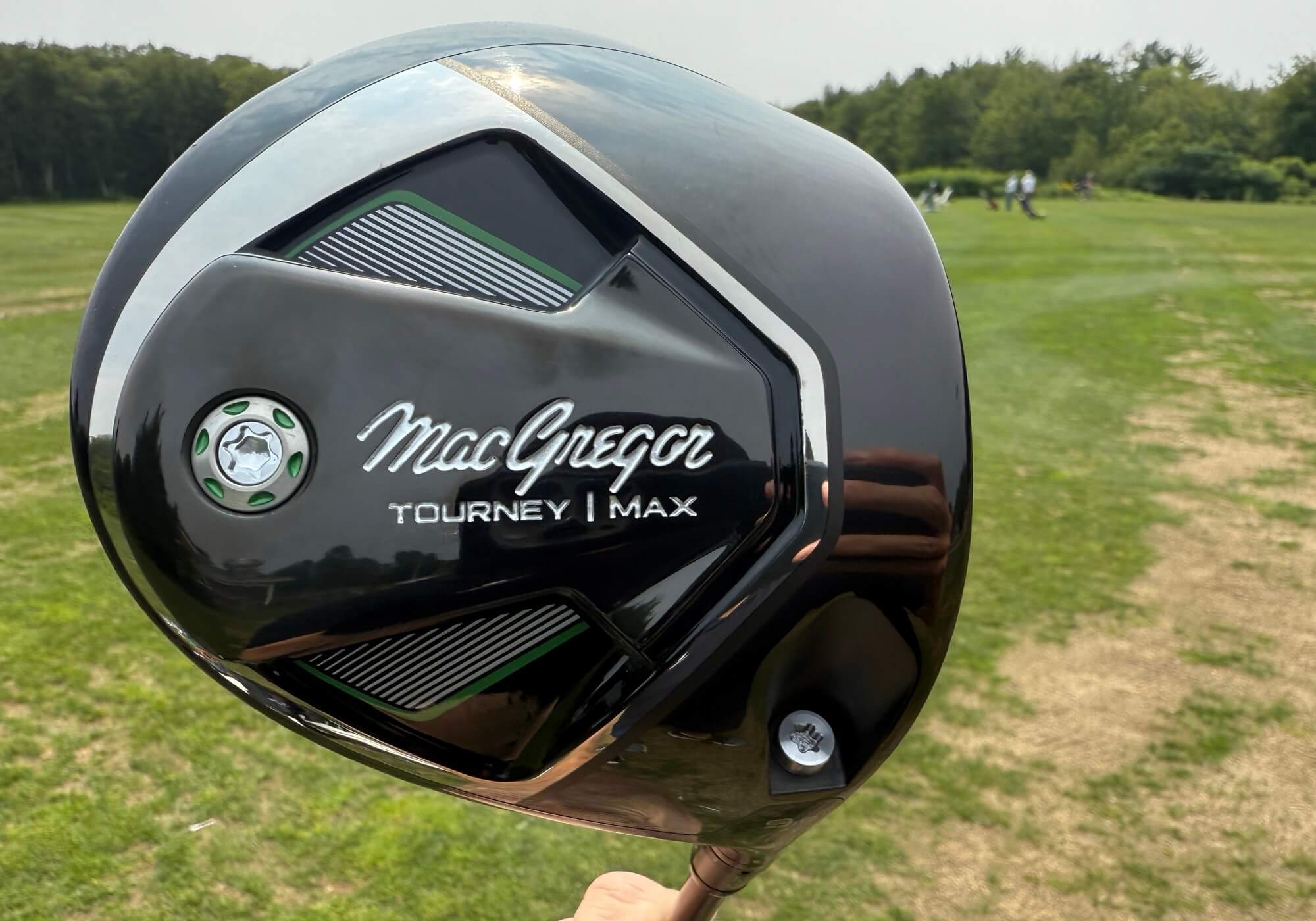
The test highlighted three genuinely low-priced drivers: the MacGregor Tourney Max ($249), Takomo Ignis D1 ($319), and Vice VGD01 ($349). These are prices that make you do a double-take, especially when flagship models are pushing $600-$700.
The Takomo Ignis D1, in particular, caught my eye from a pure distance perspective.
“The Takomo Ignis D1 produced the strongest distance numbers among the three lowest-priced models. It finished roughly in the top third of the field at around 250 yards of total distance, putting it closer to many premium drivers than its price would suggest.”
This is interesting, but it comes with a major asterisk. The data showed a significant split: some testers saw the Ignis D1 in their top five for distance, while others had it in their bottom 10. In my fitting bay, we see this all the time. A driver might have a weight port or a specific internal geometry that, for a certain combination of swing speed, attack angle, and shaft profile, just *clicks*. When it works, it works beautifully, generating optimal launch, low spin, and high ball speeds. When it doesn’t, it’s often because the center of gravity (CG) placement or the moment of inertia (MOI) just isn’t complementing that particular swing, leading to excessive spin, too low/high launch, or inconsistent speeds across the face. For the Ignis D1, this pattern screams: “Get fitted!” If it fits your swing profile, it’s an absolute steal for 250 yards. If not, you’re leaving performance—and distance—on the table.
Then we have the MacGregor Tourney Max. While not a distance monster, the article notes its “strong forgiveness numbers relative to its price.” This aligns with what I often see in less expensive designs. Manufacturers sometimes prioritize a larger, more stable clubhead to maximize MOI and expand the sweet spot, knowing that not every golfer is chasing those last few yards of pure carry. Forgiveness, or resistance to twisting on off-center hits, often translates directly to tighter dispersion and more balls staying in play—a genuine game-improvement characteristic that many golfers value above all else.
The Vice VGD01 was described as more balanced. This often means it didn’t shine brightly in any one area like peak ball speed or ultra-low spin, but it didn’t have any glaring weaknesses either. Think of it as a solid, consistent performer that won’t wow you on the launch monitor with outlier numbers, but also won’t punish you excessively for a slightly imperfect strike.
The Real Value Tier: Beyond the Cheapest
This is where the MyGolfSpy data gets really interesting for a club fitter like me. They expanded their value segment to include drivers that have seen price reductions from their initial release, specifically calling out the Titleist GT lineup.
“Drivers from the Titleist GT lineup, for example, now sell well below many flagship releases from other brands. That shift makes them relevant in a value discussion even though they weren’t originally introduced as budget drivers.”
This is a crucial point. Often, last year’s premium model is this year’s “value” champion. The engineering, materials, and R&D that went into those drivers are still top-tier. When we look at the results for distance in the broader value segment, it’s clear:
| Driver | Rank | Total Distance |
|---|---|---|
| Vice VGD01+ | 8 | 252.72 yds |
| Titleist GT4 | 9 | 252.65 yds |
| Titleist GT3 | 10 | 252.52 yds |
| Titleist GT2 | 11 | 252.42 yds |
The Vice VGD01+ (a step up from the base VGD01) shows impressive raw distance, but the caveat of “widest dispersion patterns” is a huge red flag for me in a fitting. Raw distance is great for bragging rights, but if half your drives end up in the rough, that distance is costing you strokes. I always preach: distance in the fairway is king. So, while it’s long, for many, the dispersion trade-off might not be worth it.
The Titleist GT series drivers, on the other hand, consistently deliver. The GT2, for example, finished 11th overall in distance but “rarely produced poor results for testers.” This speaks volumes about consistency and playability. In my hands-on experience, Titleist has consistently nailed the balance between ball speed, launch, and spin with their GT series, resulting in predictable flight paths and tight dispersion. When a driver performs well for 35 different testers and only lands in the bottom 10 for three of them, that tells you it’s a very forgiving and versatile head – one that can suit a wide range of golfers, from mid-handicappers to lower handicaps who prioritize consistency.
Forgiveness: The Unsung Hero of Value
The Ben Hogan PTx LST and PTx Max really stand out here, posting “tightest dispersion patterns among the value drivers.” The PTx LST even had the highest overall performance score among value drivers, indicating strong Strokes Gained despite middle-of-the-pack distance. This is exactly what I mean by value. If a driver consistently keeps your ball on the planet, even if it’s 5-10 yards shorter on average, you’re likely going to score better. Forgiveness isn’t about crushing one perfect drive; it’s about minimizing the damage on your imperfect ones. The LST designation often indicates a lower spin model, and achieving tight dispersion with low spin is a testament to sophisticated CG placement and MOI design.
| Driver | What It Did Well | What the Data Shows |
|---|---|---|
| Vice VGD01+ | Distance potential | Longest results among value drivers and finished eighth overall in total distance |
| Titleist GT4 | Speed and distance | Top-10 total distance with strong ball speed results |
| Titleist GT3 | Carry efficiency | Strong carry distance and consistent top-10 finishes for many testers |
| Titleist GT2 | All-around performance | Fewest bottom-10 tester finishes and top-11 overall distance |
| Ben Hogan PTx LST | Shot consistency | Tight dispersion and highest Performance score among value drivers |
| Ben Hogan PTx Max | Dispersion control | One of the tightest shot patterns in the value segment |
| Takomo Ignis D1 | Swing-fit potential | Top-five distance for some testers but bottom-10 for others |
| MacGregor Tourney Max | Budget forgiveness | Strong forgiveness score relative to price |
The Real Takeaway: Don’t Judge a Driver by its Price Tag Alone
This data confirms what I repeatedly see in fittings: stellar performance doesn’t always come with the highest price tag. Sometimes it’s about finding that sweet spot of a driver’s characteristics aligning perfectly with your swing. Sometimes it’s about leveraging the natural depreciation of last year’s cutting-edge tech. The cheapest option might appeal to your wallet, but it might severely compromise your performance.
My advice remains consistent: ignore the hype and the price tags initially. Focus on what the data tells you your swing needs – be it more ball speed, lower spin, higher launch, or tighter dispersion. Then, approach the market with an open mind. A driver like the Titleist GT2, now potentially found at a significant discount, offers a phenomenal blend of distance and consistency that rivals many current flagships. The Ben Hogan PTx LST shows that you can find exceptional forgiveness and Strokes Gained performance without breaking the bank.
The ultimate value isn’t just about the dollar amount; it’s about how many strokes that driver saves you on the course. And for that, there’s no substitute for real data from a skilled fitting professional.
