


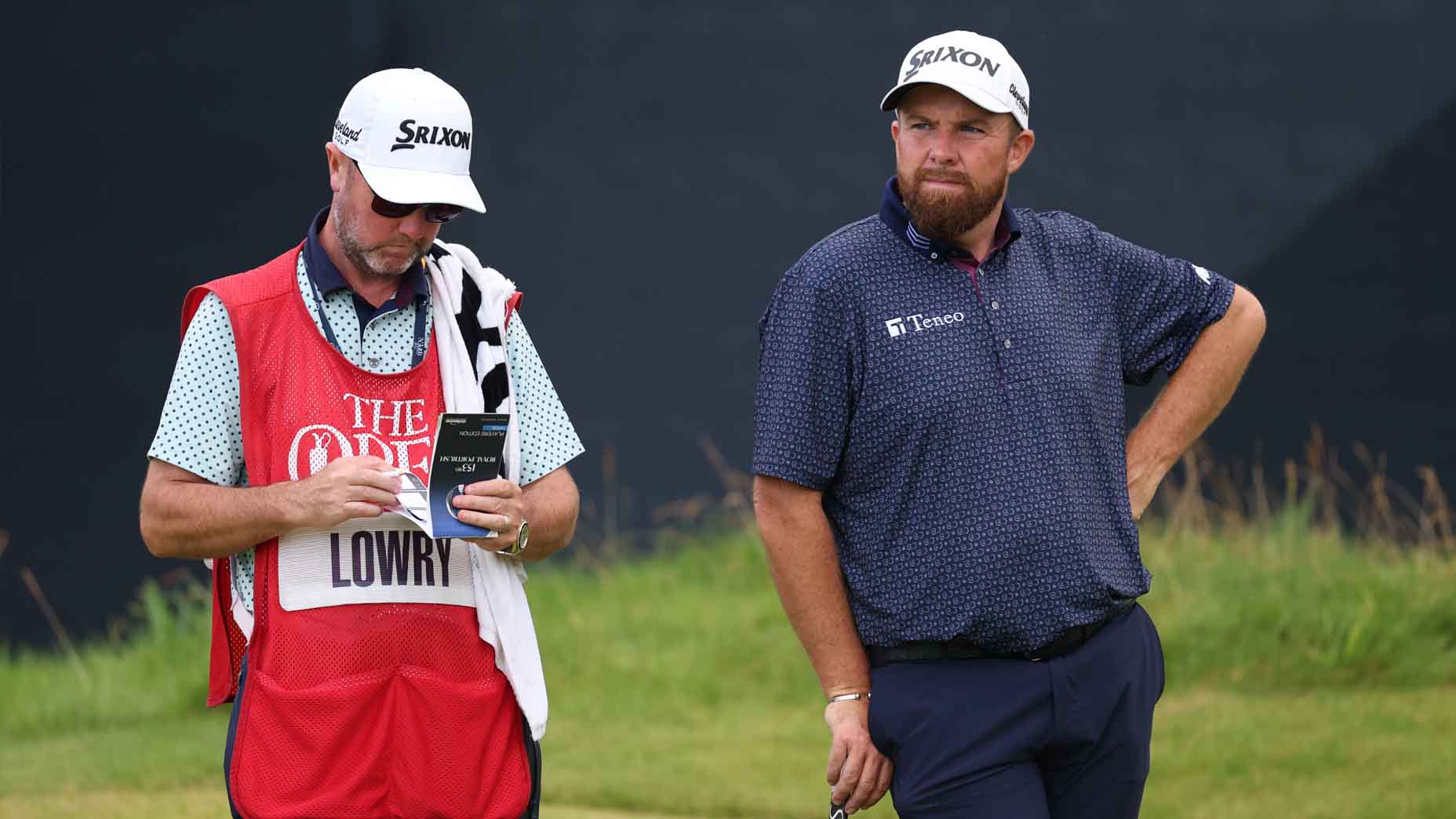
The Controversial Ruling on Shane Lowry: A Deep Dive into the 2025 Open Championship
The 2025 Open Championship has already begun making waves, not only for the competition on the green but also for the dramas off it. One incident that has sparked considerable debate among players and fans alike is the two-shot penalty handed to Shane Lowry after the second round. This article will explore this ruling, dissect its implications, and delve into the reactions it has generated throughout the golf community.
Understanding the Incident
Shane Lowry’s two-shot penalty came after it was determined that his practice swing on the 12th hole inadvertently caused his ball to move. According to the R&A rules, players are not penalized for moving the ball unless it is clear to the naked eye. Lowry was informed about the potential penalty while teeing off on the 15th hole, which understandably flustered him as he contemplated the implications of such a ruling during a crucial phase of the tournament.
The Rule in Question
The specific rule that Lowry fell afoul of states that if a player causes their ball to move while taking a practice swing, they may be penalized unless the movement is not visible to the naked eye. This nuance has been a point of contention in golf. The introduction of the "naked eye" rule in 2013 aimed to reduce the reliance on slow-motion technology to determine infractions. What Lowry experienced raises the larger question: Are some rules in golf becoming too complex for the game’s ethos?
Lowry’s Reaction
When asked about the penalty, Lowry expressed disappointment and concern. “I definitely was looking down towards the ball as I was taking that practice swing, and I didn’t see it move. I had to take the penalty because I can’t have my name talked about like that,” he said. His sentiments resonate with many golfers who believe that fairness should be a cornerstone of the sport. Lowry’s acceptance of the penalty, despite his grievances, demonstrates a character of resilience and sportsmanship.
A Community Divided
The ruling has triggered a division among golf analysts and pundits. James Colgan, editor and commentator, questioned the merit of enforcing a penalty that requires extensive video review to establish if an infraction occurred. “If you need 20 minutes to determine via slow-mo footage if an infraction occurred, you probably shouldn’t be enforcing a penalty in the first place,” he noted, calling into question the integrity of the ruling process.
The Naked Eye Rule: A Double-Edged Sword
The "naked eye" rule was designed to simplify judgments, yet it has created its own set of complications. Josh Schrock, another sports editor, explained that if Lowry didn’t see the ball move, that should suffice as a basis for overturning the potential penalty. He expressed that the ruling feels like an administrative error that one might expect from the USGA rather than the R&A, an organization founded upon the principle of fair play.
Perspectives from Other Analysts
Different writers from the golf community have chimed in on the debacle. Nick Piastowski argued that if Lowry stated he didn’t see the ball move, then that should be the end of the conversation. “We seem to salute players for being honest only when they’re penalized,” he commented, pointing out the irony of the situation. Josh Sens added that Lowry deserves credit for maintaining his composure in the face of an unjust ruling. Dethier encapsulated the feeling of many when he remarked that a two-stroke penalty for an infraction that may not even exist seems illogical.
Broader Implications for the Game
This controversy isn’t just about Shane Lowry; it serves as a reflection of golf’s ongoing struggle with its rules and technology. The incident highlights the need for a comprehensive review of certain regulations to ensure fairness in the sport. As technology continues to evolve, golf’s governing bodies must adapt while balancing the integrity of the game.
A Call for Change?
Should the rules of golf be revisited in light of such incidents? Many believe that the governing bodies should introduce clearer guidelines, especially when it comes to events that lack visible evidence of wrongdoing. Incorporating a system that allows for immediate review or even adjusting the penalty structure may help alleviate situations like Lowry’s.
Conclusion: The Next Steps
As we move forward in the 2025 Open Championship, the buzz around Shane Lowry’s ruling is likely to continue. Whether it sparks a larger conversation around the regulations in golf, one thing remains evident: players and fans alike yearn for a fair, transparent, and consistent approach to the rules. How the R&A and the golf community respond in the coming days will be telling not just for Lowry, but for the future of the sport itself.
Join the Conversation
We invite golf enthusiasts and analysts to share their thoughts on the ruling and its broader implications for the game. Engage with us on social media using the hashtag #OpenChampionship2025 or follow us @golf_com for more updates, insights, and discussions as the tournament progresses.
