

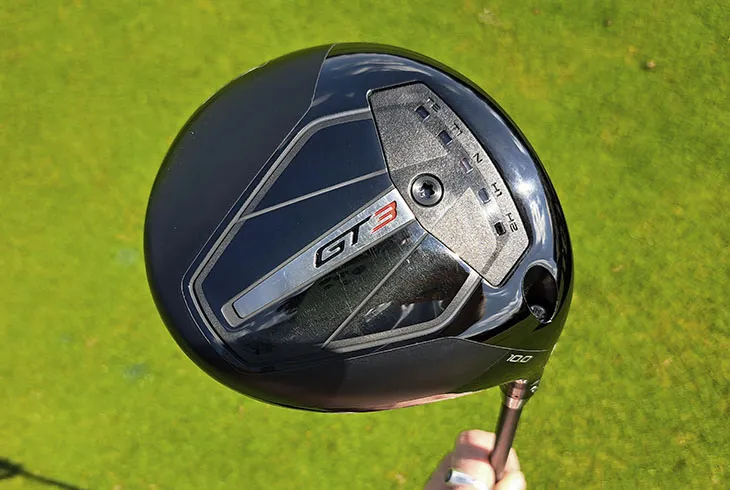

Well, folks, Cameron Young just laid claim to his biggest career victory at The Players Championship, and honestly, the gear he used to get it done offers a fantastic case study in modern club fitting and performance. A dramatic finish at Sawgrass, capped by a long drive on 18, always gets the equipment junkies like me buzzing. Let’s dive into what was in his bag and, more importantly, what we can learn from it.
First off, Young’s entire bag is a Titleist affair, which isn’t groundbreaking news for a tour pro. What *is* interesting is the specific blend of clubs he’s working with, particularly in his long game and irons. The blend of forgiveness and workability is a common theme among elite ball strikers, and Young’s setup is no exception.
The Driver: GT3 Powerhouse
Let’s talk about that driver. Young is sporting a Titleist GT3 at a lofty 11 degrees. Now, before you scoff at the higher loft, remember Young is known for his prodigious power. I’ve tested countless drivers on the launch monitor, and while we often chase that low spin, high launch monster, the reality is that many powerful hitters benefit from a bit more loft to optimize their descent angle and carry distance. The GT3 is Titleist’s lower-spin offering in the GT line, designed for players who generate a lot of speed. Coupling that with an 11-degree head and a Mitsubishi Diamana PD 60 TX shaft tells a story.
For context, the Diamana PD shafts are known for their stable feel and mid-launch, low-spin characteristics, catering to players with aggressive transitions. The TX flex is, of course, the stiffest and built for pure power. This setup, while not for everyone, allows Young to generate incredible ball speed without ballooning his shots. We saw that perfectly illustrated on 18 at Sawgrass:
“A record 375-yard drive on the 18th helped secure par.”
That kind of distance isn’t just brute strength; it’s optimized launch conditions. In my fitting experience, many amateur players chase a lower loft than they actually need, resulting in lower launch and less carry. Young’s setup is a prime example of maximizing carry and overall distance, not just raw ball speed.
The Long Game: Foursome of Forgiveness
Beyond the driver, Young’s bag features a Titleist GT1 14.5-degree fairway wood and a Titleist GT1 20-degree hybrid. Notice both use versions of the Mitsubishi Diamana PD shaft (80 TX for the fairway and hybrid). This consistency in shaft profile suggests a desire for similar feel and dispersion characteristics across his longer clubs. The GT1 line offers more forgiveness and a slightly higher launch bias than the GT3 driver, which makes sense for fairway woods and hybrids where getting the ball airborne easily and with control is paramount. For the average golfer, a similar strategy of matching shaft profiles across your metalwoods can bring a lot of consistency to inconsistent parts of the game.


A Blended Iron Set: Precision and Forgiveness
Young’s iron setup is where things get really fascinating for the average golfer trying to optimize their bag. He carries a Titleist T200 4-iron, a T100 5-iron, and then a set of Titleist 631.CY Prototype 6-9 irons. All are shafted with True Temper Dynamic Gold X7, a seriously stout shaft for a high-swing speed player.
The T200 4-iron is a cavity-back, distance iron. Its technology likely provides a higher MOI (Moment of Inertia) and a lower center of gravity (CG), making it easier to launch and more forgiving on off-center strikes. This is crucial for a long iron, where maintaining carry and control is often difficult. Transitioning to the T100 5-iron suggests a desire for more feel and workability as he moves closer to the mid-irons, while still retaining some forgiveness.


The real head-turner, however, is the “Titleist 631.CY Prototype 6-9 Irons.” Prototype clubs for specific players are nothing new on tour. These are likely bespoke forged blades or muscle-back irons, designed to Young’s exacting specifications for feel, workability, and precise turf interaction. This highlights the obsession pros have with granular control in their scoring clubs. It also underscores why a custom fitting is paramount. You might not get a “CY Prototype,” but you can get clubs that are prototyped for *you*.

This blended set isn’t just about showing off; it’s about optimizing performance for every single yardage. As I tell my clients repeatedly, your irons don’t all need to be the same model. Mixing and matching game-improvement, players’ distance, and true players’ irons can solve specific problems you face in different parts of your bag.
Wedges and Putter: The Scoring Tools
Cameron Young’s wedge setup mirrors many tour pros with Titleist Vokey SM11 wedges in 48, 52, 57, and 62-degree lofts, featuring “K Wedgeworks.” The K grind is a wide, high-bounce sole, excellent for softer conditions and bunker play, providing a lot of forgiveness. The use of a 62-degree wedge is notable; it offers maximum versatility around the greens for high flop shots or delicate drops. All also have the Dynamic Gold X7 shaft, maintaining consistency in feel and weight throughout his short irons and wedges.

His Scotty Cameron Phantom 9.5 Tour Prototype Putter is another player-specific piece. The Phantom series offers high MOI designs for stability on off-center putts. The “Tour Prototype” status implies subtle modifications tailored to Young’s stroke and feel preferences, reinforcing that even the putter is a highly personal, finely tuned instrument for pros.

The “Prototype” Golf Ball: Real Innovation or Marketing?
Finally, the Titleist Pro V1x Prototype Golf Ball. This is something we see regularly with Titleist staff players. Titleist is constantly innovating, and getting real-world feedback from the best players in the world is critical for their R&D. While “prototype” might sound like marketing hype, in Titleist’s case, it usually means slight tweaks to the cover, core, or mantle layers that will eventually make their way into a consumer model. It’s not necessarily a radically different ball, but rather an incrementally improved one, meticulously tested for minute gains in spin, flight, and feel.

What Can We Learn?
Cameron Young’s victory underscores a few key realities for every golfer, regardless of handicap:
- Loft is Your Friend: Don’t be afraid of higher lofts in your driver or woods if the launch monitor data supports it. “Lower loft for more experienced players” is an outdated adage for many. Young’s 11-degree driver is proof.
- Blended Sets are Smart: You don’t have to play a full set of the same irons. Mixing forgiving long irons with more workable mid-to-short irons is a highly effective strategy. I’ve seen this personally benefit countless golfers during fittings by optimizing carry distances and dispersion throughout their iron set.
- Shaft Continuity Matters: Notice the consistent use of Diamana PD in his metalwoods and Dynamic Gold X7 in his irons/wedges. Finding a shaft profile that works across multiple clubs can lead to better feel and more predictable results.
- Custom is King: From a prototype iron to specific wedge grinds and a tour putter, Young’s bag is tailor-made. While amateurs won’t get “prototype” clubs, a professional fitting is the closest equivalent and offers the most significant gains for your game. It’s about optimizing *your* swing with *your* clubs, not just buying off the rack.
So, the next time you’re thinking about new gear, don’t just mimic what the pros play. Look at *why* they play it. Young’s setup is a testament to meticulous fitting and understanding how each club contributes to overall performance. It’s not about the brand; it’s about the data and the fit. And that, my friends, is how you truly gain an edge on the course.


