


Mastering the Ryder Cup Experience: Rory McIlroy’s Insights on Balancing Engagement and Performance
The Ryder Cup stands as one of golf’s premier tournaments, known for its intense atmosphere and passionate crowds. A critical aspect of competing in this prestigious event involves navigating the emotional landscape created by the fans. Rory McIlroy, a seasoned veteran of the Ryder Cup, recently shared his valuable advice for newcomers, emphasizing the importance of balance in engaging with the crowd while maintaining focus on their performance.
Engagement with the audience can be crucial during the Ryder Cup but can easily tip into the realm of distraction. For McIlroy, the line between interacting with supportive fans and becoming overly distracted is razor-thin. He noted that while the energy of the crowd can serve as a motivating force, there is a point at which engagement can become counterproductive. Balancing this dynamic is essential for peak performance under the heightened pressures that come with playing away from home.
Reflecting on his past experiences, McIlroy admitted that he has struggled to find this balance. During the 2016 Ryder Cup at Hazeltine, he engaged with the crowd too much, which affected his game. Conversely, at the 2021 Ryder Cup at Whistling Straits, his lack of engagement led to a more subdued performance, illustrating that both extremes can hinder a player’s effectiveness. For newcomers, understanding how to manage these interactions is part of the challenge they face.
McIlroy pointed out that each player must discover this balance for themselves. What works for one athlete may not resonate with another, making personal reflection and awareness crucial. The unpredictability of the Ryder Cup environment means that players must adapt quickly, learning from each round. They confront various distractions, especially when teammates hit impressive shots and the crowd erupts in raucous approval. Being able to navigate these moments becomes fundamental.
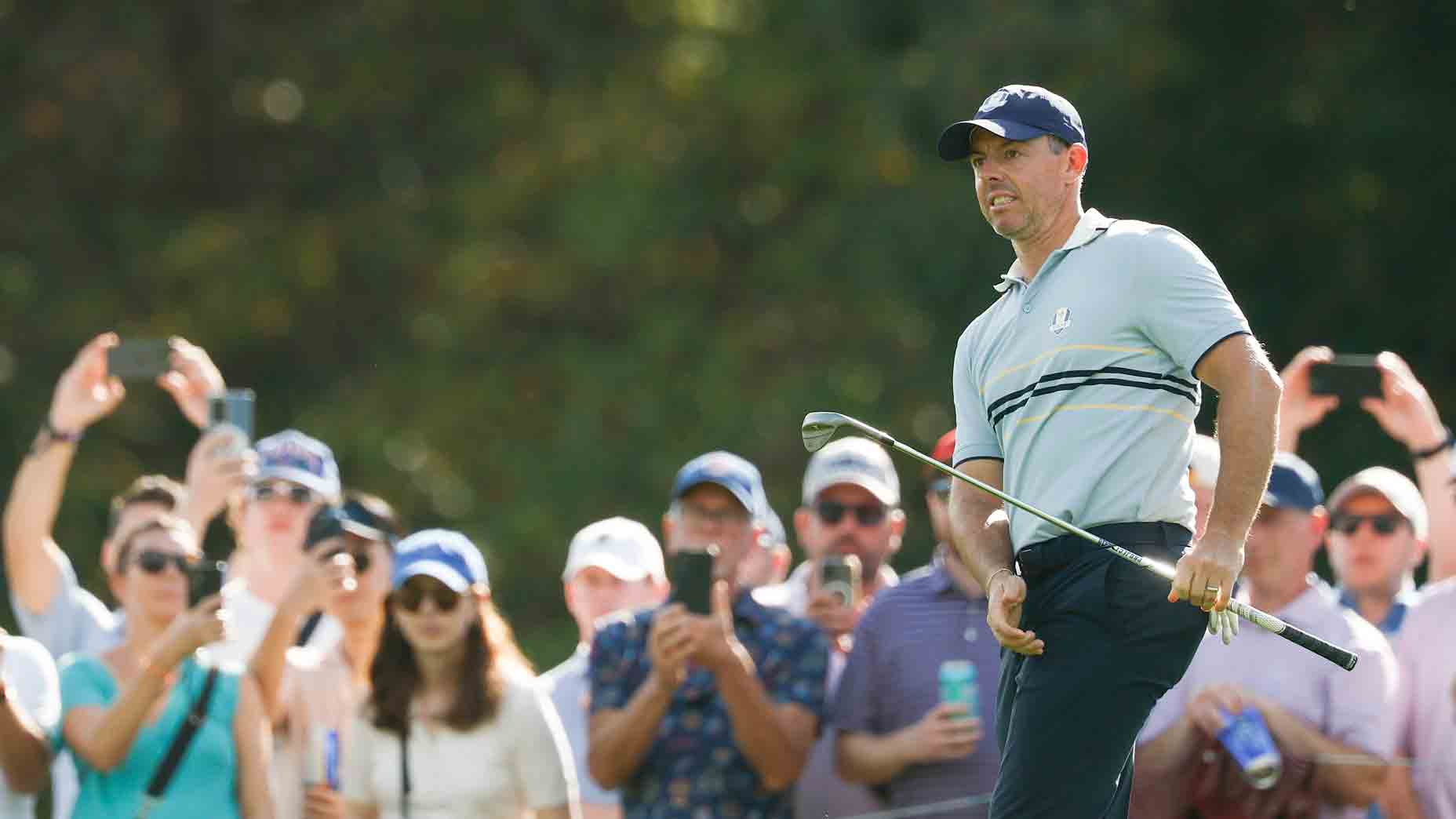
An illustrative example of this came during a four-ball match at Bethpage Black involving McIlroy and his partner Shane Lowry against American players Sam Burns and Patrick Cantlay. After a strong performance on the 11th hole, where Lowry made a fantastic birdie, the two European players celebrated energetically. The celebration, however, brought McIlroy to a moment of reflection as he pointed towards a fan. This action, caught on camera, opened discussions on whether McIlroy had indeed found his engaging balance.
Understanding the impact of reactions, whether celebratory or otherwise, is critical. Moments of joy can galvanize a team, while off-kilter engagements can distract from maintaining focus. The pressure of the Ryder Cup, which includes revving up the crowds while managing your inner game, is a test of mental fortitude as much as it is of physical prowess.
For aspiring Ryder Cup players, McIlroy’s advice transcends mere sportsmanship. It serves as a guide on the importance of emotional intelligence in competitive sports. Engagement with the crowd can be a double-edged sword; when used wisely, it can fuel success. However, should it lead to distractions, the consequences can be dire.
As the chances of victory are often hinged upon such fine balances, the ability to remain attuned to both surroundings and personal performance can significantly shape a player’s experience. McIlroy’s reflections illuminate a profound truth about the Ryder Cup: excellence extends beyond skill; it involves mastering the psychological intricacies of competition.
In conclusion, Rory McIlroy’s insights on handling the balances of crowd engagement during the Ryder Cup stand as essential learning for newcomers. By understanding the dynamics at play, players can better prepare for the unique challenges of this event, paving the way for memorable experiences and potential victories. The art of balance forms an integral piece in the larger puzzle of achieving success in golf’s most electrifying tournament.
