

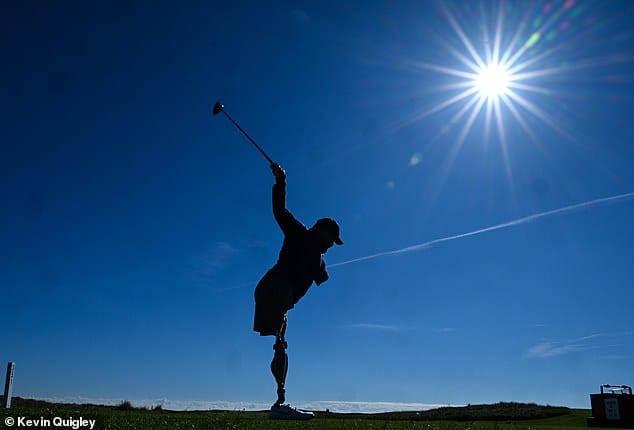

The Simpson Cup: A Celebration of Resilience and Team Spirit Among Veteran Golfers
As the sun set on the excitement of the Ryder Cup, another significant event drew British and American golfers together under the same blue sky—the Simpson Cup. This annual tournament represents more than just a competition; it embodies the spirit of camaraderie and resilience among military veterans who have faced life-changing injuries. This week, these brave individuals will display not only their golfing skills but also the indomitable human spirit that unites them.
Unlike the often heated atmosphere of traditional competitions, the Simpson Cup fosters an environment of mutual respect and shared experiences. Players from both teams, having undergone traumatic experiences in military combat, now converge on the stunning and challenging fairways of the Royal St George’s Golf Club. The distinctive sycamore tree outside the clubhouse serves as a powerful symbol of unity for these golfers, who lean on the game as a pathway to recovery and purpose.
Golf has been a lifeline for many participants, transforming their lives after devastating injuries. Among them is British golfer Kushal Limbu, a former member of the Gurkha Rifles, who lost both legs in Afghanistan due to an IED explosion. He expresses the profound significance of being part of a team, stating, "Every part of the military is a team, and when we lose that, we lose a piece of ourselves." The Simpson Cup offers him a chance to reconnect with that sense of belonging while showcasing his skills on the course.
The beauty of the Simpson Cup lies not just in competition but in the stories of resilience that every player carries. Limbu, for instance, found solace in golf, a sport that allows him to temporarily forget the physical and emotional scars of war. His remarkable performance of three early birdies on the course is a testament to his dedication and skill, reminding us all that triumph often comes from overcoming adversity.
The connection between military service and the sport reinforces golf’s unique ability to level the playing field. The game welcomes players of varying abilities, making it an ideal avenue for veterans like Limbu and American competitor Nick Kimmel to showcase their talent. Kimmel, who lost both legs above the knee and his left arm in combat, demonstrates the necessary adjustments in his stance and swing. Despite the challenges, his determination shines as he prepares for the competition ahead.
On the practice day before the official tournament begins, gifted veterans like Kimmel and Limbu reveal the quality of play we can expect in the Simpson Cup. The event mimics the Ryder Cup format, with pairs competing in doubles on one day followed by singles matches. This structure fosters fierce competition while simultaneously serving as a platform for camaraderie and understanding—hallmarks of both military life and the sport itself.
The stakes are high; both the U.S. and British teams have each claimed five Simpson Cup victories in the past. The last two tournaments saw neck-and-neck competition. This year, as players navigate the undulating terrain at Royal St George’s, the thrill of competition is palpable. Yet behind each swing is a story of resilience, as many competitors face ongoing physical challenges that test their resolve.
The hard-fought battles on the course are not just about winning a trophy. For these veterans, every shot embodies their relentless spirit to reclaim their lives after trauma. As Kimmel struggles with the physical realities of navigating the course, he brushes himself off after each fall, demonstrating that the spirit of perseverance runs deep. He candidly states, “Where would I be without all this? I don’t know that I would be here,” underscoring the critical role that golf plays in his recovery.
The organization behind this inspiring event, the On Course Foundation, is dedicated to helping injured servicemen rediscover their passion for life through golf. Established by John Simpson, a WWII veteran who lost a leg to polio, the foundation introduces veterans to the game while providing them with invaluable skills and support. Simpson’s journey reflects the impact of community and shared experiences in overcoming adversity. His contribution was recognized when he received the Army Distinguished Public Service Medal.
It’s important to consider the broader context of this gathering. In the U.S., about 20 of the four million injured veterans tragically take their lives daily. The isolation suffered by many veterans can often lead to despair. However, events like the Simpson Cup aim to combat this isolation by creating a supportive community where individuals can motivate and uplift one another.
Through shared experiences on the golf course, players like Mike Browne have found a new lease on life. Having lost his leg during a training exercise, Browne transformed his passion for golf into a pathway to wellness, ultimately ascending to compete at the professional level. His remarkable journey reminds us that with determination and support, healing is possible.
As the tournament kicks off, stories of resilience and friendship fill the air. With the picturesque backdrop of Ramsgate’s White Cliffs, the spirit of both nations is palpable, emphasizing the universal themes of fraternity and perseverance. British captain Andy Stevens encapsulated this sentiment in his address to the American team, saying, "Now when we battle alongside each other on the course, we know we are among friends."
In conclusion, while the Ryder Cup may capture the media’s focus, it is the Simpson Cup that profoundly illustrates the power of sport to heal. As we witness these courageous veterans compete, we are reminded that life’s greatest victories often arise from the toughest battles. As the players exchange camaraderie, every swing serves as a powerful reminder of resilience, friendship, and the significance of shared experiences—a true celebration of what it means to be human.
