

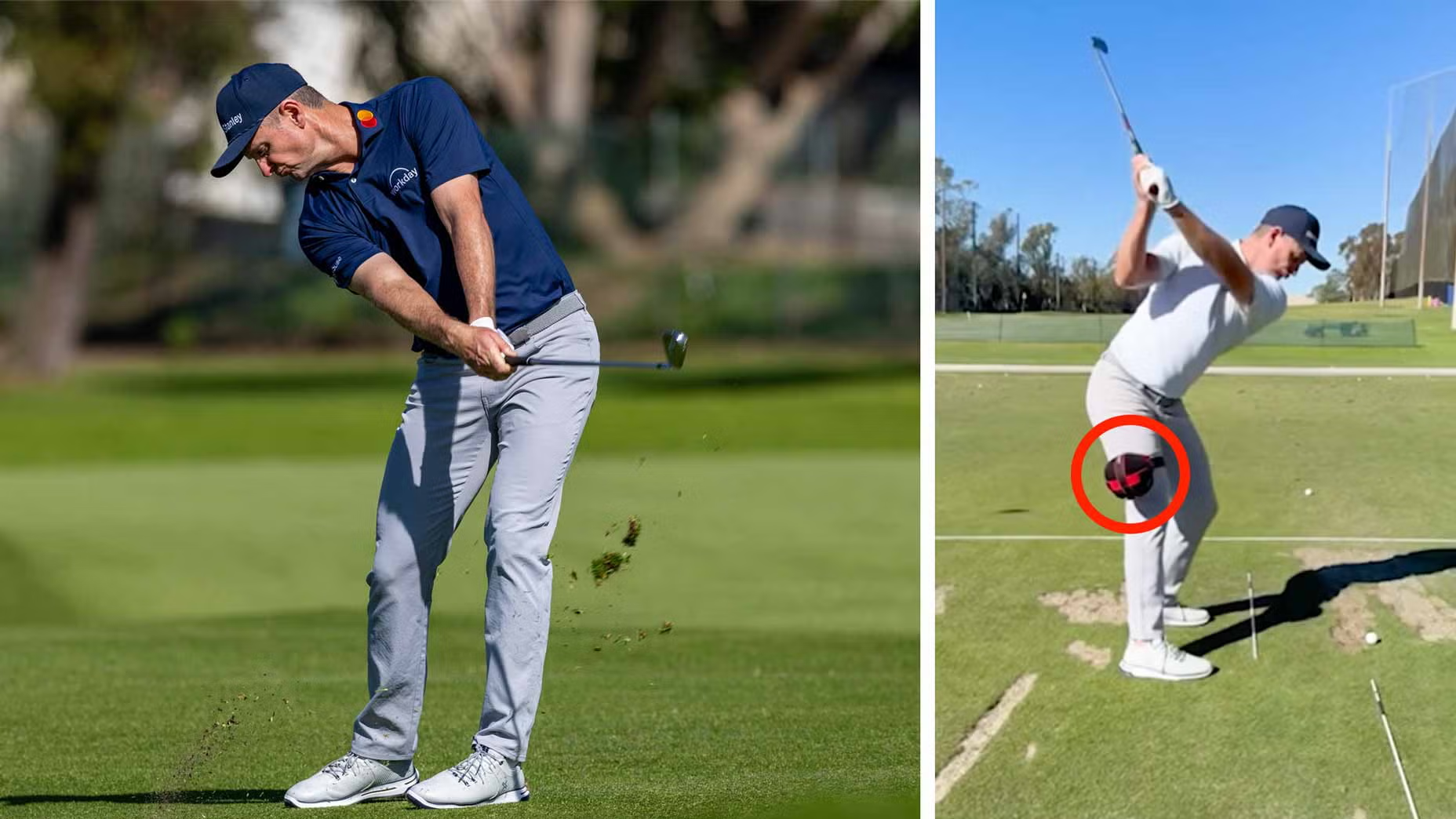

We all watch the pros on TV, marvelling at their seemingly effortless swings, their laser-like precision, and their ability to perform under pressure. And while it’s easy to credit natural talent, what often goes unseen is the meticulous work, the constant refinement, and the profound partnership between player and coach that truly underpins their success. As a lifestyle editor, I’m always searching for those human elements, those ‘aha!’ moments that transcend the leaderboard and offer insights we can all lean into, whether we’re aspiring pros or weekend warriors.
Justin Rose, fresh off his PGA Tour victory at the Farmers Insurance Open, offers a perfect case study in this philosophy. His swing is famously smooth, a thing of beauty to behold. And while he possesses elite athleticism, his consistency, as I’ve learned, is deeply rooted in the nuanced guidance of GOLF Top 100 Teacher Mark Blackburn. Their recent interview on the Smylie Show provided a fascinating glimpse into the collaborative dance of improvement, revealing powerful lessons applicable to any golfer’s journey.
The Art of the “Feel” and the Science of the Swing
What truly caught my attention was how Rose and Blackburn dissect the feel of the swing, rather than just the mechanics. It’s a holistic approach that acknowledges the human element – how a player internalizes and executes instruction. For Rose, a key focus has been his right leg, specifically his trail knee during the downswing.
Blackburn explained Rose’s characteristic feel on the course:
“One of the things Rosie likes to feel as a player, is he likes to be quite passive through impact. So he has a tendency at times for his right knee and right leg to work a little too inward, towards the ball, which then leaves his torso backing up a little bit and then he has to straighten his arms out.”
This insight is so valuable because it speaks to a common predicament for many golfers: how our bodies instinctively react can sometimes work against the desired outcome. For Rose, that inward drift of the trail knee would lead to a compensation – the torso backing up, arms straightening prematurely. It’s a chain reaction, and honestly, who among us hasn’t felt that struggle?
Their solution? Getting that trail knee to track more toward the lead knee during the downswing. This isn’t just a technical fix; it’s about staying centered, promoting rotation, and ensuring a powerful, efficient move through the ball. Blackburn underlined what Rose values most in his swing:
“He [Rose] wants to have a lot of rotation in his golf swing, that’s what he likes to feel. His ‘bad golf’ is played with a lot of slide and tilt and arm throw out.”
This really resonates with me. It’s not just about what ‘looks’ right, but what ‘feels’ right to the player, allowing them to perform their best. It highlights the importance of understanding your own tendencies, both good and bad, on the course.
The Humble Smart Ball: A Game-Changer for All Skill Levels
Perhaps the most fascinating aspect of Rose’s recent success is the simplicity of the training aid that helped him dial in this crucial movement. Enter the Smart Ball. 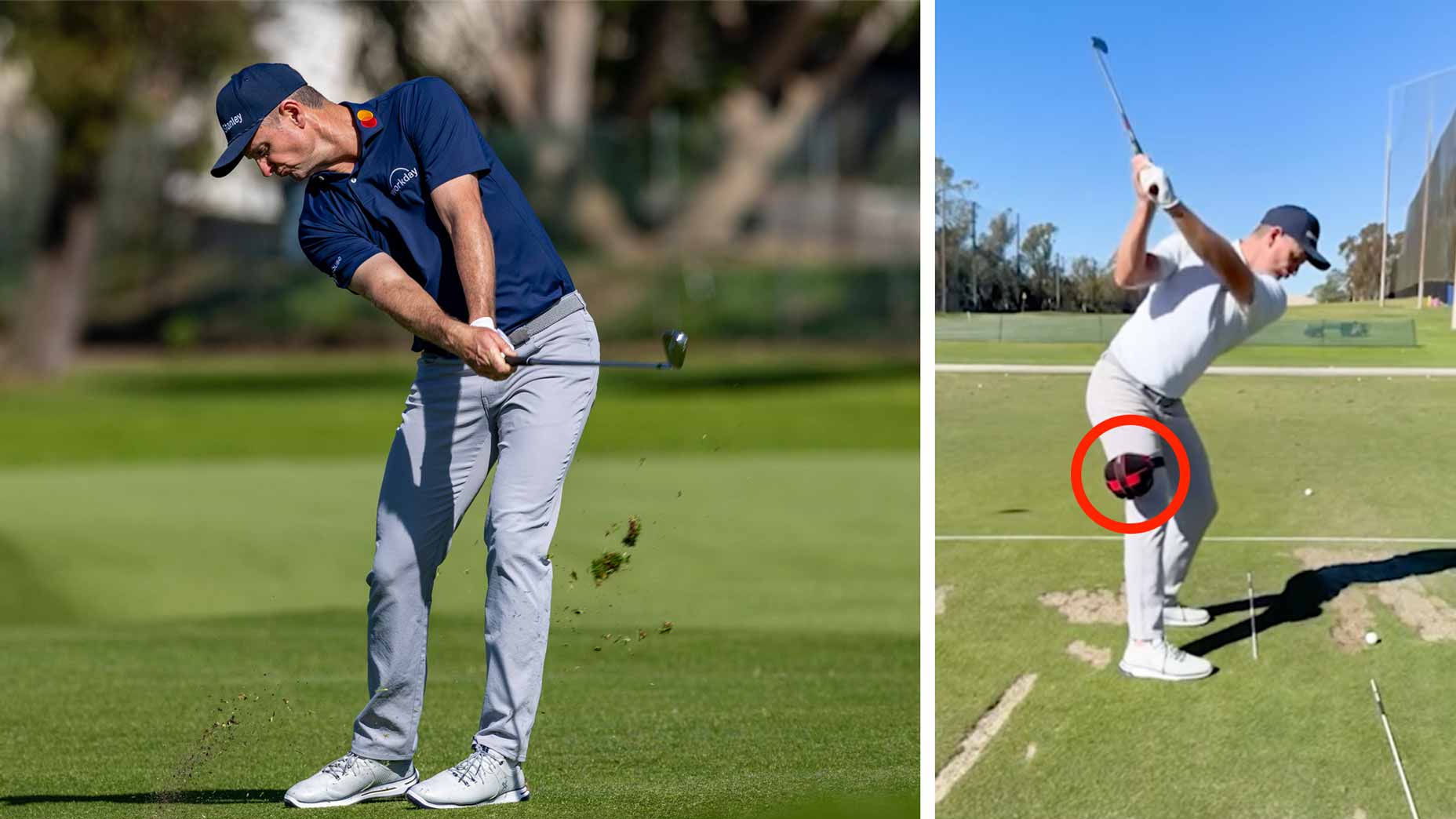
Blackburn had Rose attach this unassuming device just above his trail knee. The ingenious part? It gives instant, undeniable feedback. If his trail leg drifts inward towards the ground instead of correctly tracking toward the target, his hands would likely clip the ball. It’s an immediate, tactile correction.
What blew me away, and I think it’s a huge takeaway for everyday golfers, is that this specific drill was incorporated only a week before he won the Farmers Insurance Open! As Blackburn put it:
“We kind of threw this in this week. He [Rose] likes it [the drill] because it then allows him to to reflex or cover the golf ball and be quite passive through the hit.”
Think about that. A simple, affordable training aid, focused on one specific, critical movement, yielded immediate, tour-winning results. This isn’t about expensive gadgets or complex biomechanics accessible only to the pros. This is about finding the right tool to address a specific feel, and how quickly that can translate to improved performance. It’s empowering to think that a small, targeted adjustment can unlock such significant gains.
Actionable Takeaways for Your Game and Your Life
So, what can we, as everyday golfers and people looking to improve in all areas of life, learn from Justin Rose’s approach?
Identify Your Key “Feel”: Instead of chasing a perfect, robotic swing, understand what feels *right* for your body to produce your best results. What movements signal good shots? What indicates struggle? Working with a coach to define these feels is invaluable.
Embrace Specific, Targeted Drills: You don’t need to overhaul your entire swing every week. Sometimes, focusing on one small, impactful movement, like Rose’s trail knee, can create a ripple effect of improvement. Look for drills that provide instant feedback.
Simplicity Often Wins: The Smart Ball is not a high-tech marvel, but it’s incredibly effective. Don’t underestimate the power of simple, tangible solutions for complex problems, whether on the course, in your fitness routine, or even in managing your daily tasks.
The Power of Partnership: Rose’s success is a testament to his trust in Blackburn. Having someone who understands your unique tendencies and can offer clear, actionable guidance is a game-changer, in golf and in life. Seek out mentors or coaches who can help you identify and refine your personal “feels.”
Rose’s story is a beautiful reminder that golf, much like life, is about continuous learning and refinement. It’s about breaking down big challenges into manageable, ‘feelable’ pieces. It’s inspiring to see that even at the highest level of the game, a small, focused tweak, understood through the lens of personal feel and reinforced with a simple aid, can lead to triumph. It gives me hope that a little focused effort on the course can lead to more consistent, joyful rounds for us all.
