

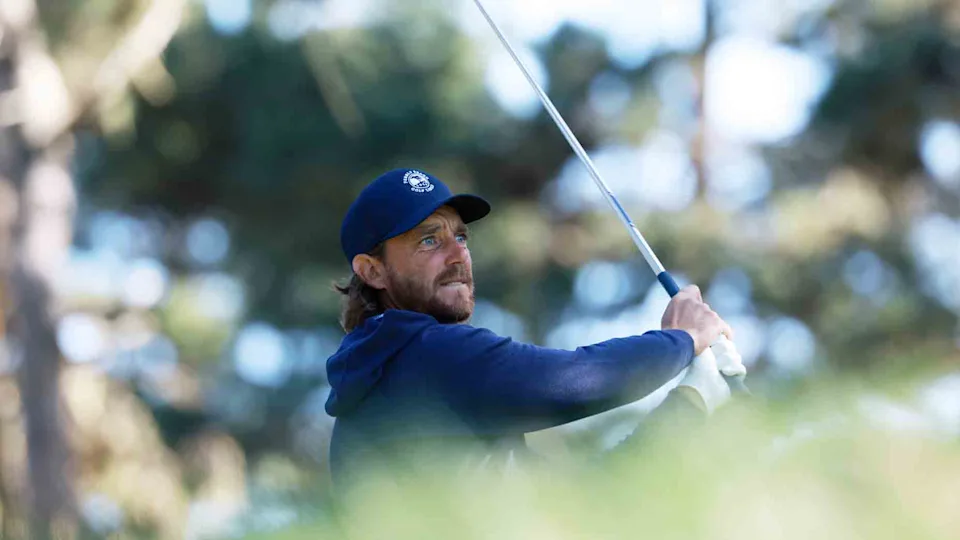

Tommy Fleetwood’s Nice Guy Revolution: Why Being Yourself Beats Manufactured Edge
There’s a moment in every long career covering professional golf when you realize the conventional wisdom is, well, not particularly wise. I had one of those moments reading Tommy Fleetwood’s thoughts on niceness, competitiveness, and the supposed curse of being likable in a sport that historically rewards the cutthroat.
After 35 years watching this tour—and having carried bags for Tom Lehman back when patience was considered a liability—I can tell you this: Rory McIlroy’s suggestion that Fleetwood needed to develop “a little bit of edge” to finally break through? It was well-intentioned but ultimately missing the point.
The 163-Start Question
Let’s establish the context. Tommy Fleetwood arrived at Pebble Beach this week as the world’s fourth-ranked player, fresh off a Tour Championship victory, a Ryder Cup triumph with Europe, and an October win in India. This is the man who went 163 PGA Tour events without a victory—a streak that exceeded a full Major League Baseball season in length. The near-misses were brutal: a one-shot lead at the Travelers Championship in June, the final-round lead at FedEx St. Jude in August.
So when Fleetwood finally broke through in late August, the narrative practically wrote itself. Here was a guy who’d need to find some killer instinct, some chip on his shoulder, some reason to be annoyed. After all, that’s what separates the winners from the also-rans, right?
Except here’s what I think McIlroy actually meant—and what Fleetwood understood better than most will admit: You don’t need to become a jerk to develop competitive fire. You need to find the version of yourself that refuses to accept anything less than excellence. For Fleetwood, that apparently didn’t require a personality transplant.
The Authenticity Advantage
In my experience, the players who have the longest, most consistent careers are the ones who figure out early that pretending to be someone you’re not is exhausting. I’ve seen guys try to manufacture controversy, adopt personas, buzz their hair to look tougher. You know what usually happens? They’re playing golf while simultaneously auditioning for a role. That’s a lot of cognitive real estate wasted.
Listen to what Fleetwood said when asked if things felt more like work after 16 years as a pro:
“Yeah, I have my days where I feel it’s pretty rubbish, I don’t play well or the weather’s rubbish and I’m having a bad day or whatever it is. I’m still, I think — yeah, it’s important to remember how much you wanted this life and how much you love it really.”
That’s not soft. That’s remarkably honest. And it’s the kind of perspective that keeps a player grounded through the inevitable stretches of mediocrity and heartbreak that every career—even Hall of Fame ones—must endure.
What strikes me most is Fleetwood’s response when asked about his major championship window being now:
“I always try and find the positives of whether it be, as you say, is this my window to win a major. Try and find the positives in that. Like I would rather you be asking me that question than not mentioning it at all because I would then not be doing that great.”
That’s not naïveté. That’s the perspective of someone who understands that external pressure is inevitable, so you might as well harness it rather than fight it. And he’s right—the fact that major championship talk is following him to Pebble Beach means he’s doing something very right.
The Real Edge
Here’s what I think gets misunderstood about competitive intensity: It doesn’t require a surly demeanor or manufactured anger. Some of the most competitive players I’ve ever covered—and I’ve covered 15 Masters—were genuinely pleasant human beings off the course. What they shared was an almost obsessive commitment to improvement and an absolute refusal to accept mediocrity.
Fleetwood demonstrated that during his winless streak. Rather than making excuses or blaming external factors, he kept showing up, kept asking questions, kept analyzing what he was doing wrong. That’s not nice guy behavior in the traditional sense—that’s relentless self-examination masquerading as humility.
And when he finally won? He didn’t suddenly become a different person. He just became a different competitor—one who’d apparently figured out how to channel his natural empathy and introspection into tactical aggression.
“I don’t know what that stigma is about like too nice to win or nice guys — you know, nice guys can win, of course. I think I’ve always prided myself on being a good person, a nice guy, but I also love playing golf and competing.”
This is the real story, and it matters far beyond Fleetwood’s personal success. In an era when sports often celebrate larger-than-life personalities and manufactured beef, here’s a guy demonstrating that consistency, authenticity, and genuine competitive hunger can coexist without contradiction. He didn’t need to become someone else. He just needed to become the best version of himself.
That’s not a nice guy finishing last. That’s a smart guy finishing first—and doing it on his own terms.
