


When Form Gets Hot, Even Poa Annua Can’t Cool It Down: What Gotterup’s Streak Tells Us About Tour Momentum
I’ve been covering this tour long enough to know that momentum in professional golf is as real as the Pacific wind at Spyglass Hill—and about as predictable. But what Chris Gotterup did over the opening 36 holes at Pebble Beach this week? That’s the kind of performance that stops you mid-sip of your drink and makes you lean forward.
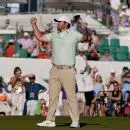
The kid from New Jersey extended his birdie streak to nine consecutive holes across two rounds on two entirely different golf courses. We’re talking about winning Phoenix on a dramatic playoff finish last week, then immediately jumping on a plane to California and treating Pebble Beach like it owes him money. That’s not just good golf. That’s the kind of sustained excellence that separates the contenders from the pretenders.
The Numbers Don’t Lie—And Neither Does History
Let me put this in perspective for you. Gotterup shot an 8-under 64 at Pebble Beach on Thursday, sitting just two shots behind Ryo Hisatsune heading into Friday’s action. But here’s what really caught my attention: he became the first golfer in 25 years to open a PGA Tour event with six straight birdies immediately after winning his previous start. That’s a historically significant accomplishment.
In my three decades covering this game, I’ve learned that streaks like this reveal something fundamental about a player’s mental state. When you can shake off the adrenaline of a playoff victory, travel across the country, and immediately dial in your game on unfamiliar greens? You’re not just swinging it well. You’re in that rare zone where confidence becomes self-perpetuating.
“I was kind of just coasting along. You don’t really realize it in the moment, and then when you look up you’re like, ‘Wow, I’m 6 under through six.’ That’s nice.” – Chris Gotterup
Notice the humility in that quote. That’s what tells me Gotterup might have something special brewing. The players who acknowledge they’re playing above their conscious level—those are usually the ones who sustain it longest.
Scheffler’s Struggles Should Concern Us (A Little)
Now, I don’t want to overreact to one bad round. Scottie Scheffler is still Scottie Scheffler, and even-par 72s happen to the best of them. But this is worth monitoring: it marks the first time since May 2021 that he’s shot even or worse in the first round of back-to-back PGA Tour starts. That’s over four years without this particular pattern.
What’s interesting is that Scheffler himself seemed to understand the issue wasn’t mechanical. The mud on his ball at the par-5 second was genuinely bad luck, not bad swing. But then look at the specifics: only two approach shots inside 10 feet, no putts longer than 8 feet made. That’s not a guy swinging it poorly—that’s a guy who couldn’t get the ball in the right spots.
“I guess the challenge is making a bunch of birdies. That was a challenge for me today,” Scheffler said.
In my experience as a former caddie, I learned that when elite players miss approach shots by small margins over 18 holes, it’s usually a setup issue or a focus problem rather than a talent problem. Scheffler will adjust. But the fact that he had to acknowledge the challenge at all suggests something was off in how he was visualizing his targets.
Bradley and Burns: The Unsung Narrative
Here’s what doesn’t get enough credit: Keegan Bradley and Sam Burns both shot in the mid-60s while dealing with Spyglass Hill, which typically plays significantly harder than Pebble Beach. The course average at Spyglass was running about one-and-a-half shots higher than at Pebble on a day when the weather was genuinely gorgeous.
That context matters enormously. Bradley’s chip-in for eagle at the eighth was nice, sure, but what really impressed me was the clean card afterward. Discipline. In my decades covering the tour, I’ve noticed that the best players often aren’t the ones hitting the most spectacular shots—they’re the ones who minimize disasters.
“It’s about as nice of a day as I’ve ever seen out here. The greens are soft but that gets them a little bumpy, too. So some of the putts are a little dicey, but definitely scoring is good.” – Keegan Bradley
That’s a pro talking. Acknowledging that ideal scoring conditions can actually create their own challenges with firm greens creating inconsistent roll. That’s the kind of nuance casual fans miss.
What This Week Tells Us About the Tour’s Direction
The scoring at Pebble Beach on Thursday—with a 62 leading and multiple players in the 60s—reflects something I’ve observed increasingly on the modern tour. When conditions align, the field is so talented now that low scores become almost automatic. The margins between winning and missing the cut are measured in single digits and often come down to who makes the most putts on a given day.
Gotterup’s nine-birdie streak and Hisatsune’s 62 aren’t anomalies. They’re the new baseline for elite performance when the wind is down and the greens cooperate. What will separate this week’s winner from the also-rans isn’t who shoots the lowest single round—it’s who maintains intensity over 72 holes when everyone else is also shooting career numbers.
That’s why I’m watching Gotterup closely. Consistency across different courses and conditions, combined with the mental resilience to back up a victory immediately, is the rare combination that produces majors and tour championships. Kid’s got something brewing.
