


McIlroy’s Next Chapter: Why His Quest for St. Andrews Matters More Than You Think
I’ve been covering professional golf since the Reagan administration, and I’ve learned that the best stories aren’t written in the moment—they’re recognized in hindsight. So when I watched Rory McIlroy calmly discuss his remaining ambitions at Pebble Beach on Friday, I realized we were witnessing something more significant than a player simply checking boxes on his career bucket list. We were watching a champion fundamentally reorient himself after achieving the sport’s ultimate prize.
Let me be direct: what McIlroy said about St. Andrews, Riviera, and those legendary venues matters precisely because he’s saying it after winning the Masters. That’s the crucial context that separates this moment from idle speculation.
The Breakthrough That Changes Everything
Having caddied for Tom Lehman back in the ’90s, I understand the psychological weight of major championship droughts. You can talk about process and perspective all you want, but there’s a voice in the back of every elite golfer’s head asking: “What if I never get that one?” For McIlroy, that voice belonged to the Masters—and Augusta National has a way of haunting players far more effectively than any other venue.
What struck me most wasn’t his Pebble Beach victory in February or even his Masters triumph in April. It was this moment of clarity he expressed on Friday:
“There’s places I haven’t won that I would love to. St. Andrews being one of them. Riviera next week would be another. Riviera and Muirfield Village are two. They’re wonderful golf courses but who hosts the events as well. You know, Tiger and Jack.”
Notice something? He’s not just talking about winning golf courses anymore. He’s talking about legacy narrative—about winning the tournaments where legends won, and doing it while those legends are still here to witness it. That’s a player who has crossed the finish line and is now thinking about what kind of golfer history will remember him as.
The St. Andrews Question: His Mount Everest
In my 35 years covering this tour, I’ve seen players obsess over major championships, and I’ve seen them obsess over specific venues. St. Andrews represents something different entirely—it’s the combination of both, plus the weight of history that makes it genuinely unique.
“Yeah, this is certainly one, Augusta was another, and the last one I think — not the last one, but the biggest one on the list would probably be St. Andrews.”
That pause before “the biggest one”—you can feel the gravity in those words. McIlroy won’t get another realistic crack at St. Andrews until 2027 when The Open Championship returns to the Old Course. He’ll be 38 years old. By any measure, that’s still young enough to compete at the highest level, but it’s also the kind of timeline that focuses the mind. This isn’t a “someday maybe” ambition anymore. It’s a defined target.
What fascinates me is that McIlroy seems genuinely energized by this pivot. The Masters breakthrough wasn’t a destination—it was a departure point. He’s now free to pursue victories that matter for reasons beyond major championship count.
The Pebble Beach Principle: Decisiveness in Purpose
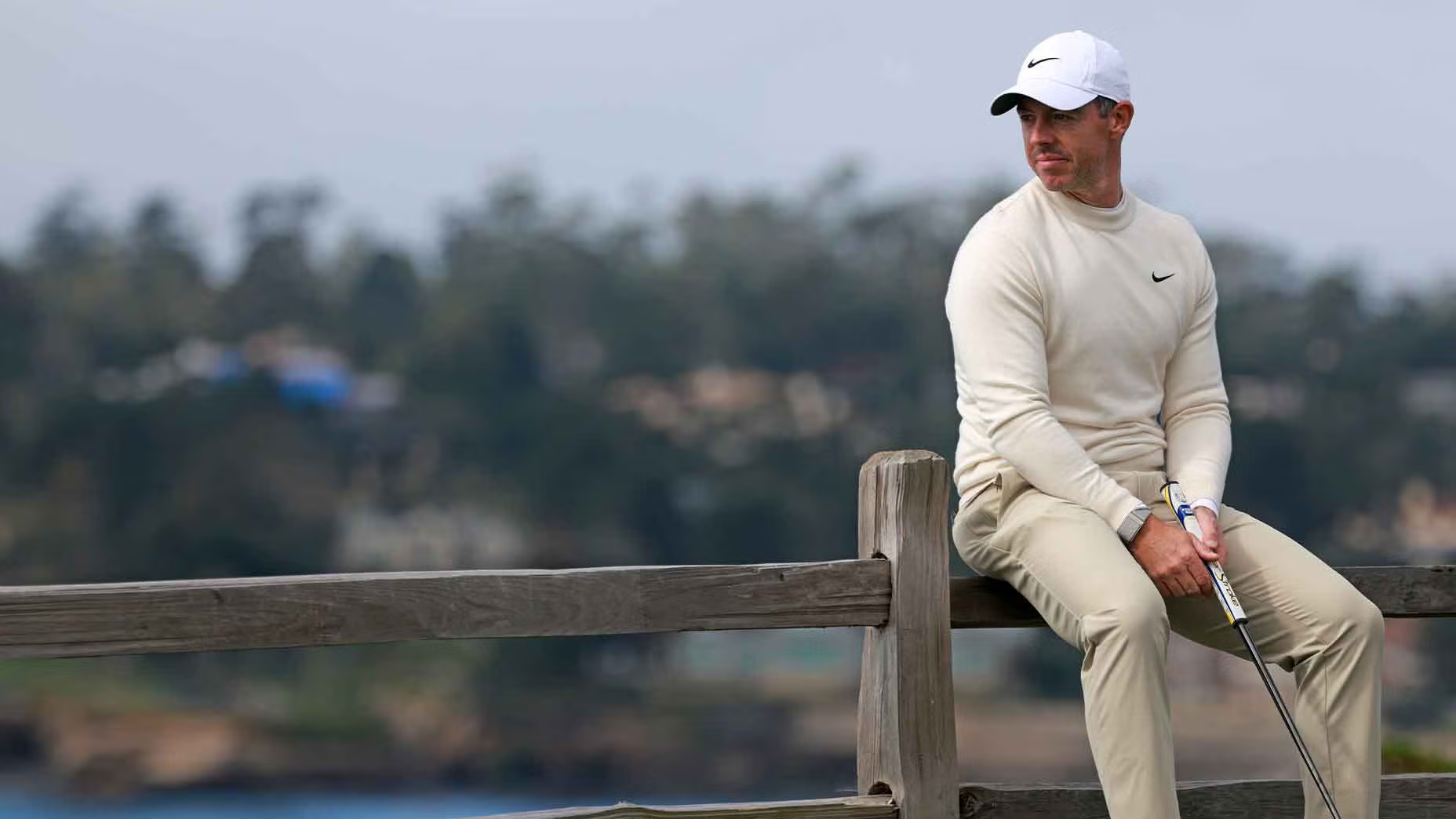
The source article opens with a wonderful detail: a warning sign at Pebble Beach’s 18th tee reading “NO SITTING ON THE FENCE.” That’s not just course management advice; it’s a philosophy that applies perfectly to what McIlroy is doing now.
“The genius of Pebble Beach exists in the extremes. Jagged rocks and foreboding surf and enormous dunes and tiny greens. Of the many skills required to thrive here, decisiveness is perhaps the most important.”
McIlroy is being decisive about what comes next. He could coast on his Masters victory, enter the obligatory victory lap circuit, and fade into comfortable mediocrity like so many major champions before him. Instead, he’s identified specific, historically meaningful targets and committed to them publicly. That takes guts.
Why This Matters Beyond McIlroy
In my experience, when a generational talent reframes his goals after achieving the ultimate prize, it often signals a shift in how the sport thinks about itself. McIlroy isn’t just pursuing wins—he’s pursuing meaning. He wants to win where Tiger and Jack won. He wants to add his name to the historical record at golf’s most sacred grounds.
That’s actually refreshing in an era where so much of professional golf feels transactional. The money is there. The sponsorships are secured. But what drives a player like McIlroy after the Masters? Legacy. Specific, historic, cathedral-of-golf legacy.
The 2027 Open Championship at St. Andrews will be appointment television not because McIlroy might win—plenty of players could win—but because winning would complete a narrative that began in February 2025 at Pebble Beach. Breakthroughs, as the article notes, often come in multiples. We may be watching the opening movements of a breakthrough sequence that culminates at the Old Course.
And unlike sitting on the fence, that’s a bet worth making.
