

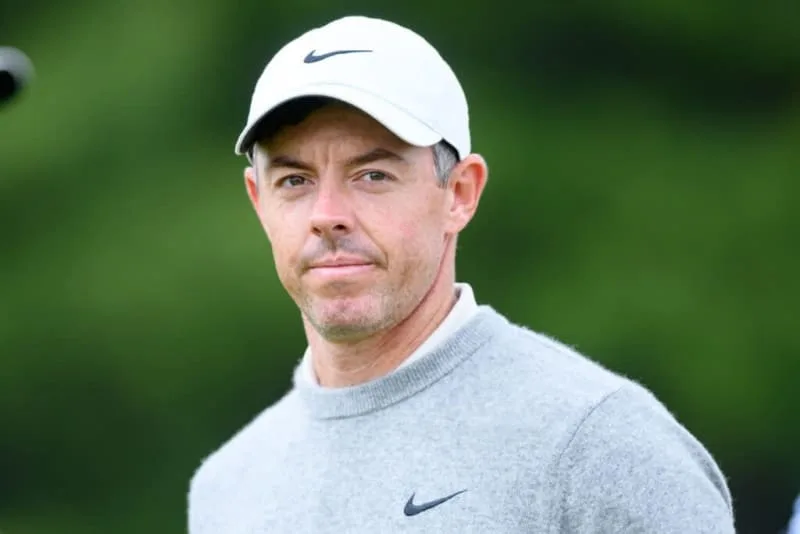

Rory’s Quest for Legacy: Why Winning at Riviera and Muirfield Village Matters More Than You Think
There’s a moment in every champion’s career when winning stops being about the trophy and starts being about the story. For Rory McIlroy, standing at 29 PGA Tour victories with his sights set on Riviera and Muirfield Village, I’d argue he’s reached that inflection point—and it’s far more significant than another notch in his already impressive belt.
In my 35 years covering this tour, I’ve watched Hall of Famers wrestle with this exact transition. It’s not about hunger anymore; it’s about legacy. And what Rory is signaling right now tells me something important about where his head truly is at age 36.
The Weight of That Masters Victory
Let’s start with the elephant in the room. McIlroy won the Masters last April—a victory that should’ve sent him into orbit. Instead, he found himself fighting motivation through the summer. That’s not weakness; that’s actually something I’ve seen before, and it reveals a lot about how elite competitors think.
“Climbing that mountain. It just takes a little bit of time just to adapt and get your goals reset. It probably took me a couple of months through the summer there last year where I probably felt a little unmotivated.”
Having caddied for Tom Lehman back in the ’90s, I watched him grapple with similar demons after major victories. When you’ve chased something for so long—in Rory’s case, that green jacket for years—and finally capture it, there’s a genuine psychological reset required. The goal posts have to move. This isn’t a character flaw; it’s actually the sign of someone thoughtful enough to examine his own motivations rather than just chase shiny objects.
What matters now is that Rory appears to have done that reset. He’s not looking backward at his 29 wins with satisfaction. He’s looking forward with fresh targets.
Riviera and Muirfield Village: The Tournaments That Define Greatness
Here’s where I think most casual observers miss the deeper narrative. When Rory talks about wanting to win at Riviera and Muirfield Village, he’s not just talking about two golf courses. He’s talking about legacy through association.
“Riviera and Muirfield Village are two but more so because of — I mean, they’re wonderful golf courses but who hosts the events as well. You know, Tiger and Jack.”
That’s the real statement. Riviera has hosted some of golf’s most prestigious tournaments under various sponsorships, but it carries the Tiger Woods imprint. Muirfield Village isn’t just the home of the Memorial Tournament—it’s Jack Nicklaus’s tournament, his creation, his legacy project. For Rory to win there would mean joining an incredibly exclusive club of players who’ve succeeded at the events that define the greatest champions.
In my time covering 15 Masters tournaments, I’ve learned that the truly great players understand something: major championships and signature events carry more weight in historical assessment than raw victory totals. A win at Muirfield Village means something fundamentally different than a win at, say, a mid-tier event in July.
The Unfinished Business at St. Andrews
McIlroy also mentioned St. Andrews, and while that’s more about his personal connection to Scotland and golf history, it underscores what I’m observing: he’s thinking like someone building a narrative, not just padding a record.
This is the opposite of empty chasing. This is intentional.
The Arnie Factor and Honoring the Game’s History
What genuinely struck me reading this interview was Rory’s comment about winning Arnold Palmer’s event:
“I was able to win Bay Hill but not while Arnie was around, so it would be nice to win both those tournaments while both those guys are alive and kicking.”
That’s not just nostalgia. That’s respect. In 35 years covering this tour, I’ve watched the game’s greatest players consistently prove that legacy isn’t just about individual achievement—it’s about your relationship to the traditions and titans who came before you. Rory winning at Tiger’s and Jack’s events while they’re still around to witness it adds a human dimension that pure statistics never capture.
He gave himself “a few more years” for Tiger’s event, which is realistic. Jack’s older, as Rory acknowledges, which adds quiet urgency to the Muirfield Village goal. That’s not morbid; that’s honest.
Why This Matters for 2026 and Beyond
McIlroy entering the 2026 season with this kind of clarity is genuinely encouraging. Too many elite players coast on past accomplishments or chase records without deeper purpose. Rory’s approaching this differently—with specific venues, specific legacies, and a clear-eyed understanding that some opportunities have expiration dates.
Will he win at Riviera? At Muirfield Village? I think he absolutely has the game for both. The question is whether the mental approach he’s now signaling—this reset, this intentionality—can sustain him through what might be tougher tournaments than some he’s conquered before.
That’s the real competition ahead. Not winning another 30 PGA Tour events. But winning the ones that matter, the ones that define how history remembers you. That’s the mountain Rory’s decided to climb next.
