

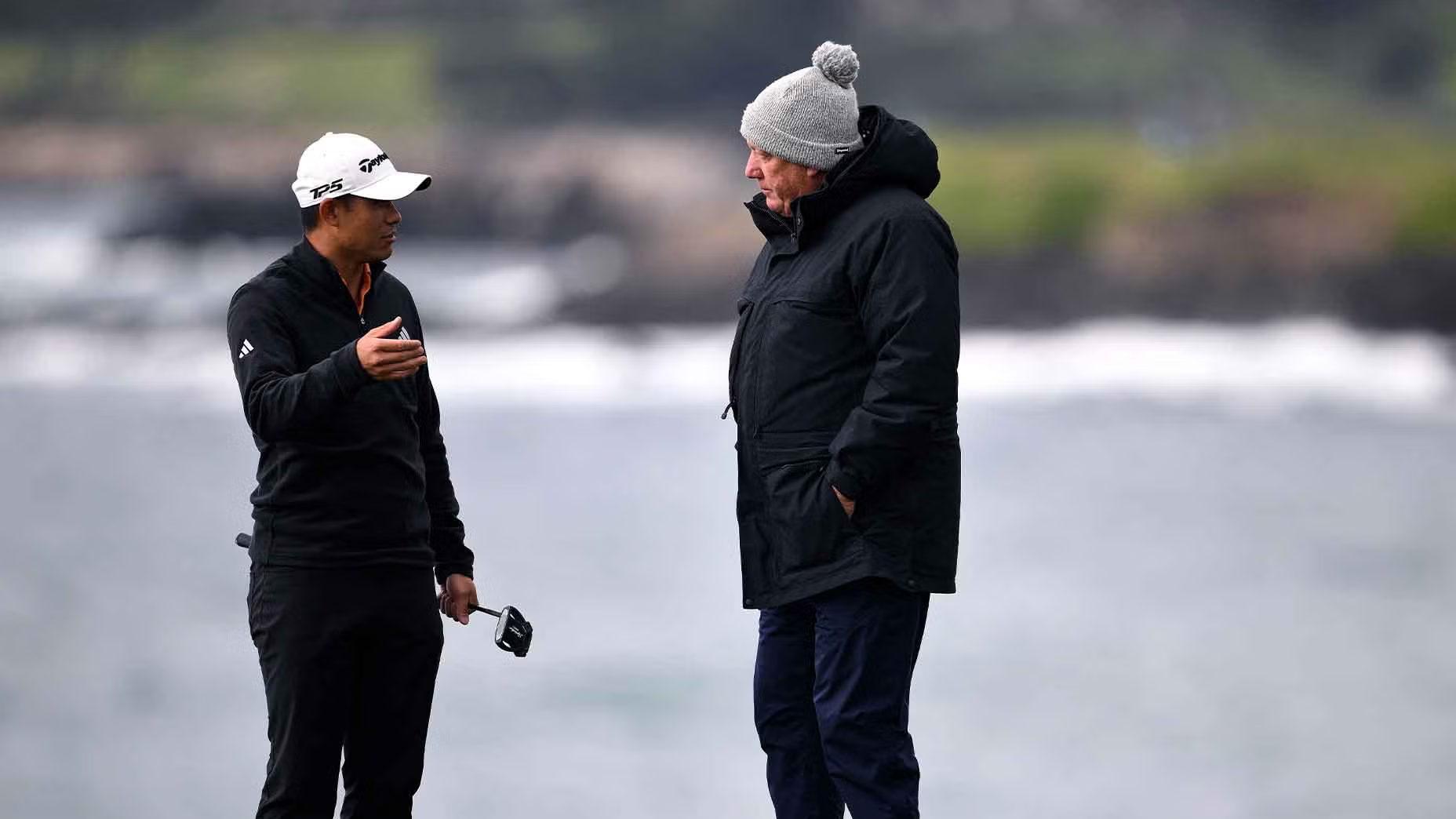

Ah, Pebble Beach. The name itself conjures images of craggy cypress trees, dramatic cliff-side greens, and the relentless roar of the Pacific. It’s a place I’ve visited countless times, both in person and in my mind, a true marvel of golf architecture that continues to enthrall golfers and writers alike. And this past week, as Collin Morikawa etched his name onto its illustrious winners’ board at the AT&T Pebble Beach Pro-Am, the magic of this timeless links-style layout was once again on full display.
My first glimpse of Pebble Beach Golf Links, carved into the Monterey Peninsula, left me speechless. This isn’t a course where you merely play; you *experience* it. Each step feels like walking on hallowed ground. The design, a collaboration primarily between Jack Neville and Douglas Grant, unveiled in 1919, is a masterclass in embracing the natural landscape. They didn’t force the land; they coaxed a course out of it, allowing its dramatic contours and oceanfront setting to dictate the flow. It’s an approach that Pete Dye, for all his bold, often artificial features, would grudgingly admire for its sheer respect of the land, and one that Tom Doak often champions in his own minimalist designs.
The routing at Pebble is, in a word, brilliant. It dances along the coastline, drawing you closer to the crashing waves, then pulls you inland for a brief respite, only to return you to the dramatic oceanfront. This ebb and flow creates an unforgettable rhythm. The opening holes, while not overtly coastal, are a delightful warm-up, setting the stage. But it’s when you reach the par-3 7th that Pebble Beach truly bares its soul. A tiny jewel perched precariously above the churning ocean, it demands precision and nerve. The wind here, as any golfer will tell you, is a constant, capricious character, adding layers of strategy to every shot.
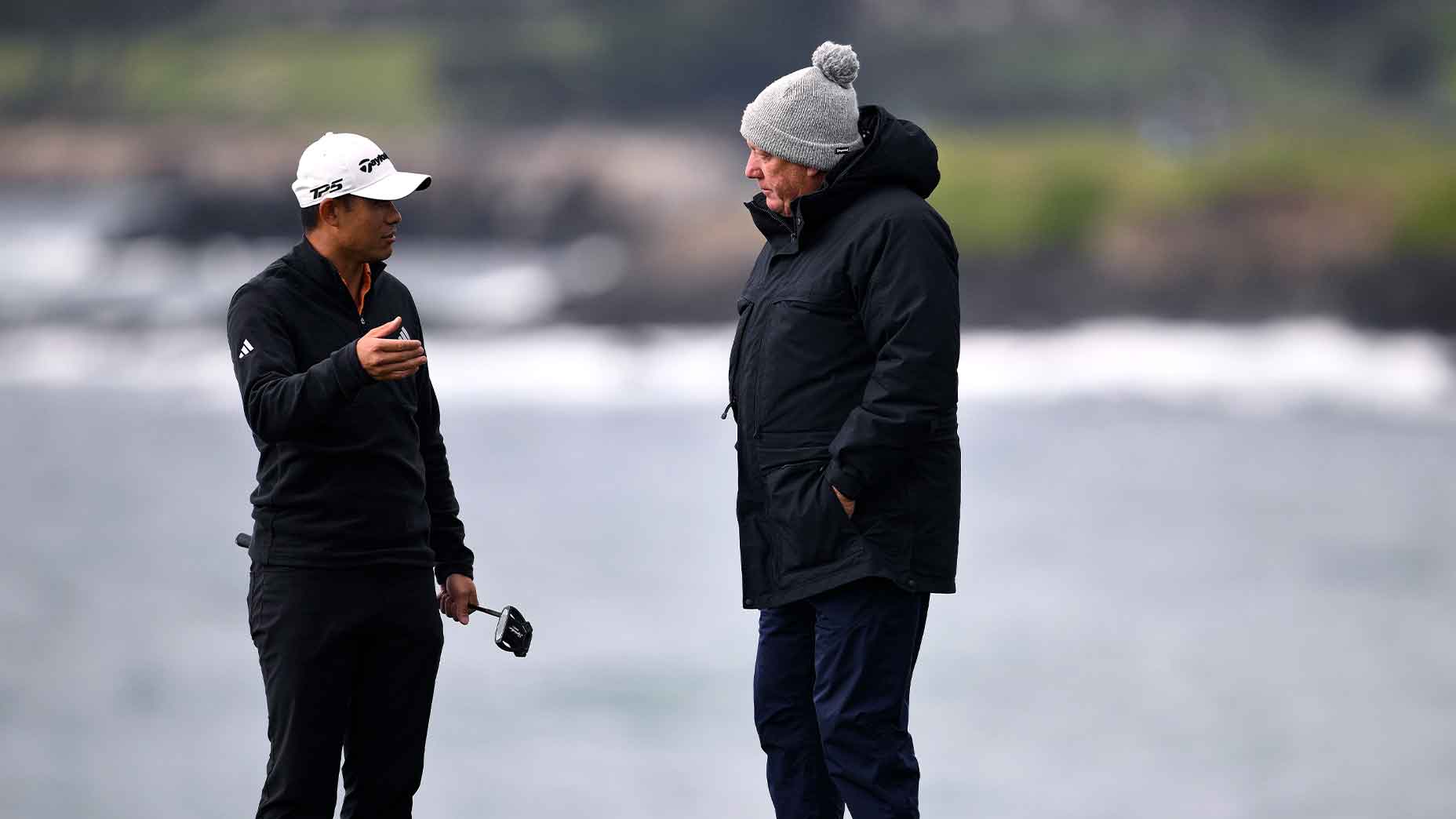
The finish, however, remains its unequivocal signature. The 18th hole at Pebble Beach is arguably the most famous closing hole in golf, a curving par-5 running along the jagged shoreline. It demands a heroic tee shot, flirting with the Pacific on the left, followed by a strategic lay-up or a daring go-for-broke second. It’s a stage tailor-made for drama, and this past Sunday, it delivered in spades, albeit with an unexpected interlude.
Morikawa’s victory march to the 18th green was protracted by what can only be described as a rules odyssey involving Jacob Bridgeman. While Morikawa stood in the fairway, staring down destiny and waiting for a clear path to victory, Bridgeman’s ball met the beach, and then the ocean, prompting a series of lengthy discussions and drops. It was a surreal moment, a reminder that even at the game’s highest levels, the unpredictable nature of golf, and its rules, can halt proceedings.
“I knew what I had to do,” Morikawa said later. “I think I paced all the way to the ocean, like, 10 times at least. I just had to keep moving. You know, it’s weird to say, but these long breaks. I mean, it’s just not good for anyone to stand still.”
This interruption, while frustrating for Morikawa, ironically highlighted the sheer mental fortitude required to win at Pebble. The wind, which intensified throughout the day, became another player in the drama. Even as Bridgeman’s ball oscillating on the green led to yet another rules debate, Morikawa had to reset, refocus on his vision, his dream of winning.
“When I first came out and turned pro, like I didn’t care about honestly making cuts or top-20s, I came out to win,” Morikawa said. “I wanted to come out and win, win the weekend, win the tournament.”
When his moment finally arrived, Morikawa delivered. His approach shot, carrying majestically over that famed lone cypress tree on the 18th, settling safely on the green, was the culmination of months of visualization and belief. Such moments are what Pebble Beach is designed for – to test not just a player’s swing, but their resolve. The greens, often small and contoured, demand precise approaches. The bunkering, deceptively simple but strategically placed, punishes errant shots. The firm, fast conditions always add an extra layer of challenge, requiring a deft touch around the greens.
Pebble Beach is, without a doubt, a bucket-list destination for golfers worldwide. Located in Pebble Beach, California, it’s a public course, though a stay at one of the resorts on the property is usually required for a tee time. It’s not an inexpensive round, but the experience is truly priceless. You’re not just playing golf; you’re walking in the footsteps of legends, experiencing a piece of golf history. The vistas are breathtaking, the air salt-laden and invigorating, and every hole offers a new challenge and a new photographic opportunity.
“When I first turned pro, I just looked too far ahead,” he said. “I think I’m gonna change that perspective and just enjoy this. Shoot, we’re at Pebble Beach right now, so I’m gonna enjoy this one.”
As Morikawa himself acknowledged, winning at Pebble Beach is something to savor. Its place among the world’s top courses is undisputed, consistently ranking at or near the pinnacle of multiple lists. It’s hosted numerous U.S. Opens and PGA Championships, proving its championship mettle time and again. For a golf architecture enthusiast like myself, Pebble is a reminder of how golf can be both a spiritual journey and a formidable test, intrinsically linked to the land and the elements. It’s a course that demands respect, and in return, it offers an unforgettable walk through one of golf’s true masterpieces.
