



There are golf courses, and then there is Pebble Beach. As a golf course & travel writer, I’ve been fortunate enough to walk fairways on hundreds of designs across the globe, from the windswept links of Scotland to the desert oases of the American Southwest. Yet, few places capture the imagination quite like this strip of coastline on the Monterey Peninsula. It’s more than just a golf course; it’s a living, breathing testament to the harmonious – and sometimes brutal – relationship between man, nature, and the little white ball. Watching Collin Morikawa secure his long-awaited victory here recently only underscored the drama inherent to this iconic layout.
Pebble Beach isn’t just about beautiful vistas; it’s a strategic masterpiece born from the minds of Jack Neville and Douglas Grant in 1919. Their philosophy was simple yet profoundly effective: to design as many holes as possible along the jagged coastline. The result is a routing that constantly keeps the Pacific in play, demanding both courage and precision. The early holes, while not directly on the ocean, lull you into a false sense of security with their rolling terrain and strategic bunkering. But then, you turn a corner, and the coastline explodes into view, quite literally taking your breath away.
The course truly comes alive on the ocean-hugging stretch from the 4th through the 10th and then again on the sensational closing holes. The 7th, a mere pitch over a cove to a tiny green, is arguably the most photographed par-3 in the world. It’s a study in minimalism and terror, especially when the wind howls. Architecturally, it’s brilliant because it forces a choice and punishes anything but perfection. The way the green is perched, seemingly defying gravity, is a testament to how well Neville and Grant integrated the natural features of the land into their design.
But the real crescendo, the moment that defines championships and seals legends, is the notorious 18th. It’s a par-5 that sweeps left along the craggy shores of Carmel Bay, daring you to challenge the Pacific’s unforgiving embrace. It’s a risk-reward hole of the highest order, where a valiant second shot can set up eagle, or a misstep can lead to devastation. We saw both sides of this coin during Morikawa’s thrilling finish. The drama on the 18th is what separates good courses from truly great ones. It isn’t just about aesthetics; it’s about the strategic choices, the pressure, the sheer nerve it takes to navigate it with a tournament on the line.
“When the intensifying winds at Pebble Beach sent Bridgeman’s ball oscillating around the green, requiring a third rules intercession, the fans at home could do little but laugh.”
The wind, oh the magnificent wind at Pebble. It’s not just a factor; it’s a co-designer. It shapes shots, defines strategies, and adds layers of difficulty to every swing. You might arrive on a placid, sunny morning, only for the afternoon breeze to whip into a gale, turning easy par-4s into struggles for bogey. This kind of natural defense is what truly elevates a course. It’s why architects like Alister MacKenzie championed designs that were dictated by the land and the elements, rather than artificial contrivances. At Pebble, the elements are the star performers.
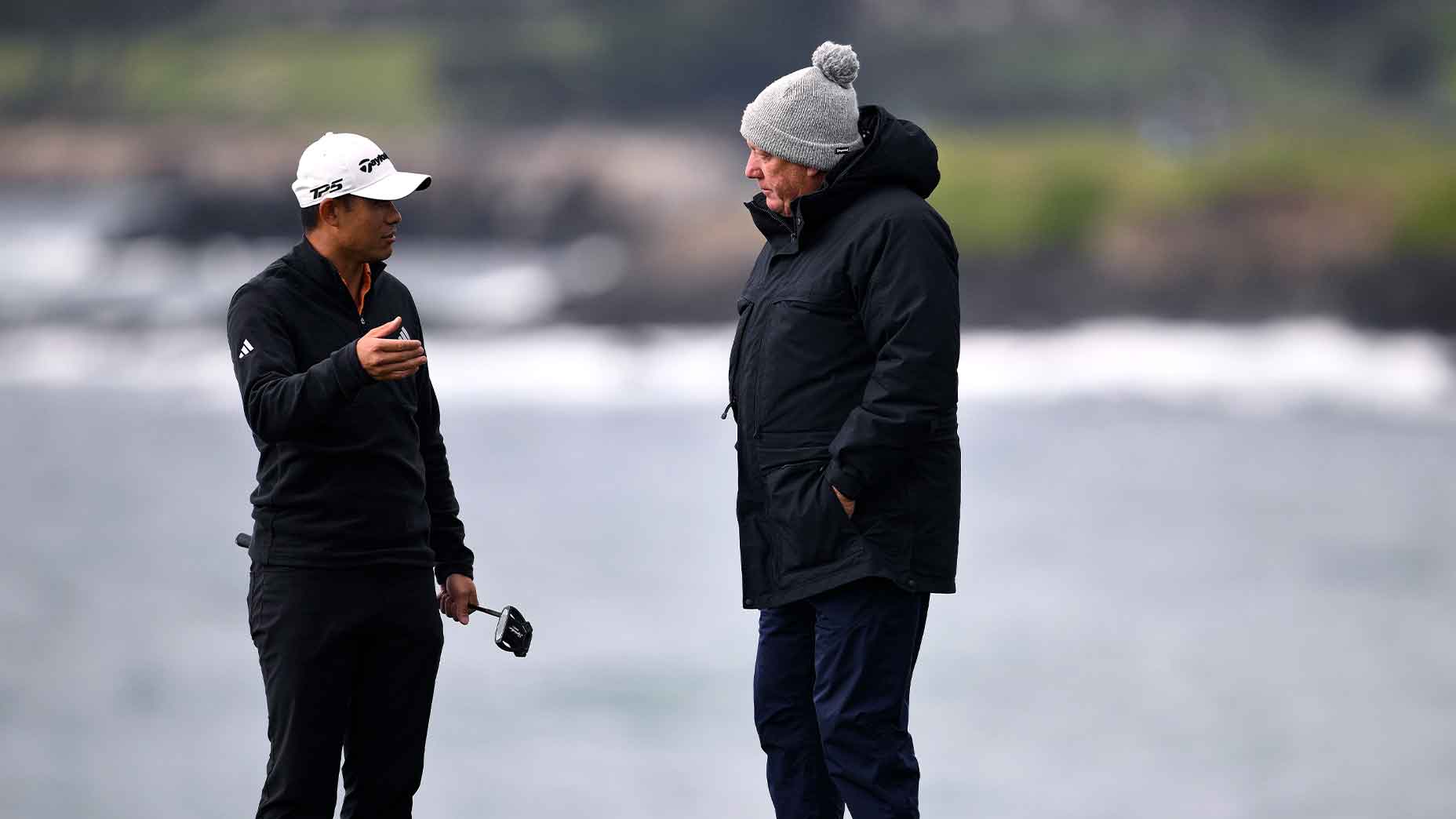
Collin Morikawa’s journey to victory on American soil after an almost three-year drought was a compelling narrative. His mental approach, honed with his mental coach Rick Sessinghaus, became paramount on that pressure-cooker 18th hole. The lengthy, almost farcical, delay caused by Jacob Bridgeman’s unfortunate encounter with the rocks and the ocean only amplified the tension. Morikawa, pacing like a caged tiger, had to maintain his focus.
“I knew what I had to do,” Morikawa said later. “I think I paced all the way to the ocean, like, 10 times at least. I just had to keep moving. You know, it’s weird to say, but these long breaks. I mean, it’s just not good for anyone to stand still.”
His second shot, carrying majestically over that famed tree in the 18th fairway, landing safely on the edge of the green, was a moment of pure golf artistry. It was a shot born of both technical skill and immense mental fortitude, a testament to overcoming external distractions and internal pressure. It’s these moments, sculpted by the design of a course like Pebble Beach, that linger in the memory of players and fans alike.
“Shoot, we’re at Pebble Beach right now, so I’m gonna enjoy this one.”
Pebble Beach isn’t an exclusive club; it’s a resort course, open to the public, albeit at a premium price. Located in Pebble Beach, California, it’s easily accessible and part of a larger resort that includes Spyglass Hill and Poppy Hills. If you plan a trip, book well in advance, and be prepared for one of the most memorable rounds of your life. Walk the fairways, feel the ocean spray, and understand why this place consistently ranks among the top courses in the world. It’s a journey steeped in history, natural beauty, and profound golf architecture, where every shot tells a story against the most dramatic backdrop imaginable.
