

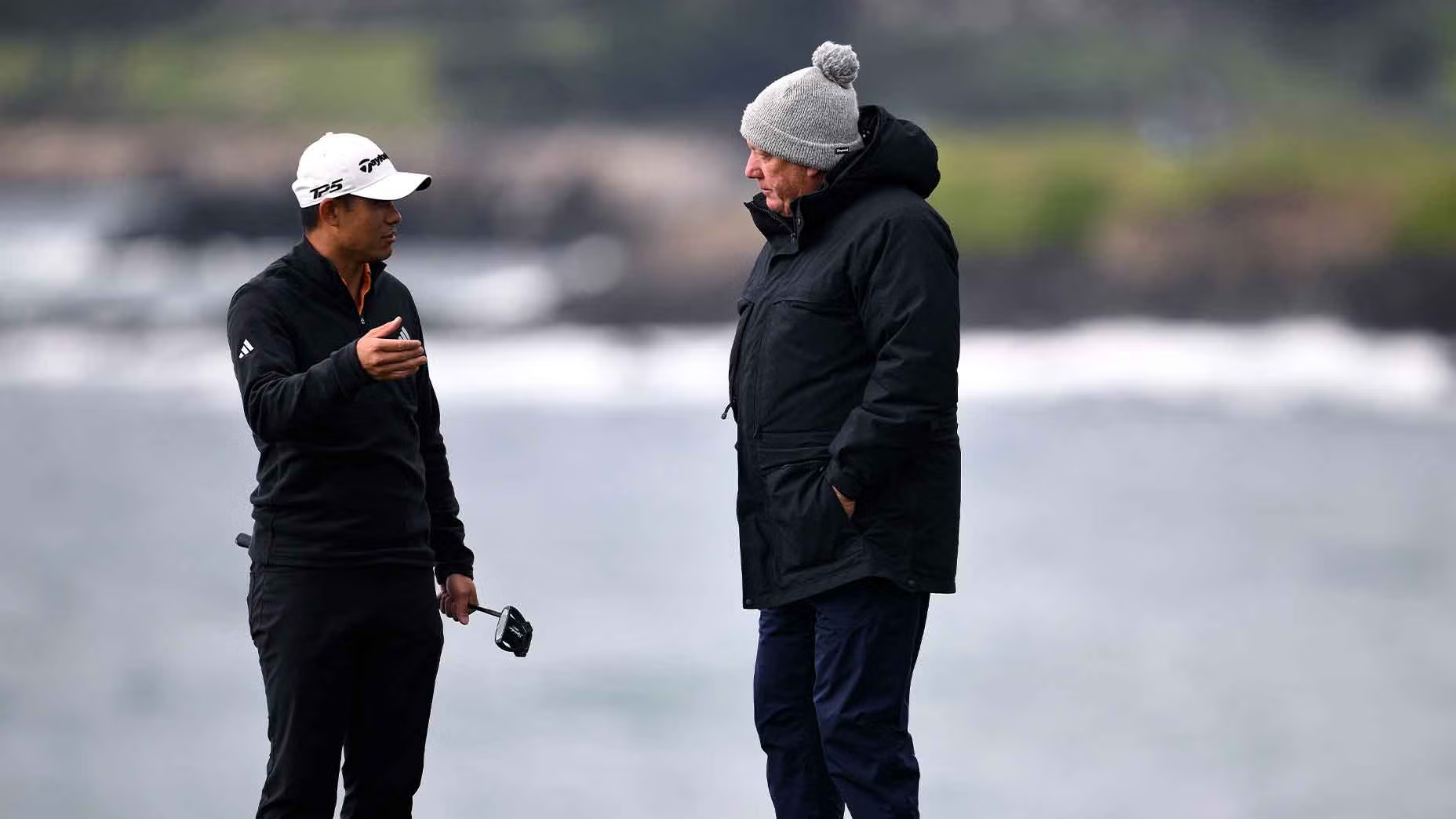

There are golf courses, and then there is Pebble Beach. As a golf writer who’s been fortunate enough to walk the hallowed fairways of 200+ courses across the globe, I can tell you that few places stir the soul quite like the Monterey Peninsula. It’s a canvas painted by nature and perfected by man, a testament to what happens when land, sea, and strategic design converge in spectacular fashion.
My recent trip back to Pebble for the AT&T Pebble Beach Pro-Am, while primarily for work, always feels like a pilgrimage. It’s hard not to be captivated by the sheer drama that unfolds here, especially on the final few holes. And this year, watching Collin Morikawa navigate the concluding theatrics of the 18th, I was once again struck by how Pebble’s design elements aren’t just pretty; they are utterly decisive, shaping destinies with every gust of wind and every crashing wave.
Pebble Beach isn’t just renowned for its postcard views; it’s a masterclass in risk-reward, originally conceived by Jack Neville and Douglas Grant, a duo whose understanding of coastal golf was ahead of their time. Laid out in 1919, the course maximizes its Pacific Ocean frontage with an almost audacious commitment. The front nine teases with glimpses of the water, building anticipation. But it’s when you turn for home, particularly from the 7th hole onwards, that Pebble truly reveals its teeth and its unparalleled beauty.
The Roar of the Waves and the Whisper of Design
Consider the routing: a figure-eight that ensures the ocean is a constant, yet varied, presence. You play alongside it, over it, away from it, and back to it. This isn’t just about aesthetics; it’s about the ever-present, swirling winds that Pete Dye would later become famous for harnessing, but which were simply an undeniable force at Pebble from day one. Alister MacKenzie, had he designed Pebble, would have undoubtedly appreciated this natural integration, allowing the landscape to dictate strategy.
The 18th hole, a par-5 that hugs the jagged coastline, is arguably the most famous closing hole in golf. Its crescent shape, the gnarly cypress tree standing sentinel in the fairway, and the unforgiving Pacific to the left—it’s brilliant. It’s not overly long by modern standards, but its strategic demands are immense. The tee shot must flirt with the ocean to shorten the approach, opening up the green for a potential eagle. Yet, as we saw with Jacob Bridgeman this year, a slight miscalculation can turn a potential birdie into an oceanic nightmare.
I caught glimpses of his ordeal. The image of a ball plunging into the ocean after caroming off the rocks is a familiar sting to anyone who’s diced with destiny on the California coast. Bridgeman’s unfortunate sequence highlighted the fine line players walk here, a line that’s dictated directly by the course’s design and its natural elements.
“First came a disaster from the beach: a lengthy rules discussion that led to a heavy wedge shot which plunked off the rocks and plunged into the ocean. Then came a second lengthy rules discussion, this time about the legitimacy of a drop from on the other side of the beach, up by the fairway.”
This drama with Bridgeman, though lengthy, provided the perfect foil for Morikawa’s own moment of truth. Standing over his ball, needing a birdie to win, after a twenty-minute delay, is where mental fortitude meets architectural challenge. The design asks not just for physical prowess but for unwavering psychological strength.
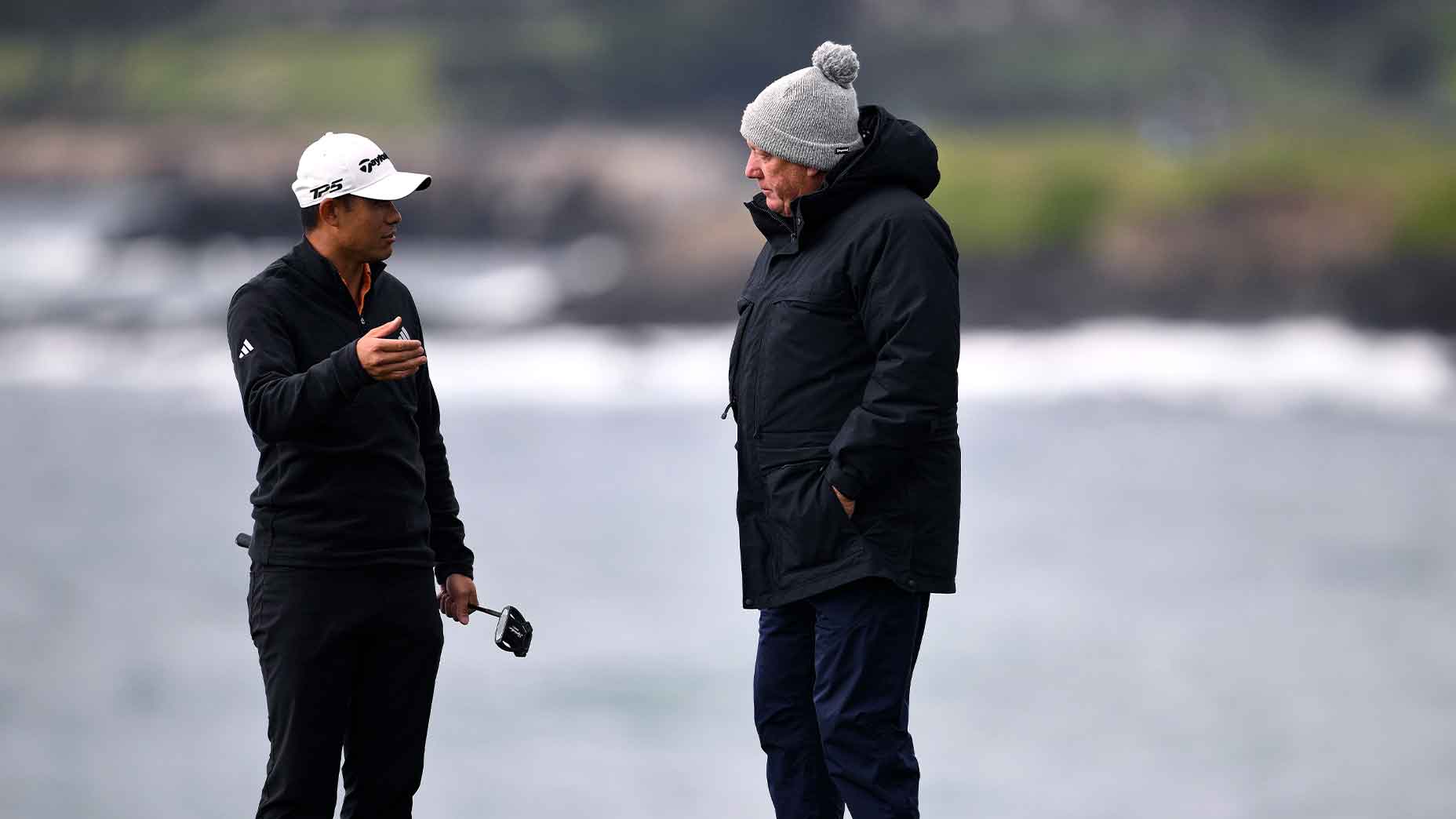
“I knew what I had to do,” Morikawa said later. “I think I paced all the way to the ocean, like, 10 times at least. I just had to keep moving. You know, it’s weird to say, but these long breaks. I mean, it’s just not good for anyone to stand still.”
The way Morikawa composed himself, recalling his vision and ultimately executing a shot over that iconic tree, landing safely on the green, speaks to the power of preparation—and the course’s capacity to test it to its absolute limits. The final up-and-down for birdie wasn’t just a win; it was an affirmation of belief, made all the more vivid by the course’s relentless pressure.
“When I first turned pro, I just looked too far ahead,” he said. “I think I’m gonna change that perspective and just enjoy this. Shoot, we’re at Pebble Beach right now, so I’m gonna enjoy this one.”
Playing Your Own Pebble Dream
For those aspiring to play this legendary course, know this: Pebble Beach Golf Links is located in Pebble Beach, California, accessible via scenic Highway 1. It is a resort course, meaning it’s open to the public, but comes with a hefty green fee. My advice? Embrace the splurge. Stay at one of the luxurious Pebble Beach Resorts properties, and your tee time becomes part of an unforgettable experience. Book well in advance, and prepare for a round that will challenge every aspect of your game.
While the greens aren’t as wildly contoured as a Donald Ross design, they demand precise iron play and a keen eye for slope. The bunkers are strategically placed, deep, and often penal. But above all, it’s the Pacific Ocean that remains the course’s most dominant and beautiful hazard, a constant reminder of the epic scale on which this game is played here.
Pebble Beach isn’t just one of America’s most heralded courses; it’s a living, breathing testament to golf’s enduring allure. It’s where legends are made, and where even a seasoned golf writer like myself feels a thrill every time the caddie hands me a driver on the first tee, with the roar of the ocean promising both beauty and beast ahead.
