


There are very few places on Earth where man-made architectural genius and nature’s raw, untamed beauty meld so perfectly that they create an experience transcending mere sport. Pebble Beach Golf Links is one such place. Having walked its hallowed fairways and been humbled by its unforgiving cliffs on more occasions than I care to admit to my accountant, I can attest to the sheer magnetism this course holds. It’s more than just golf; it’s an pilgrimage, a test, and an immersion into one of the game’s grandest stages.
My most recent journey there, however, wasn’t to play, but to witness history. As Collin Morikawa sealed his victory at the AT&T Pebble Beach Pro-Am, the familiar drama of the 18th hole played out in spectacular fashion. It’s a hole I’ve studied, written about, and cursed at countless times, and it never fails to deliver.
The Majestic Finale: Pebble’s 18th
The 18th at Pebble Beach is arguably the most famous closing hole in golf, and for good reason. It’s a par-5, sweeping left along the jagged coastline of Carmel Bay. Alister MacKenzie, the master architect behind Augusta National and Cypress Point, once wrote of the dramatic potential of seaside courses, and nowhere is that potential more fully realized than the final stretch at Pebble. The tee shot demands precision, hugging the left hazard if you dare to shorten the hole, or playing safer right, leaving a longer approach. But it’s that second shot, and indeed the entire approach into the green, that truly tests the mettle.
The hole’s strategic brilliance lies in its relentless pressure. The Pacific Ocean, with its crashing waves, isn’t just a picturesque backdrop; it’s a constant, menacing threat. The iconic lone cypress, often seen guarding the fairway, acts as a visual anchor and a mental hazard. On Sunday, as Jacob Bridgeman found to his dismay, the 18th is merciless. His unfortunate sequence of events, culminating in a ball plunging into the ocean, perfectly illustrates the razor-thin margin for error.
I’ve always admired the way the ocean influences play here, not just visually, but strategically. Pete Dye, known for his dramatic use of water hazards, surely took inspiration from places like Pebble. Here, the ocean isn’t a manufactured pond; it’s the raw, untamed force that shaped the land and, consequently, the golf course. The ground game is largely nullified on the left side, forcing aerial carries over intimidating hazards. The wind, which can shift dramatically, adds another layer of complexity, often making a calm approach feel like navigating a storm.
A Test of Nerves and Design
Morikawa’s path to victory was fraught with tension, exacerbated by extended delays on the 18th green. While patience isn’t typically a design element, how a course’s layout handles such moments is telling. The wide-open space around the 18th green at Pebble, allowing for large galleries to gather and creating an amphitheater effect, adds to the drama. You can almost feel the collective breath held by thousands of spectators, even through a television screen.
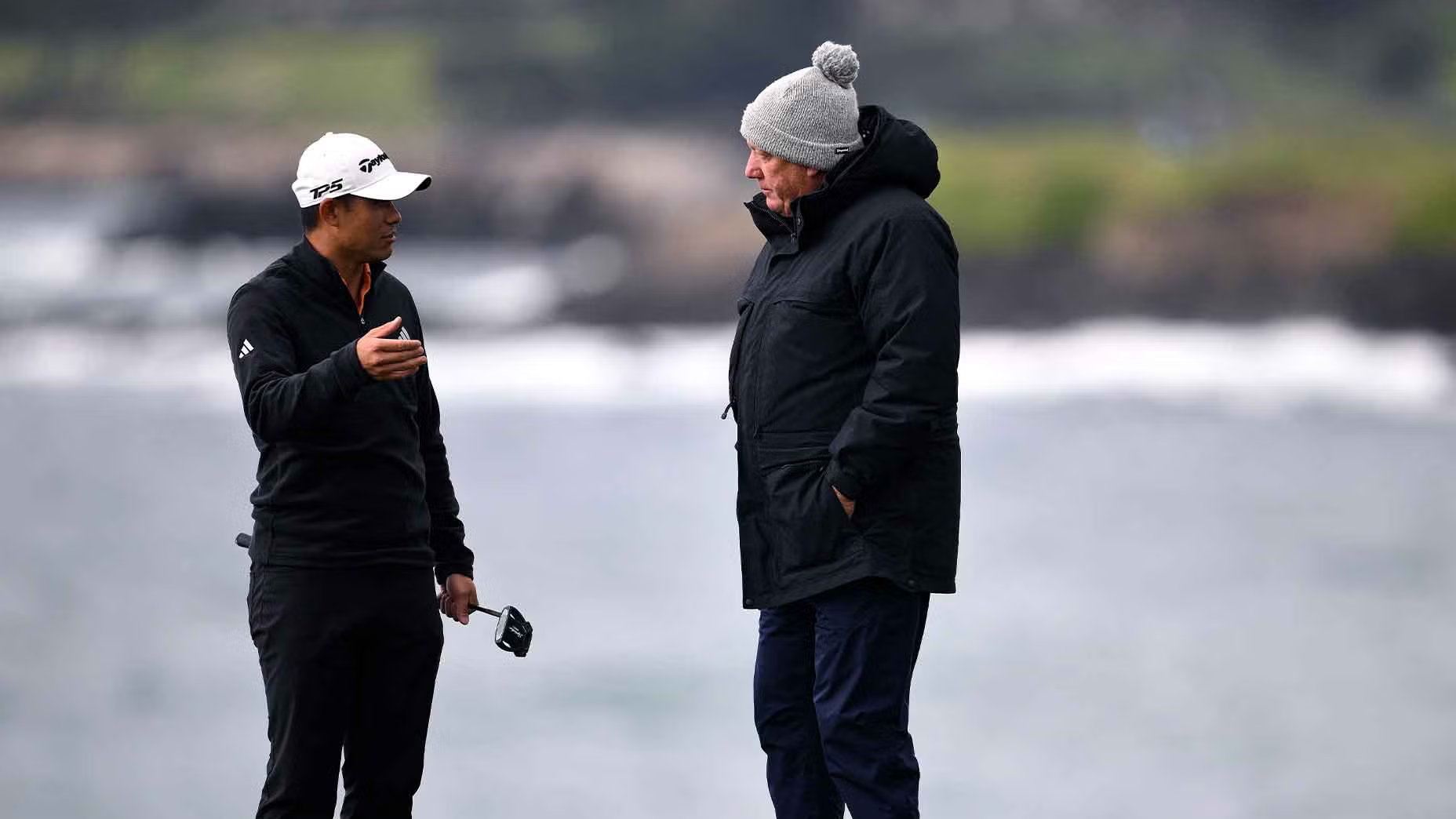
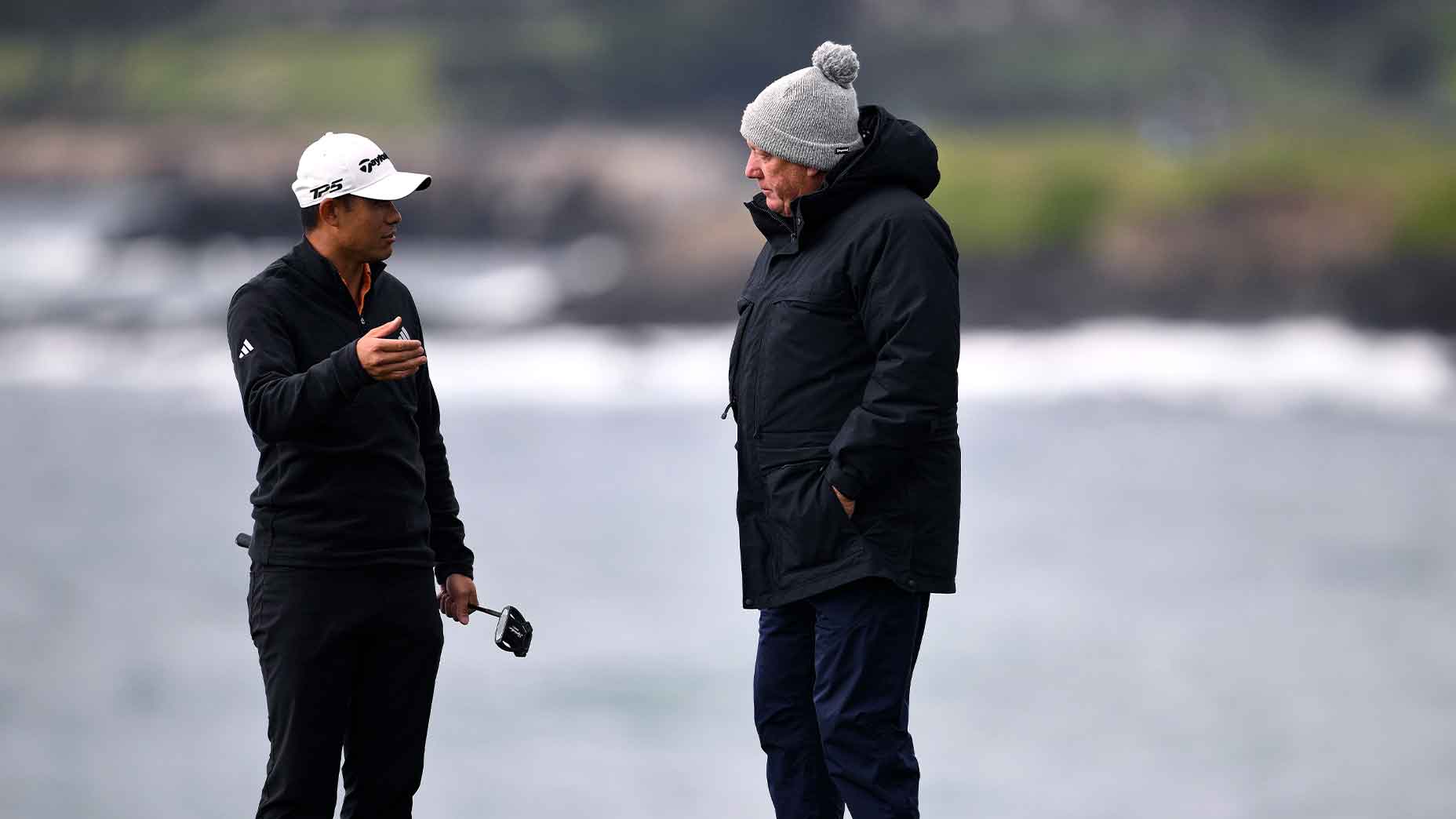
“I knew what I had to do,” Morikawa said later. “I think I paced all the way to the ocean, like, 10 times at least. I just had to keep moving. You know, it’s weird to say, but these long breaks. I mean, it’s just not good for anyone to stand still.”
This quote perfectly captures the mental games Pebble plays. Even in moments of delay, the course itself, its history, its challenges, seep into a player’s psyche. Standing over that second shot, knowing the ocean awaited any misstep, must have felt like an eternity. The fact that he had to carry “over the famed tree in the 18th fairway” to land safely on the edge of the green speaks volumes about the heroic nature of the shot required under pressure.
What makes Pebble special isn’t just the jaw-dropping scenery, but how that scenery is integrated into every strategic decision. The routing, particularly on the back nine, is a masterclass in using elevation changes and natural features to create compelling golf holes. The famous run of holes from 4 through 10, often considered the greatest stretch of holes in golf, continuously brings the ocean into play, each hole a unique challenge against the backdrop of crashing waves and dramatic cliffs. Even the inland holes, while offering a respite from the direct coastal wind, are meticulously crafted to engage and test every club in the bag, employing strategic bunkering and subtle green contours that demand thoughtful play.
The Pebble Beach Experience
For the golf architecture enthusiast, Pebble Beach is an open-air museum. It’s one of the few courses where you can truly feel the echoes of golf’s golden age of design while simultaneously experiencing the cutting edge of modern professional golf. It’s widely available for public play, though a stay at one of the Pebble Beach Resorts properties is largely required, and it’s an investment well worth making for any serious golfer. The walking experience, feeling the soft dampness of the fairways in the morning and the crisp ocean breeze as the day progresses, is something digital media cannot fully convey.
“When I first turned pro, I just looked too far ahead,” he said. “I think I’m gonna change that perspective and just enjoy this. Shoot, we’re at Pebble Beach right now, so I’m gonna enjoy this one.”
Morikawa’s parting words resonate deeply with me. It’s easy to get caught up in scores, rankings, and the minutiae of a round. But at a place like Pebble Beach, the true reward is in the experience itself. It’s about being present, absorbing the majesty of the surroundings, and appreciating the architectural genius that harmonized golf with one of nature’s most spectacular canvases. Before you go, be prepared for brisk winds, bring plenty of layers, and embrace the walk. It’s a journey you won’t soon forget, and perhaps, like Morikawa, you too might just find a moment of triumph on its iconic shores.
