

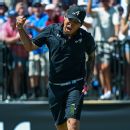

Morikawa’s Pebble Beach Victory Signals Return of a Player Who Finally Found His Swing—and His Peace
There’s a moment in every golfer’s career when something shifts. Not in the mechanics of the swing, necessarily, but in the soul of the player. I’ve watched it happen dozens of times in 35 years covering this tour—sometimes it comes after a major championship, sometimes after a humbling stretch of missed cuts and early exits. For Collin Morikawa at Pebble Beach on Sunday, it came wrapped in a simple, almost profound realization: “There’s so much to life, there’s so much to enjoy,” he said while announcing that he and his wife are expecting their first child this spring.
That’s not the sound of a player grinding through another tournament. That’s the sound of someone who’s remembered why he plays.
Breaking the Drought with Style
Make no mistake—this win matters. Morikawa hadn’t tasted victory in 28 months, a span that included 45 tournament starts since claiming the Zozo Championship in Japan back in October 2023. For a two-time major champion who’s been ranked in the world’s top 10 since turning pro, that’s the kind of drought that starts to gnaw at you. The golf media asks questions. The sponsors wonder. And worst of all, you start to wonder yourself.
What strikes me about this victory, though, is how he won it. He tied the tournament’s lowest 72-hole winning total at 22-under par (matching Brandt Snedeker’s 2015 mark), finishing at 266 strokes. That’s not a lucky win. That’s not a gift. That’s a golfer who played at an elite level when it mattered most, particularly down the stretch when Pebble Beach’s Pacific winds were doing their damnedest to make life miserable.
Having caddied for Tom Lehman back in the ’90s, I learned something that’s never left me: winning tournaments is about making one or two more crucial putts and shots than your competition. Morikawa made four crucial ones Sunday. The 30-foot birdie putt on the 15th. The 6-iron to 8 feet on the 16th. That spectacular 4-iron from 235 yards on the 18th—the one he had to start over the ocean wall and let the wind bring back to the green. And finally, two putts from the collar to seal it.
That’s execution under pressure, plain and simple.
The Mental Game Nobody Talks About
Here’s what I found most telling about this victory: Morikawa’s ability to stay mentally present during the 20-minute wait on the 18th fairway while Jacob Bridgeman worked on an impossible lie from the beach. “I walked down to the ocean and back about 10 times,” Morikawa said. “I tried to think about anything else other than golf. Thankfully, you had the nicest backdrop you could ask for, so that was very, very easy. For me, it was how do I stay loose, how do I stay warm and not just think about the shot.”
That’s not luck. That’s not even really discipline in the traditional sense. That’s a player who’s learned to trust himself without suffocating under the pressure of a moment. In my experience, the players who figure that out—who can separate the outcome from their self-worth—are the ones who end up winning multiple majors and competing at the highest levels for decades.
Compare Morikawa’s final-round 67 to what we saw from Akshay Bhatia, the 54-hole leader who shot 72 and fell three shots back. Bhatia made only two birdies over his final 29 holes. The pressure got him. Morikawa’s philosophy shift—playing for joy rather than technique—appears to have given him an edge his competitor simply didn’t have.
The Scheffler Show (That Didn’t Quite End the Way He Wanted)
Let’s talk about Scottie Scheffler for a moment, because his final round was nothing short of extraordinary, even in defeat. Starting eight shots back, he posted a 63—including three eagles, making him the first player in PGA Tour history to record three eagles in a single round at Pebble Beach. He shot 7-under through just seven holes. At one point, if you weren’t watching Morikawa, you probably thought Scheffler had pulled off the biggest comeback in the tournament’s history.
He didn’t, but he nearly did. That tells you everything about the current landscape of professional golf: even a historic round of 63 with three eagles might not be enough. The bar has simply gotten higher. Morikawa understood that Sunday and stepped up to meet it.
What’s equally impressive is that Scheffler’s run extended his streak to 18 consecutive PGA Tour starts with a top-10 finish. That’s not a fluke. That’s a player locked into a level of consistency most of us will never comprehend.
What This Means Moving Forward
Morikawa’s leap to No. 5 in the world rankings isn’t surprising. What matters more is the trajectory. A player who’s moved away from obsessing over swing mechanics, who’s found joy in the game again, and who’s about to become a father—that’s a player with perspective. And perspective, in my experience, is what separates good players from great ones over the long haul.
This wasn’t just a tournament victory. It was a declaration that Collin Morikawa is back, and more importantly, that he’s found a way to be back while actually enjoying the journey. Given what he’s capable of when he’s both sharp and at peace with himself, we might be looking at a window where we see more weeks like Pebble Beach than droughts like the last 28 months.
That’s worth keeping an eye on.
