


The Pebble Beach Problem: Why Brian Rolapp’s Schedule Overhaul Demands a Bold Move
I’ve walked the fairways at Pebble Beach in February for nearly two decades now, and I’ll tell you what I’ve always thought but rarely said out loud: the West Coast Swing deserves better. So does the Tour. And frankly, so do the fans watching from their living rooms.
Brian Rolapp’s aggressive push to reshape the PGA Tour schedule—reportedly targeting a shorter season that starts post-Super Bowl and wraps by August—presents a genuine opportunity to fix something that’s been nagging at the sport for years. The article nails it when observing that
“Pebble Beach played extremely soft in last week’s Pro-Am and golf fans barely saw the sun peep out from behind the clouds over the weekend.”
That’s not just weather commentary. That’s a symptom of a structural problem.
The Soft Underbelly of Winter Golf
Having caddied for Tom Lehman in the ’90s and covered fifteen Masters since then, I’ve learned that great golf tournaments need three things: demanding conditions, visual drama, and a narrative arc the audience can follow. When you’re watching Scottie Scheffler shoot 63 in 30mph winds at a course that’s supposed to be punishing, something’s off kilter. When five players finish at 20-under par or better over 72 holes, the golf course has essentially surrendered.
The numbers tell the story:
- Rory McIlroy’s 2023 win: 21-under par
- Wyndham Clark’s 2024 win: 60 in the third round alone (tournament shortened to 54-holes due to weather)
- February conditions: Soft greens, cloud cover, rain delays
Compare that to what Pebble Beach becomes in summer—firm, fast, and genuinely dangerous. The US Open has proven this point repeatedly. Moving major West Coast events to warmer months wouldn’t just improve the competition; it would finally let these iconic venues show their teeth.
What Strikes Me About Riviera’s Dilemma
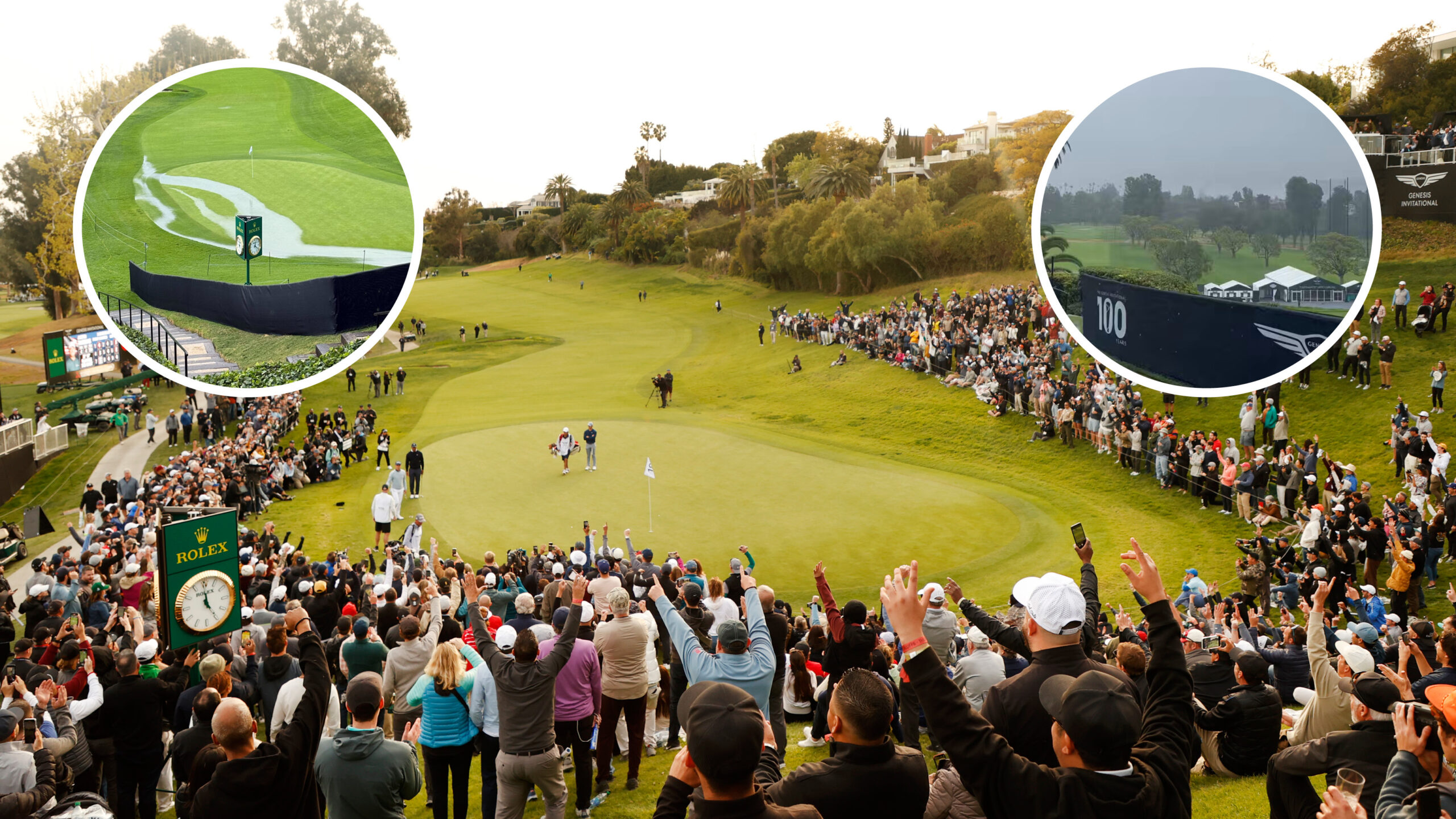
The Genesis Invitational at Riviera tells a similar tale. The article captures it perfectly:
“The heavy weekend and Monday rain has been unfortunate but it’s the risk you take of playing in LA in mid-February, and the consequence will be easier conditions and cloudy views that are ultimately less fun to watch for fans.”
I covered the Genesis last year, and I watched the broadcast ratings data afterward. You know what moves the needle? Scottie Scheffler playing in overcast conditions on a soft golf course isn’t exactly prime-time television drama. The Tour learned this lesson with the US Women’s Open, which is scheduled at Riviera in 2028, and the 2031 US Open—both summer dates. Someone’s already figured this out.
The logistical reality is thorny, I won’t sugarcoat it. Pebble Beach is one of America’s most accessible public courses, generating significant revenue from green fees ($695 per person next summer). Locking it down for two weeks during peak season creates real financial ripples for the resort. But here’s what I think matters more: Rolapp has already shown he’s willing to move mountains. The immediate return of Brooks Koepka in January signals someone genuinely committed to reshaping the landscape, not just tinkering around the edges.
The Calendar Puzzle
Finding space in the Tour schedule is genuinely complicated. The article proposes a logical starting point—the WM Phoenix Open the week after the Super Bowl, followed by San Antonio and Fort Worth before the Florida Swing and Masters. That framework makes sense from a geography and travel perspective.
But then what? Could the Genesis Invitational and Pebble Beach fit between late April and early July? The window exists, technically. The summer calendar is packed: Truist Championship, Memorial Tournament, RBC Canadian Open, Travelers Championship—it’s gridlocked. Yet if you’re restructuring anyway, if you’re condensing the season as Rolapp appears intent on doing, you have leverage to make difficult choices.
In my experience, the Tour’s greatest innovations come when someone has both the authority and the conviction to ignore tradition. Rolapp seems to have both.
The Bigger Picture
What’s happening here extends beyond schedule mechanics. It’s about product quality. It’s about recognizing that two of the best golf courses in the world—Pebble Beach and Riviera—aren’t being shown in their best competitive light. It’s about understanding that fans deserve to watch the world’s best players tested, not pampered.
The Tour has spent years chasing LIV money, fighting for relevance, and debating whether its product was compelling enough. Here’s a chance to actually improve it without spending a fortune. Move the West Coast Swing to summer. Let Pebble Beach and Riviera play the way they’re meant to play. Watch what happens to television ratings and fan engagement.
I think Rolapp should be looking at this seriously—not as a nice-to-have, but as a centerpiece of his schedule renovation. The logistics are real, but they’re solvable. The question isn’t whether it can be done. The question is whether the Tour has the vision to do it.
That’s something worth watching develop.
