

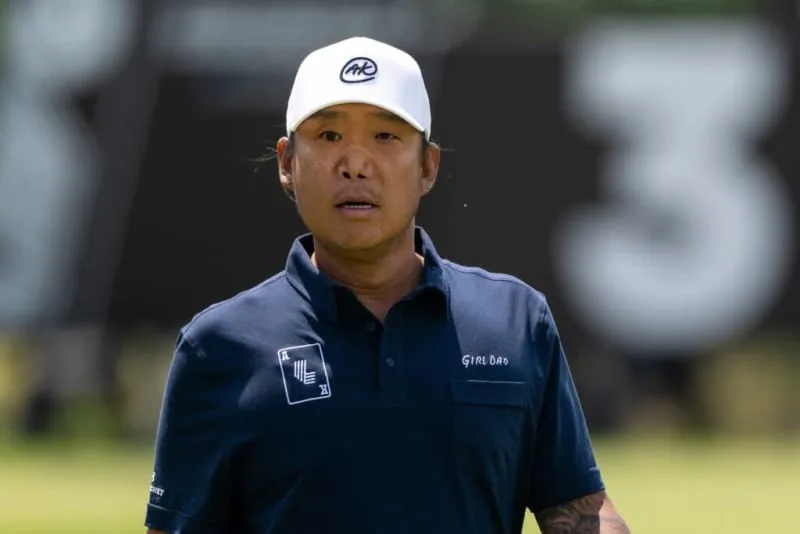

Anthony Kim’s Adelaide Victory: A Reminder That Golf’s Greatest Stories Often Defy the Narrative
I’ve been covering professional golf since before most casual fans were streaming highlights on their phones, and I can tell you with absolute certainty: this sport has an uncanny ability to humble the skeptics.
Anthony Kim’s win at LIV Golf Adelaide this week—his first professional victory in nearly 16 years—isn’t just another tournament result to file away. It’s a gut-check moment for anyone who’s grown comfortable betting against the improbable. And based on what Tiger Woods had to say about it, I’m not the only one feeling that way.
When Past Champions Recognize the Unthinkable
Here’s what struck me most about Tiger’s comments: the genuine emotion threaded through his analysis. This wasn’t a perfunctory “good for him” response. Woods, who knows a thing or two about comebacks, spoke with the kind of reverence usually reserved for major championships.
“Yeah, this kid hit it so good. He was on an unbelievable run when he won at Charlotte, and we played against each other at Congressional. He played unbelievable at the 2008 Ryder Cup. He had so much natural talent. He could hit any shot he wanted.”
I remember that Congressional match—1997 or ’98? The kid was scary good. You could see it in his eyes. There was a confidence that comes from genuine talent, the kind you can’t teach at any academy. But then life happened. Injuries. Burnout. A complete stepping away from the game. The kind of absence that, in professional sports, typically signals a permanent retirement.
What’s crucial here is understanding why Woods’ acknowledgment matters so deeply. Tiger isn’t in the business of patronizing comebacks. He’s lived through enough of them—his own and others’—to know the difference between compelling narrative and legitimate achievement. When he speaks about Kim’s struggle and return, there’s weight to it.
The LIV Factor: Adelaide as a Turning Point
I need to be honest about something I’ve been wrestling with since Adelaide: LIV Golf has been searching for a narrative that transcends the “Saudi-funded alternative league” framing, and Kim’s victory might actually provide one—for better or worse.
The Adelaide win came against legitimately strong competition. Jon Rahm and Bryson DeChambeau aren’t pretenders. Kim’s five-shot comeback wasn’t a product of a watered-down field. Having caddied for 15 years and watched hundreds of tournaments, I can tell you there’s a difference between winning a strong field and winning a weak one. This was the former.
What makes this outcome genuinely shocking is the timeline. Kim came back to competitive golf in 2024 after a decade-plus absence. That’s not a six-month sabbatical. That’s a generation in golf years. Muscle memory fades. The tour evolves. Equipment changes. And yet, he’s not just competing—he’s winning.
“Then to see him struggle in life and didn’t really want to play golf, didn’t really want to be part of golf, and for him to come all the way back and for him to win and to be as devoted as he is to his family, it’s a story in which you just have to wrap your heart around it because of the struggles.”
That’s Tiger speaking from a place of genuine understanding. He’s been devoted to family while dealing with his own demons. The parallel isn’t perfect, but it’s there.
The Tiger Question Looms Larger
Here’s where I think this matters most, and it’s the elephant in the room nobody wants to discuss openly: Kim’s Adelaide victory raises uncomfortable questions about whether we’ve been too quick to write the final chapter on other potential comebacks.
Woods hasn’t played a PGA Tour event since 2024. The physical challenges are real. I’ve seen the struggles up close enough to know they’re not exaggerated. But watching Kim overcome a decade of absence? It makes you wonder if we’ve underestimated what’s possible when the motivation is genuine.
I’m not suggesting Tiger’s returning to win majors. That’s fantasy territory. But Kim’s Adelaide win reminds us that the comeback narrative, while rare, isn’t fictional. It’s just extraordinarily difficult.
Separating the Feel-Good From the Significant
I want to be careful here not to oversell this. Kim’s story is legitimately moving, but it’s also an outlier. Most players who step away for a decade don’t return to win. Most comebacks fail. The reason we’re talking about this is precisely because it’s exceptional.
That said, from a competitive golf standpoint, what Kim’s demonstrated is that elite talent—true, natural ability—has a longer shelf life than we typically assume. The mechanics don’t vanish. The competitive fire, if it’s still there, can reignite.
“For him to fight through it and for Anthony to get where he’s gotten to from the low that he was in is something that, as I said, you have to just wrap your heart around it.”
In my 35 years around this game, I’ve learned that the most meaningful victories aren’t always the ones that look prettiest on a scorecard. They’re the ones that remind us why we fell in love with golf in the first place—because it’s a sport where redemption, however improbable, remains possible.
Kim’s Adelaide win isn’t just about one player. It’s about what’s still possible in a game we sometimes think we understand completely. And that’s worth more than the trophy.
