

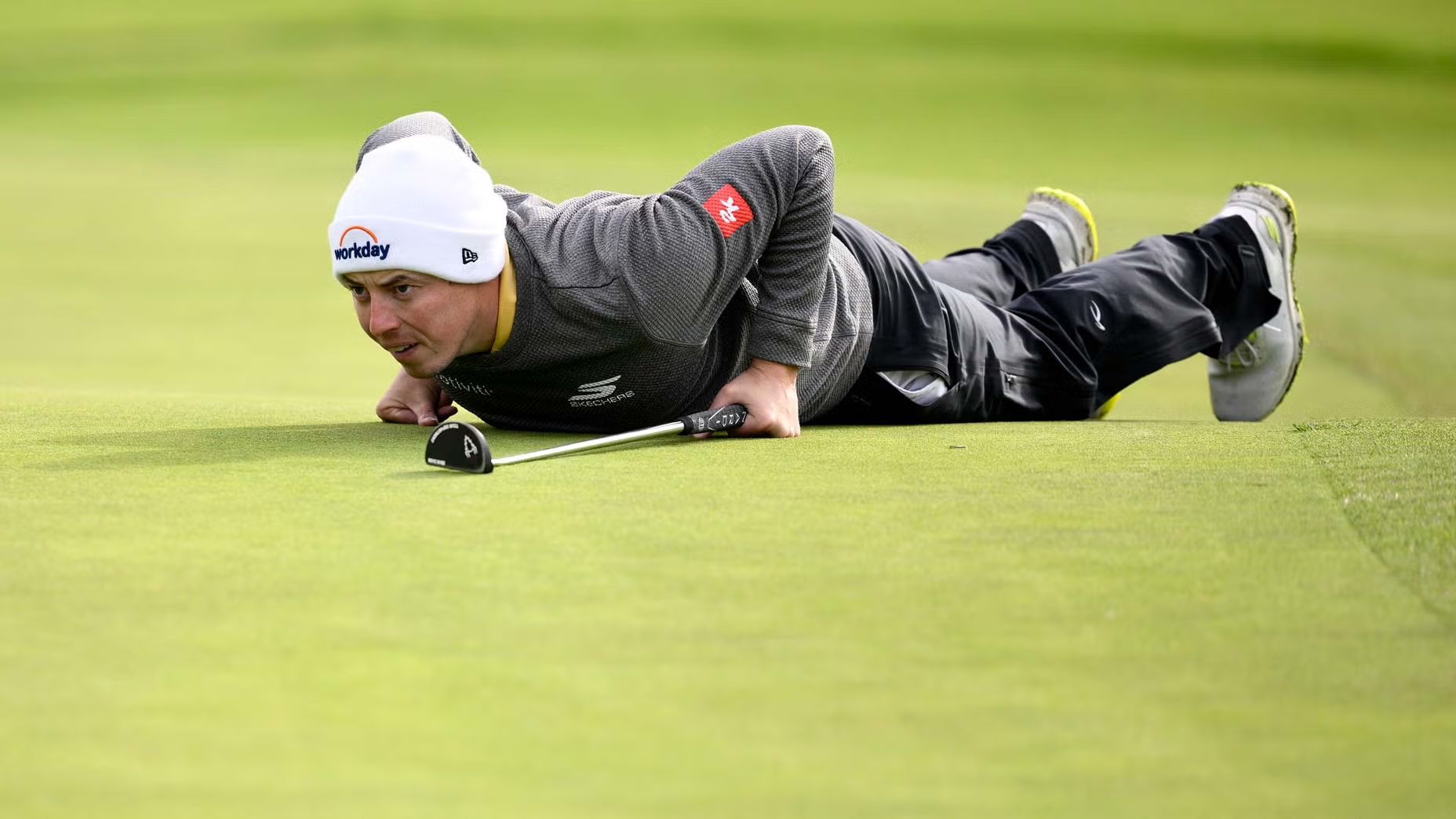

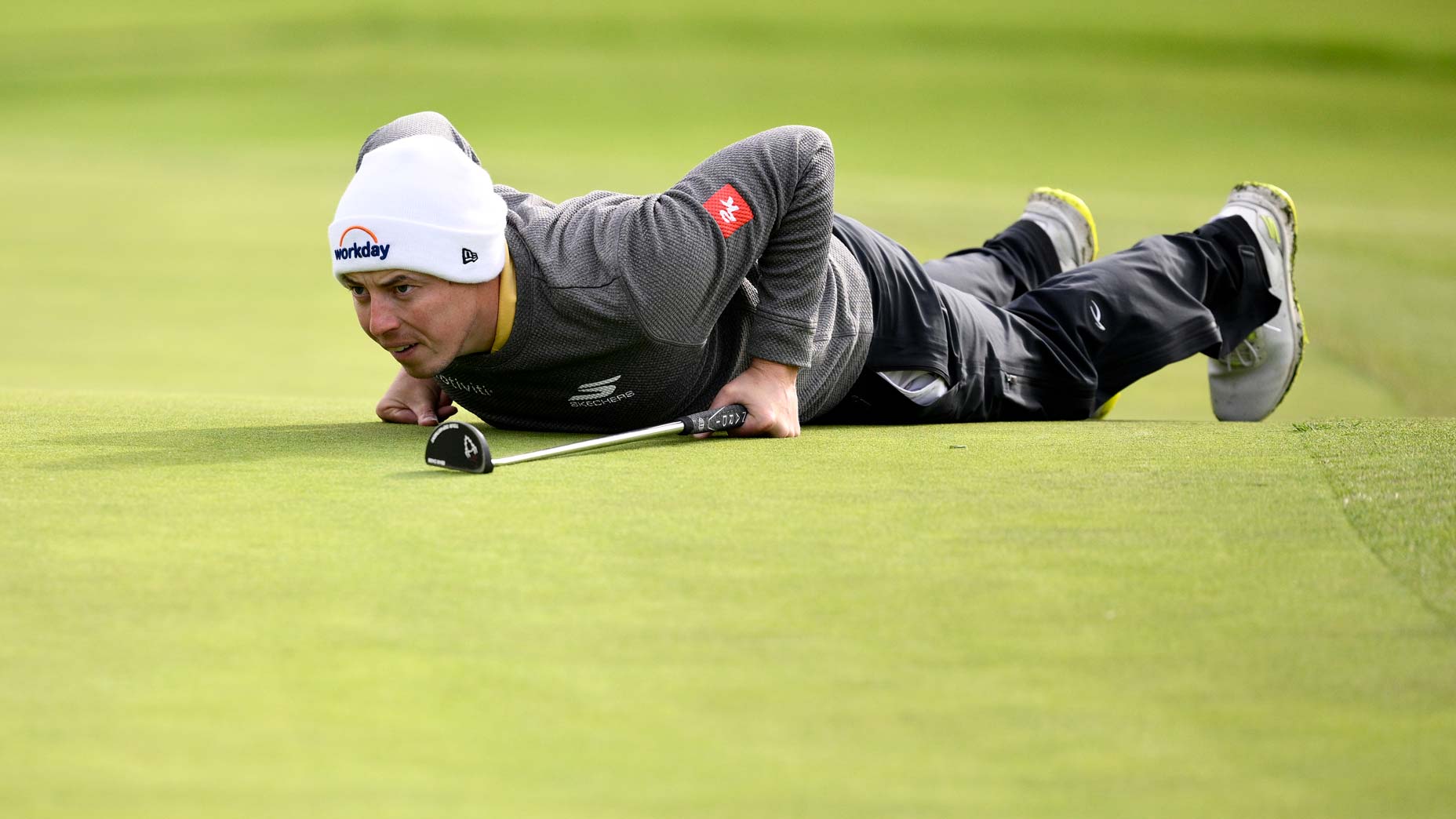
Hello, fellow Duffer! Sarah Chen here, your Golf Instruction Editor, and today we’re diving into the sometimes maddening, often exhilarating world of putting, specifically those tricky short putts. We’ve all been there – standing over a three-footer, heart pounding, only to watch it lip out. Even the pros struggle, as we recently saw at Riviera, a course notorious for its challenging greens.
Watching Xander Schauffele, Rory McIlroy, and even the tournament leader Jacob Bridgeman miss short putts at Riviera last week was a stark reminder that putting is often more mental and touch-based than it is about pure mechanics. Riviera’s unique poa annua greens, especially when soft, fast, and bumpy, amplify every challenge. The Tour average for four to eight feet is 69.2 percent; at Riviera, it drops to 65.6 percent. This shows just how much external factors can influence even the best in the world. So, don’t feel discouraged when your short putts aren’t falling; instead, let’s learn how to conquer them!
Understanding the “Riviera Effect” on Your Short Putts
What makes certain greens, like Riviera’s, so challenging? It’s a combination of factors. Poa annua greens, especially later in the day, develop what’s known as a “waffle-iron effect,” becoming bumpy. Add to that speed, and you have a recipe for unpredictability. As Rory McIlroy mentioned:
“They’re hard because you don’t want to hit [putts] too hard obviously, and then the softer you hit them, the more break they’re going to take early. There’s a lot of double breakers here, so my putt on 16 today was a great example. I had to hit it really soft. It was left to right early but the last half of the putt was right to left, but it went so far right early because I hit it so soft, it never had a chance to come back.”
This illustrates the delicate balance we amateurs face even on less challenging greens. If you hit it too soft, the putter face might not stay square through impact, and it won’t hold its line. If you hit it too firm, you risk blowing it past the hole. It’s a paradox: you need to hit it firmly enough to get it to the hole, but gently enough to encourage it to drop.
Key Principles for Conquering Short Putts
In my 15+ years of teaching, from tour players to weekend warriors, I’ve found that three core principles are paramount for short putts:
- **Commitment to Your Line:** Doubt is the enemy of the short putt. Once you’ve read the putt, trust your read and commit to hitting it on that line.
- **Pace Control:** This is the unsung hero of putting. On short putts, you want enough pace to get the ball to the back of the cup, but not so much that it rattles out.
- **Consistent Strike:** Hitting the ball consistently in the center of the putter face ensures the ball starts on your intended line.
Drills to Sharpen Your Short Putting
Let’s put these principles into action with some actionable drills you can use on the practice green (or even your living room carpet!).
1. The “Gate Drill” for Stroke Path & Face Angle
This is a classic for a reason. It teaches you to hit your intended line and keep the putter face square through impact.
How to do it: Place two golf balls (or tees) about 4-6 inches in front of your intended ball, creating a narrow “gate” just wide enough for your putter head to swing through without touching them. Focus on hitting putts from 3-5 feet.
Why it works: This drill provides immediate feedback. If you hit one of the balls/tees, your path was off, or your putter face wasn’t square. It forces you to make a smooth, controlled stroke directly towards your target.
2. The “Ladder Drill” for Pace Control
This drill is excellent for developing a feel for different distances, which translates directly to better pace control on short putts.
How to do it: Place several tees or markers at increasing distances from the hole: 2 feet, 4 feet, 6 feet, 8 feet. Start at 2 feet and hit 3 putts. If you make them all, move to 4 feet. If you miss one, stay at that distance until you make all three. Continue up the “ladder.”
Why it works: This drill trains your pace without overthinking. By focusing on making each putt, you naturally adjust your stroke length and acceleration to get the ball to the hole with the appropriate speed. You’ll develop a “feel” for how much force is needed for those crucial short putts.
3. The “One-Ball Challenge” for Pressure Simulation
This drill helps you manage the pressure of a short putt, similar to what pros face.
How to do it: Pick a 3-foot putt. You get one golf ball. You must make it. If you miss, start over from 2 feet. If you make it, try it again from 3 feet. Do this 5-10 times consecutively.
Why it works: Scottie Scheffler mentioned the mental challenge:
“…the greens are getting softer and they’re fast, which I think is a really good challenge. It’s kind of underrated how hard that is.”
This drill introduces a small amount of pressure, helping you practice staying focused and committed even when the stakes (however small) are raised. It builds confidence by repeatedly succeeding under a simulated “make-or-break” scenario. Jacob Bridgeman, Riviera’s leader, highlighted the importance of adjusting and managing frustration, saying:
“I had to make an adjustment mid round… I think I’ve accepted now that some of them are going to bump out. Like mine on the last hole, I hit a good putt, it just bumped left and it didn’t go in. I think in the past I would get kind of frustrated with that…”
This mental resilience is what the “One-Ball Challenge” helps cultivate. You learn to accept the occasional miss and not let it derail your next attempt.
Embrace the Challenge
Remember, putting is a game of feel, repetition, and confidence. Even the best golfers in the world struggle with short putts, especially on challenging greens. But with focused practice and understanding the nuances of pace and line, you can significantly improve your performance. Don’t get frustrated when a putt lips out; instead, learn from it, apply these drills, and commit to every stroke. I promise you’ll start seeing more of those crucial short putts disappear into the cup!
