

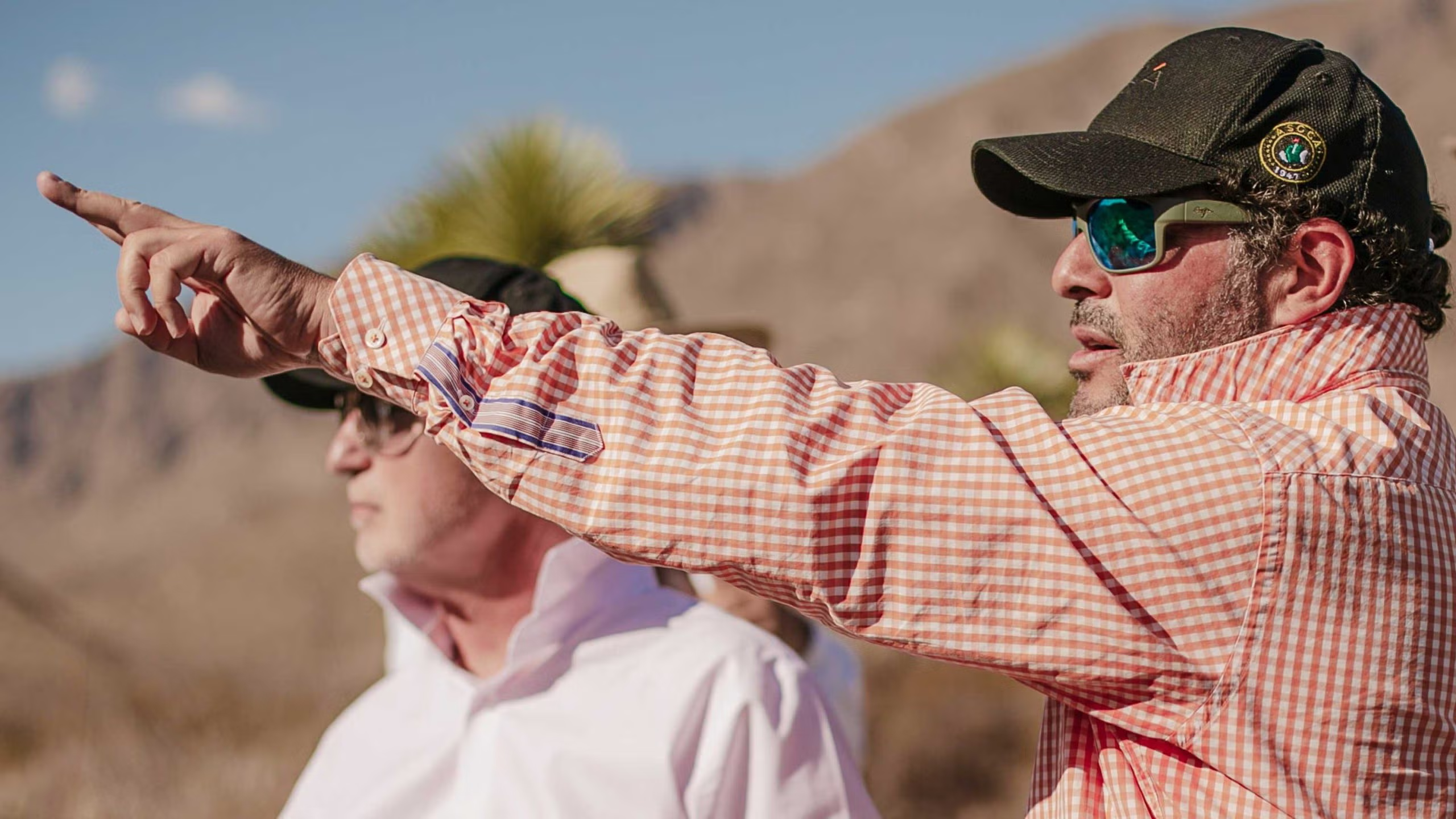

When Golf Becomes More Than a Game: Why Agustín Pizá’s Story Matters to the PGA Tour
I’ve spent 35 years watching professional golf from every conceivable angle—from the caddie’s perspective lugging clubs for Tom Lehman in the ’90s to my current perch observing tour dynamics from the press tent. In all that time, one thing I’ve learned is that golf’s real story often extends far beyond the fairways and leaderboards. The Agustín Pizá piece is a perfect example.
On the surface, it’s a travel anecdote—a golf course architect caught in Puerto Vallarta during civil unrest. But dig deeper, and you’re looking at something more important: the fragile ecosystem that supports professional golf’s international expansion, and why one designer’s steady presence in a troubled region actually matters to the future of the game.
The Architecture of Ambition
Let me be direct: Pizá represents a specific breed of golf professional that the modern tour desperately needs. He’s not a household name like a Nicklaus or a modern star player, but his fingerprints are increasingly visible across the professional landscape. The man designed holes for TGL, Tiger and Rory’s high-tech simulator league. He’s managing projects from the Coahuila Desert to Europe. And he’s deeply embedded in the infrastructure that makes places like Punta Mita viable as tour destinations.
"In industry circles, Pizá is regarded as a creative thinker inclined toward unconventional concepts."
This matters because the PGA Tour’s international footprint depends entirely on people like him. The VidantaWorld Mexico Open—the tour event that plays in the region Pizá has called his professional home—exists because someone had the vision and persistence to develop world-class facilities in Mexico. That’s not a given. It requires architects who understand both the artistic and commercial sides of the business.
What strikes me most about Pizá’s work is his willingness to take creative risks. The Butterfly Effect layout in Coahuila—a 24-hole design split into four independent six-hole loops—is the kind of experimental thinking that keeps golf from calcifying. Same with his TGL designs. Those cenote-inspired holes and "Temple" layouts that pros like Justin Thomas and Rickie Fowler navigate on television? That’s imagination at work in real time.
When Violence Threatens the Tour’s Supply Chain
Here’s what the casual golf fan might miss: international tour events are logistically fragile. They depend on stable partnerships with regional governments, consistent tourism flows, and professionals willing to invest their careers in places that face genuine risks. When cartel violence erupts in Puerto Vallarta—even localized, contained violence—it sends ripples through an entire ecosystem.
Pizá’s response to the crisis tells you everything you need to know about the character required to build golf infrastructure in complicated places. He didn’t panic. He didn’t condemn. Instead, he provided context:
"Are you going to be buying guns or drugs? If not, you’ll be fine."
That’s not dismissiveness. That’s the voice of someone who understands risk in proportion. In my three decades covering the tour, I’ve observed that the professionals who succeed at the international level aren’t the ones who shy away from challenges—they’re the ones who can distinguish between genuine danger and manufactured perception. Pizá clearly falls into that category.
The Real Test: Will Tourism Return?
The concerning part isn’t the violence itself—tragic as it was—but the perception damage. Tourism drives everything in Puerto Vallarta. The metropolitan area of roughly 500,000 people relies on visitor spending to fuel employment, and golf is a significant piece of that engine. When images of burning buses and military clashes flood international news feeds, it takes time for the narrative to reset.
What gave me confidence, though, was the small detail buried near the end of the article. By Tuesday, when restrictions lifted and the airport reopened, the Marina Vallarta Golf Club had already processed 200 rounds and was handing out free margaritas. That’s not just resilience—that’s institutional memory. Those workers knew the cycle. They understood that short-term crises historically don’t derail long-term tourism patterns in this region.
"I’ll be back in Puerto Vallarta in three weeks. I can’t wait."
Pizá’s commitment to return, and his staff’s decision to show up at the office despite optional closures, signals something important. The golf community in that region hasn’t lost faith in its future. In my experience, that matters more than any government press release.
Why This Belongs in Golf Coverage
Some editorial voices might argue this story exists outside golf’s lane—that it’s geopolitics, not golf news. I respectfully disagree. The professional golf tour’s evolution toward truly international competition depends on people like Pizá maintaining operations in places like Mexico. The VidantaWorld Mexico Open isn’t a charity event; it’s a legitimate tour stop that belongs to the schedule because the infrastructure exists to support it.
When that infrastructure faces pressure, it’s a golf story. When the architects and developers who built it demonstrate the commitment to stay put, that’s worth documenting.
The broader trend here is obvious to anyone watching: professional golf is increasingly global, and its success depends on individuals willing to work in complicated regions. Pizá isn’t just designing golf courses. He’s building proof of concept that golf can thrive in Mexico despite real challenges. That matters to the tour’s future in ways that won’t show up in this week’s leaderboard.
