


Hello golfers! Sarah Chen here, your instruction editor for The Daily Duffer. Today, I want to talk about something crucial to every golfer’s score: putting. It’s often said that “driving for show and putting for dough,” and there’s a lot of truth to that. But putting can be one of the most frustrating aspects of the game, especially when you feel like you’re doing everything right, yet the ball isn’t consistently finding the hole.
One common struggle I see with my students, from high-level amateurs to seasoned pros, is inconsistency in their putter’s face angle at impact. Minor deviations can send your ball offline, turning what should have been a simple par into a bogey, or worse. We strive for a putter that feels stable, naturally squares up, and allows us to focus on speed and line, not fighting the club itself.
The Search for a Balanced Putter
For years, many putter designs have focused on aesthetics or traditional shapes, sometimes overlooking the subtle dynamics of how the putter interacts with your stroke. This is where the concept of “Lie Angle Balance” (L.A.B.) putters comes into play, and it’s a game-changer for many.
L.A.B. Golf has been at the forefront of this innovation, creating putters that are designed to remain square to the arc of your putting stroke without you having to manipulate them. This natural stability reduces unwanted twisting and oscillation, allowing for a much purer roll. My students who’ve tried L.A.B. putters often describe a feeling of the putter “doing the work” for them, which frees up their mind to focus solely on reading the green and controlling distance.
Recently, L.A.B. Golf introduced some exciting new designs that are generating buzz on the PGA Tour: the Link 2.1 and 2.2 HS blades. What’s particularly interesting about these new models is how L.A.B. is addressing a very traditional preference with their cutting-edge balancing technology.

For a long time, L.A.B. putters, while incredibly effective, had a very distinct and sometimes unconventional look. This is where player preference often comes into play. Many golfers, myself included, have a soft spot for the classic, clean look of a traditional blade putter. The good news? L.A.B. is now bringing their renowned Lie Angle Balance technology to these beloved traditional aesthetics.
“From any from any angle you look at it It looks a little funky,” Morrow said. “As soon as you put it down behind a ball and you look at it from address, beautiful.”
This quote perfectly captures the essence of these new designs. While the engineering might allow for a departure from traditional shapes, L.A.B. is clearly listening to what golfers want to see behind the ball. The Link 2.1 and 2.2 HS models represent a significant step in offering that beloved traditional look with the L.A.B. performance advantage.
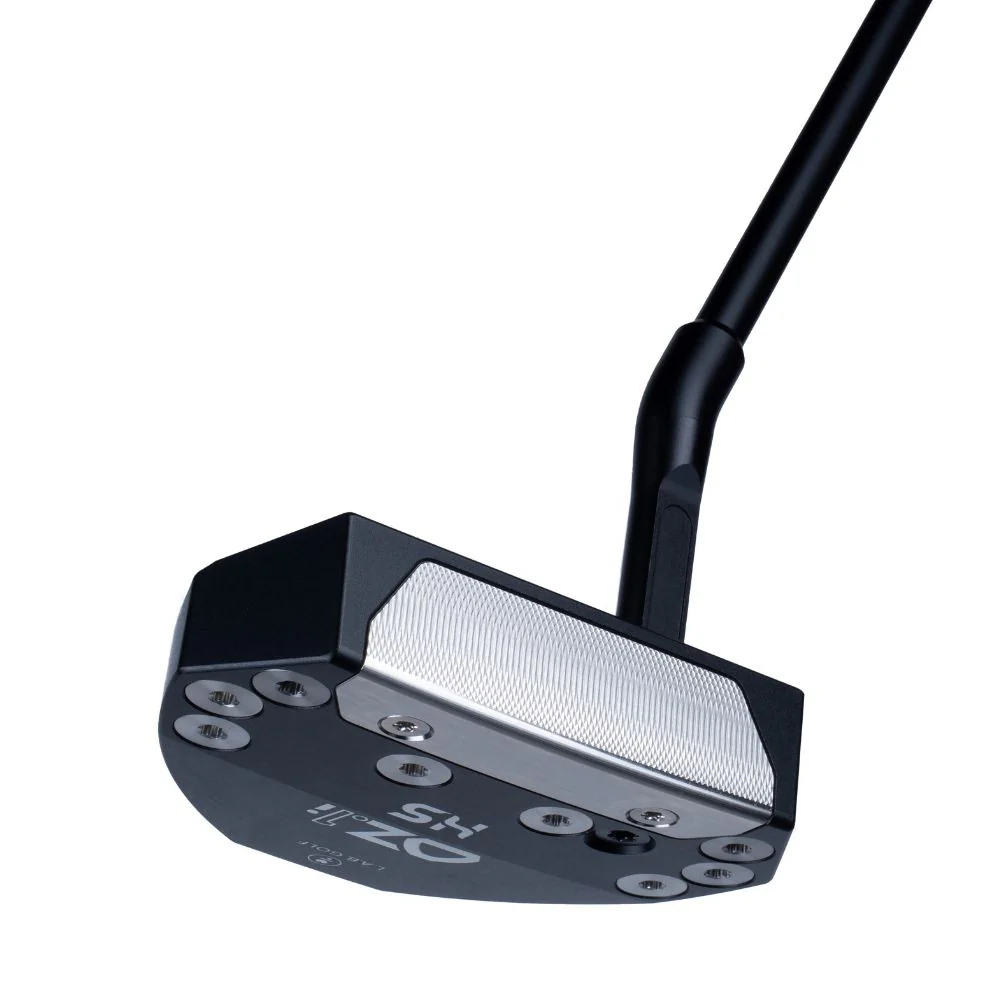
Most importantly, these putters have the most traditional shapes of any L.A.B. design to date, especially when viewed from address.
This is fantastic news for golfers who appreciate classic putter aesthetics but refuse to compromise on performance. It means you no longer have to choose between a putter that looks good and one that performs exceptionally well.
Golfers who prefer a heel-shafted look no longer have to compromise on performance. And because it’s a L.A.B., you can count on every putter being individually built and balanced. With OZ.1i HS, it’s not where the shaft goes. It’s where the ball goes.
This statement highlights the core philosophy – moving the focus back to the ball’s trajectory, which is exactly what we want as golfers!
Practice Drills for Putter Face Control
Even with the most balanced putter, improving your stroke and consistency is key. Here are a couple of drills you can use to refine your putter face control:
Drill 1: The Gate Drill
This is a classic for a reason! It immediately reveals if your putter face is square at impact.
How to do it:
- Find a flat section on the practice green.
- Place two tees (or coins) just wider than your putter head, creating a “gate” about 6-8 inches in front of your golf ball. The goal is for your putter to pass cleanly through this gate on its forward stroke.
- Place a third tee about 1-2 feet directly behind the ball, positioned so that your putter shaft must stay inside it on your backstroke. This helps promote an in-to-in path.
- Focus on keeping your putter face square to your target line as you swing through the gate. If you hit a tee, your putter face was likely open or closed.
Why it works: This drill provides immediate feedback. If your putter twists open or closed, you’ll hit a tee. The goal is to make 10 putts in a row without touching any tees. This trains your muscles to maintain a square clubface through impact.
Drill 2: Mirror and Alignment Stick Check
Visibility is crucial for understanding your setup and stroke.
How to do it:
- Get a putting mirror (even a small, inexpensive one will do).
- Place an alignment stick (or a wooden dowel rod) on the ground, pointing directly at your target.
- Position the putting mirror on the ground so that it’s perpendicular to the alignment stick and directly under your eyes.
- Set up to a golf ball. Use the mirror to check that your eyes are directly over the ball, your shoulders are square to the alignment stick, and most importantly, your putter face is square to the alignment stick both at address and at the top of your backstroke, as well as after impact.
Why it works: Seeing is believing. This drill helps you identify any subtle alignment issues that might be causing your putter face to open or close, allowing you to self-correct and build a more consistent setup and stroke. I tell my students that what they feel isn’t always what’s real, and visual feedback is invaluable.
Your Path to Better Putting
Whether you’re exploring new putter technology like the L.A.B. Link series or refining your stroke with your current gamer, remember that putting is a skill that responds incredibly well to dedicated, intelligent practice. The goal is always to simplify the stroke, reduce variables, and instill confidence.
Keep working on these drills, pay attention to your putter’s natural tendencies, and don’t be afraid to experiment with equipment that helps you achieve a more stable and balanced stroke. Anyone can improve their putting, and I’m here to help you find your path to more drained putts and lower scores. Happy putting!
