



As a golf instruction editor for The Daily Duffer, I often get asked about the latest trends on tour and how they might apply to the everyday golfer. Recently, one topic has been creating quite a buzz, not just on social media, but also in the minds of many recreational players: long putters and the art of anchoring. With players like Akshay Bhatia making headlines with his “broomstick” putter and vastly improved statistics, it’s understandable why golfers are curious.
The conversation around long putters isn’t new. For years, golfers have experimented with different putting styles and equipment to find an edge on the greens. What we’re seeing now with players like Bhatia simply highlights the ongoing quest for consistency and confidence in one of the most crucial parts of the game.
Understanding the “Anchoring” Debate
First, let’s clear up some confusion. The governing bodies outlawed anchoring in 2016. This means you cannot press the club into your body as a fixed point during your stroke. However, as the article mentions with Akshay Bhatia, there’s a nuanced line that some players are walking.
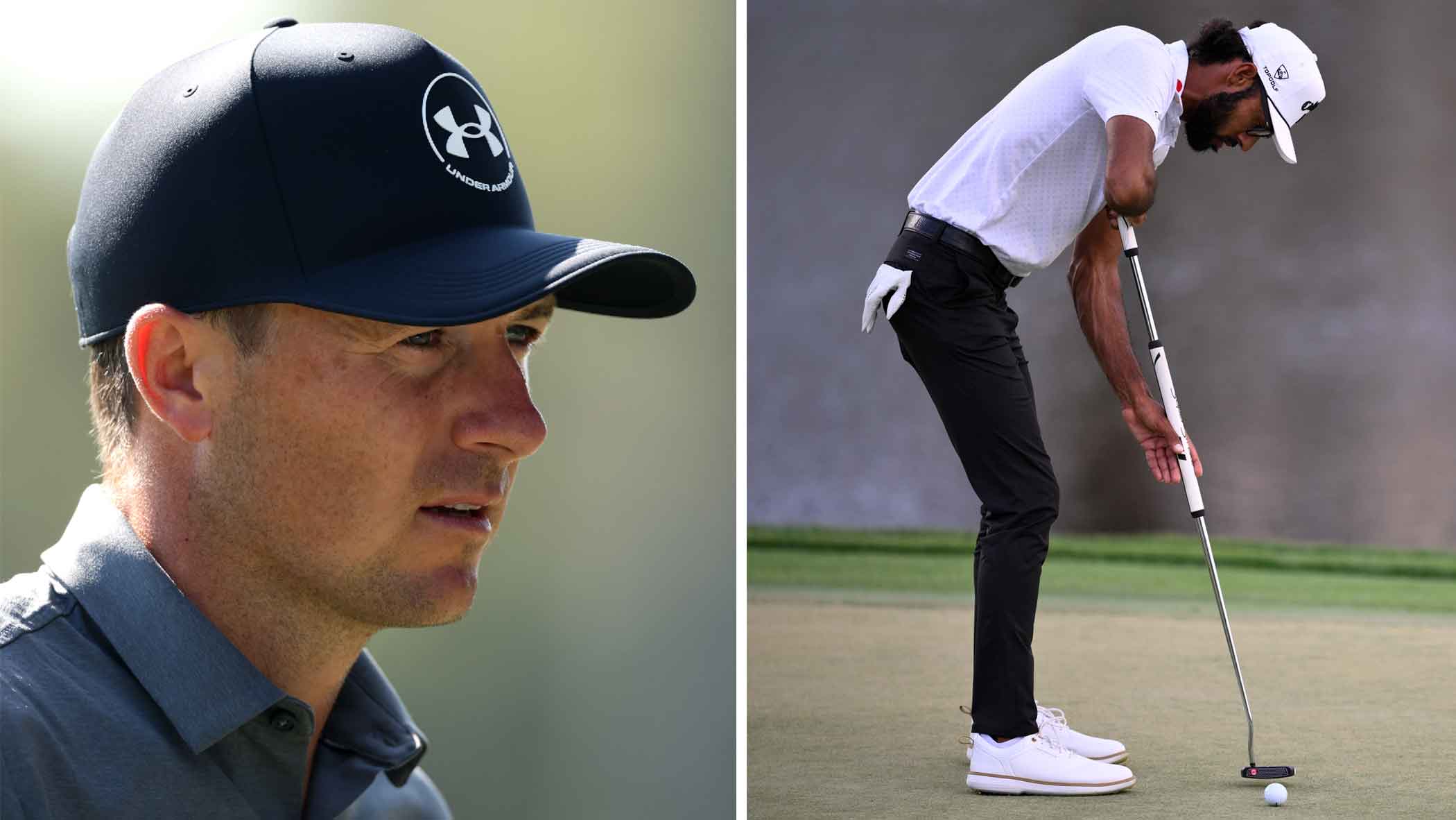
“Kay was referring to Akshay Bhatia, who won the Arnold Palmer Invitational last week with a 50-inch broomstick putter and an oh-so-close-to-anchoring technique in which he hovers the butt of his putter within a whisper of his chest; pressing the club into his chest would be anchoring, which was outlawed by the governing bodies in 2016, but Bhatia is not anchoring.”
The key here is that Bhatia is hovering the putter very close to his chest, but not making contact. My role, and your goal as a golfer, is to understand what’s legal and what’s effective for YOUR game. While tour pros might push the envelope, for us, it’s about finding a stroke that feels natural and repeatable.
Why the Long Putter Attraction?
So, why are players, both amateur and professional, drawn to long putters? Often, it comes down to stability and minimizing wrist action. If you struggle with the yips, an inconsistent stroke, or simply want to take your hands out of the putting equation, a longer putter can be appealing. The increased length often necessitates a more upright posture, which can lead to a more pendulum-like stroke, using the larger muscles of your shoulders and arms rather than the smaller, more twitchy muscles in your hands and wrists.
The article highlights Bhatia’s dramatic improvement:
“In the 2022-23 season, Bhatia finished 183rd in SG: Putting. In both 2024 and 2025, he finished among the top 40 in the category. This season, he’s currently ranked 12th, helped in part by his sensational week on the crispy surfaces at Bay Hill.”
This kind of statistical jump is a testament to the potential effectiveness of a significant equipment or technique change when it clicks. While you might not see the same leap on your local course, if you’re struggling on the greens, exploring alternatives is always a wise move.
Is a Long Putter for You? Finding Your Putting Style
As a PGA-certified instructor with over 15 years of experience, I always tell my students that there’s no one-size-fits-all in golf. What works for Akshay Bhatia or Jordan Spieth might not be the best fit for your unique swing and body mechanics. Jordan Spieth, for instance, prefers a more traditional approach:
“I would like the putter to be the shortest club in your bag, because it is the shortest club in my bag, and I do believe that it forces more skill. It uses your hands more, which makes you have to be more, kind of athletic and deal with the stuff that comes up a little bit more.”
Spieth’s perspective emphasizes skill and feel, which is absolutely valid. My aim is to help you find what gives you the most confidence and consistency. If you’re intrigued by the long putter concept, here are some things to consider:
Experimentation is Key: Before committing to a new putter, try different lengths and head styles. Many golf shops have demo models you can experiment with. Pay attention to your posture – does it feel more comfortable and stable?
Focus on a Pendulum Motion: Whether you use a standard or long putter, the goal is often a smooth pendulum stroke driven by your shoulders and arms, rather than excessive wrist movement. A longer putter can naturally encourage this by making it harder to manipulate the club with your hands.
Drills for a Stable Putting Stroke (Regardless of Putter Length)
Whether you’re exploring a broomstick or sticking with your trusty short putter, these drills will help you develop a more stable, consistent stroke:
1. Gate Drill for Path and Face Control:
- **Setup:** Place two tees slightly wider than your putter head, just in front of and behind your putter. This creates a “gate” for your putter to swing through.
- **Execution:** Practice putting through this gate. The goal is to avoid hitting either tee on your backswing or follow-through.
- **Why it works:** This drill immediately shows you if your putter path is inconsistent or if you’re manipulating the clubface. It encourages a straight back, straight through motion or a subtle arc, depending on your stroke preference. Start with short putts (3-5 feet) and gradually increase the distance as your consistency improves.
2. Two-Ball Drill for Shoulder Rotation:
- **Setup:** Place a golf ball where you would normally address your putt. Then, place a second golf ball about 6-8 inches directly behind your putter head.
- **Execution:** Without hitting the second ball, make your putting stroke.
- **Why it works:** This drill forces you to initiate your backswing by rotating your shoulders and keeping your hands quiet. If you “snap” your wrists or arms too early, you’ll hit the second ball. This promotes the desired pendulum motion, reducing unwanted hand and wrist action.
3. Split-Hand Drill for Connection:
- **Setup:** Take your putting grip, but split your hands apart on the grip. Place your dominant hand lower on the grip, and your non-dominant hand higher, leaving a space in between (like you’re shaking hands with the club).
- **Execution:** Make several putting strokes like this.
- **Why it works:** By splitting your hands, you immediately become more aware of how your shoulders and arms are working together. It reduces the ability to “flick” your wrists and encourages a more connected stroke, where your arms and shoulders move as a unit. This is especially helpful if you find yourself getting “handsy” in your stroke.
The Mental Game of Putting
Beyond mechanics, putting is often a mental game. As the article points out, the “optics” of certain techniques can draw criticism. However, your focus should always be on what helps YOU perform your best. As Michael Kim stated regarding Akshay Bhatia:
“It’s funny to me that Akshay anchoring is a thing. In person, it’s not that close. This is not a concern amongst the players.”
This highlights an important lesson: don’t let external opinions dictate your approach if you’re within the rules and finding success. Confidence on the greens is paramount, and if a certain setup or putter style gives you that confidence, then it’s a valuable tool.
Ultimately, whether you opt for a traditional putter or explore the world of long putters, the principles of good putting remain the same: consistent path, controlled clubface, and a repeatable stroke. With a little experimentation and dedicated practice using drills like these, you can unlock a more confident and effective putting stroke for your game!
