

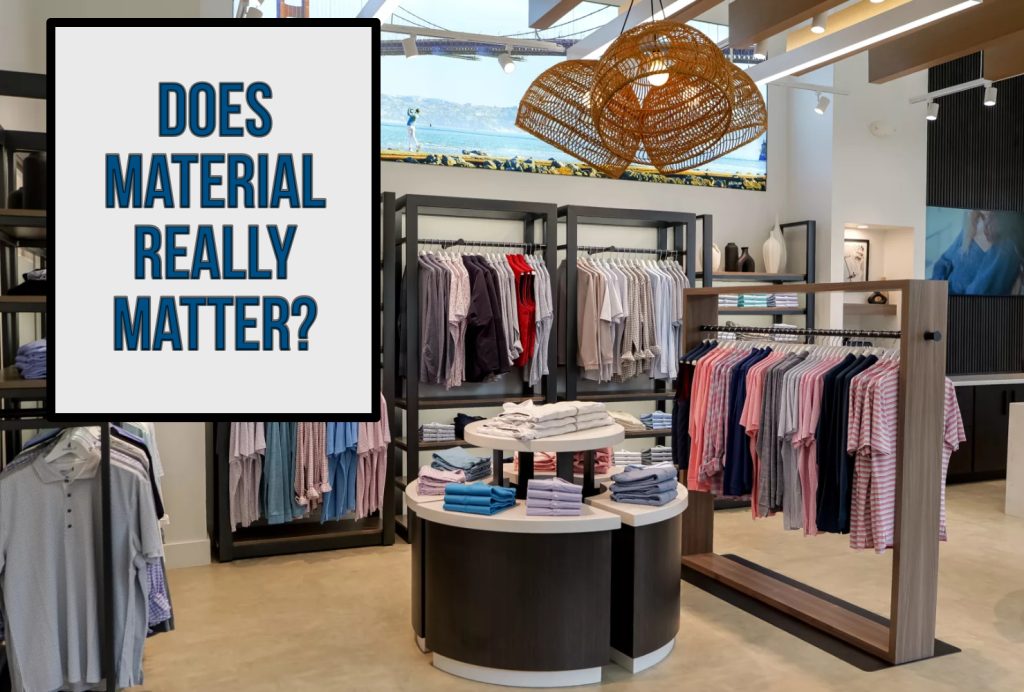

Alright, let’s talk shop. I just stumbled across some chatter about the latest episode of “Off Course,” where they had the Johnnie-O team on. Now, as the Equipment Editor here at The Daily Duffer, my antenna immediately goes up when topics like “material” and “design” are brought into a golf context. Usually, when we’re talking about performance gains, we’re dissecting movable weights, variable face thicknesses, or shaft profiles. Rarely does the conversation land squarely on golf apparel and its impact on your game – at least, not in the way drivers or irons do.
My job, for over a decade now as a certified club fitter, has been to strip away the marketing fluff and get down to brass tacks: does it actually perform? Does it show up on the launch monitor? Does it shave strokes or add yardage? I’ve fitted hundreds of golfers, from weekend warriors to aspiring pros, and one thing is clear: marginal gains are often the sum of many small improvements. But usually, those improvements come from the tools you swing, not necessarily the threads you wear. Or do they?
The “Off Course” podcast, episode 288, featuring Johnnie-O, seems to lean heavily into the aesthetics and comfort side of golf gear. They mention:
“Today, the team from an apparel favorite joins the show to discuss material, design and Johnnie-O on Tour.”
Okay, “material and design.” This is where it gets interesting, even for an equipment guy like me. While I’m not pulling up swing speed metrics on a new polo, I can certainly appreciate the role comfort and restriction (or lack thereof) play in a golf swing. I’ve seen golfers lose precious mph off their club head speed simply because their shirt is binding in the shoulders or their pants are too tight, restricting their lower body rotation. It’s not a direct ‘ball speed’ enhancer, but it can be a ‘swing speed killer’ if done wrong.
The conversation also delves into “Johnnie-O on Tour” and how material and design play a role in creation. This suggests that there’s a performance element they’re aiming for, even if it’s subtle. When we talk about tour players, every single detail is scrutinized. Trust me, I’ve seen their equipment vans – it’s an obsession. If a fabric could improve a player’s range of motion by even a fraction of a degree, or reduce fatigue over 18 holes, they’d be all over it.

I’ve tested countless prototype drivers, iron sets, and balls over the years. My focus is always on quantifiable performance: how does this new face insert affect ball speed across the face? Does altering the CG location really reduce spin for most players? With apparel, it’s a different kind of measurement. It’s less about a direct 3 mph ball speed gain and more about preventing a 3 mph *loss* due to discomfort or restriction. It’s about not thinking about your clothes during your swing, which allows you to focus purely on the mechanics.
My take? While Johnnie-O isn’t going to give you more ball speed or a tighter dispersion in the way a properly fitted driver might, the emphasis on materials and design is crucial for a different kind of performance. That performance manifests as unhindered movement, temperature regulation, and overall comfort – factors that undeniably influence a player’s ability to execute a consistent swing over 18 holes. A golfer who is constantly adjusting uncomfortable clothing, or feeling restricted in their backswing, is less likely to perform optimally. It’s a subtle advantage, but an advantage nonetheless.
“Talking Material, Design and some Fresh Collections”
This point from the podcast agenda resonates with my fitting philosophy. When I’m fitting a club, I look at everything that touches the golfer – grip size, shaft flex, club length, lie angle. Each component must work synergistically. The same applies to apparel. The “material” dictates how moisture is wicked away, how the fabric drapes, and its stretch characteristics. “Design” impacts seams, fit, and how the garment moves with the body. A well-designed garment should be an extension of the golfer, not a hindrance. I’ve had golfers come in for fittings complaining of swing issues, only to discover their polo was so ill-fitting it was causing them to unconsciously shorten their backswing.
So, does premium golf apparel, like what Johnnie-O offers, actually “work”? Yes, but not in the quantifiable, launch-monitor-friendly way of a new driver. It ‘works’ by removing obstacles to your natural swing, by enhancing comfort, and by allowing you to focus purely on the shot at hand. For the average golfer, this might mean simply feeling better throughout the round. For the competitive player, where every slight edge counts, the ergonomic design and advanced materials can prevent minor restrictions that, over 72 holes, could become significant.
My practical buying advice for golfers considering this type of gear: Don’t expect 10 extra yards because of your shirt. Do expect to feel more comfortable, less restricted, and potentially less fatigued late in your round. If budget is a concern, prioritize your clubs first, as the performance gains there are typically much larger and more direct. However, if you’ve got your equipment dialed in and you’re looking for that marginal gain in comfort and freedom of movement that helps you stay sharp from the first tee to the 18th green, then investing in well-designed golf apparel is a smart play. It’s not hype; it’s recognizing that the human element is just as critical as the equipment in your bag.
