

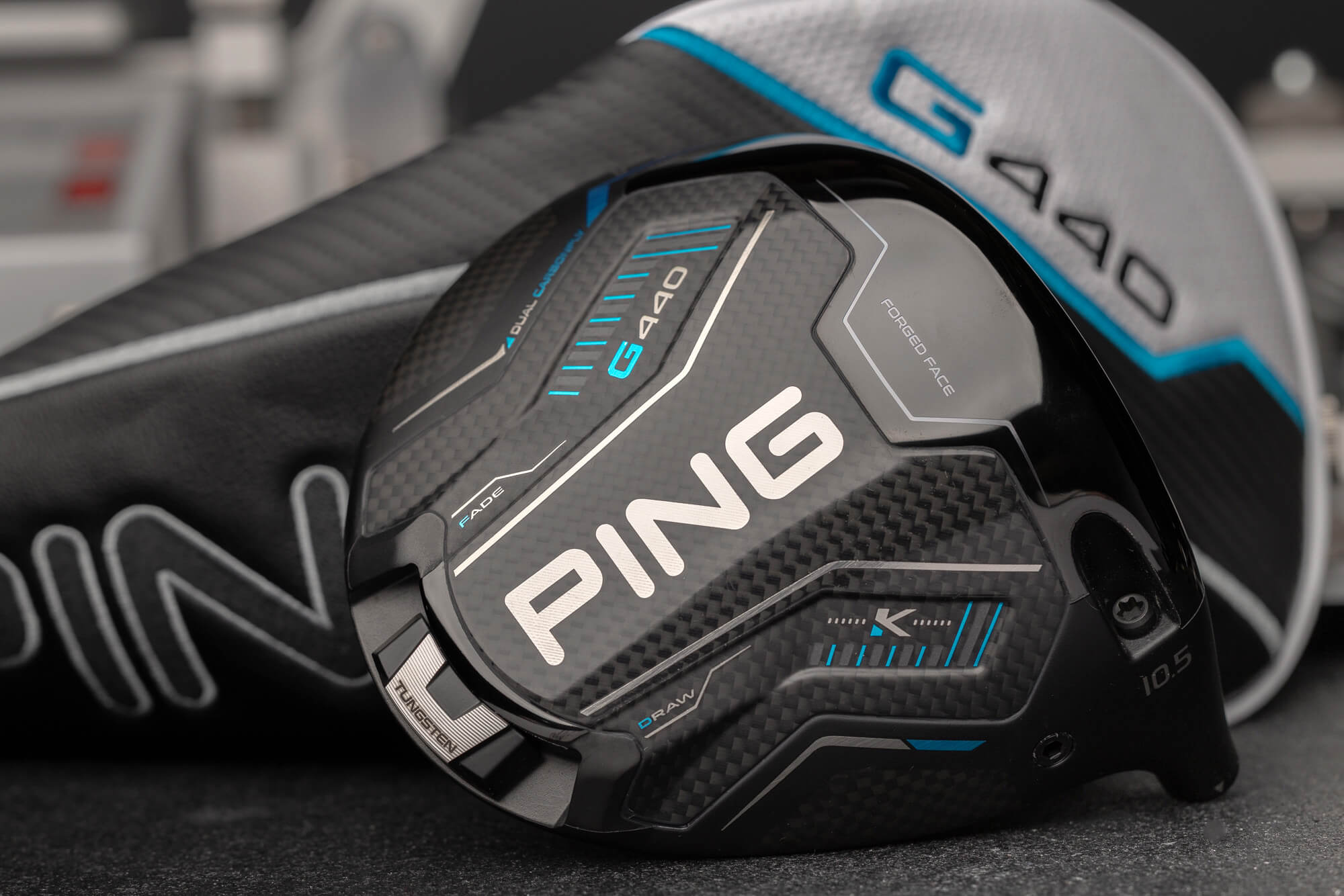

As the Equipment Editor for The Daily Duffer, I’ve seen countless drivers come through our testing bay. I’ve put them on the launch monitor, dissected their technology, and, more importantly, fit hundreds of golfers to them. So, when a driver family, especially one as prominent as PING’s G430, holds its ground for multiple seasons, it genuinely catches my attention. The recent buzz around tour players finally transitioning from the G430 to the new G440 platform got me thinking: is it really time to upgrade, or is the G430 still a king in the bag?
Let’s not forget, the PING G430 Max 10K was crowned the Best Driver of the Year in 2024. That’s not just marketing fluff; that’s hard data from extensive testing. I’ve often said that forgiveness is king for the majority of amateur golfers, and the Max 10K delivered that in spades. My launch monitor sessions with the G430 family consistently showed impressive ball speed retention across the face, even on off-center strikes. That translates directly to more consistent carry distances and tighter dispersion for golfers of all skill levels.
“The broader PING G430 Driver lineup built a reputation for: Reliable ball speed retention, Strong forgiveness numbers, Consistent dispersion patterns.”
This isn’t just theory; it’s what I saw firsthand in fittings. A golfer could miss the sweet spot by a surprising margin, and the ball speed drop-off was minimal compared to many other drivers on the market. That high MOI (Moment of Inertia)—the resistance to twisting on off-center hits—was genuinely effective. The G430, especially the Max and the 10K, really set a benchmark for what a forgiving driver could be, without becoming unduly penal on ball speed for those who found the center more consistently.
The Tour Player Perspective: A Telling Sign
One of the most compelling pieces of evidence for the G430’s performance is its longevity in professional bags. Tour players, who are often chasing minuscule gains and are paid to play the newest gear, held onto the G430 for two to three seasons. That’s almost unheard of in today’s rapid equipment cycle. Keegan Bradley, Tony Finau, Sahith Theegala, Harris English – all top-tier players, all using the G430 LST for extended periods. This isn’t a coincidence; it’s because the club worked for them, delivering the specific launch, spin, and dispersion characteristics they needed to compete at the highest level.
| Player | G430 Model Used | Approx. Time Using G430 | Driver in the Bag Now |
|---|---|---|---|
| Keegan Bradley | PING G430 LST | ~2 years | PING G440K |
| Tony Finau | PING G430 LST | ~2.5 years | PING G440 LST |
| Sahith Theegala | PING G430 LST | ~3 years | PING G440K |
| Harris English | PING G430 LST | ~3 years | PING G440 LST |
| Daniel Berger | PING G430 LST | ~2 years | Still using G430 |
| Ben Griffin | PING G430 Max 10K | ~1–2 years | Still using G430 Max 10K |
“Seeing drivers remain in play for two to three seasons is relatively rare in today’s equipment cycle and highlights how successful the G430 design was for many players.”
The fact that a few, like Daniel Berger and Ben Griffin, are still bagging their G430s speaks volumes. For a pro, confidence in their driver is paramount. If the G430 provides that confidence through predictable ball flight and distance, there’s no incentive to switch until a new model offers a significant, measurable upgrade.
Breaking Down the G440 Data: Incremental Gains?
Now, let’s look at the new kid on the block, the PING G440. I’ve been eager to get these on the launch monitor and the data from 2026 Most Wanted testing provides a solid baseline.
| Driver | Overall Score | Accuracy | Distance | Forgiveness |
|---|---|---|---|---|
| PING G440 LST Driver | 8.8 | 8.4 | 9.0 | 9.1 |
| PING G440 MAX Driver | 8.8 | 9.1 | 8.6 | 8.6 |
| PING G440 K Driver | 8.7 | 8.9 | 9.0 | 8.1 |
| PING G440 SFT Driver | 8.6 | 9.2 | 8.0 | 8.8 |
What jumps out at me is the consistent performance across the G440 lineup. The G440 LST, for instance, rated 9.0 for distance and 9.1 for forgiveness. That’s a highly desirable combination for stronger, faster-swinging players. My own testing confirms that PING has a knack for balancing these attributes in their LST models, maintaining a lower spin profile without sacrificing too much stability on miss-hits. The G440 K, another model seeing tour play, also hit a 9.0 in distance, albeit with slightly less forgiveness than the LST. This suggests PING might be leaning into specific performance profiles more distinctly with each head.
However, the crucial question for golfers bagging a G430 is: do these numbers — 8.8 overall, ~9.0 for distance/forgiveness — represent a significant enough leap to warrant an upgrade? Based purely on overall scores, it looks like a solid evolutionary step rather than a revolutionary one. Most golfers, especially those with average swing speeds, won’t see a 10-yard gain overnight just by switching generations. The improvements are often found in finer details: perhaps a marginal increase in ball speed on one particular quadrant of the face, or a slightly tighter spin window at a specific launch angle. These are gains that only a precise fitting session would uncover.
The Smart Upgrade Path: When to Pull the Trigger
My advice, as always, comes down to one word: fitting. If you’re a PING G430 owner contemplating the G440, please, for the love of consistent drives, do not buy off the rack. Go get fit. And critically, bring your G430 with you.
We’ll put your G430 head-to-head against the G440, with your chosen shaft, and look at the actual launch monitor data: ball speed, launch angle, spin rate, dispersion, and peak height. If the G440 consistently gives you 2-3 mph more ball speed, a tighter dispersion pattern, or a more optimized launch/spin window for your swing, then it’s absolutely worth considering. For many golfers, especially those already playing the G430 Max 10K, the gains might be too incremental to justify the expense.
| Driver | New Price | Typical Used Price |
|---|---|---|
| PING G440 MAX Driver | $619 | ~$399+ |
| PING G440 LST Driver | $619 | ~$400+ |
| PING G440 K Driver | $649 | ~$550+ |
| PING G430 Driver | ~$400–$450 (remaining new stock) | ~$300–$400 |
Consider the pricing, too. A new G440 will set you back $619-$649. Your G430 could fetch $300-$400 on the used market. The delta, around $200-$300, needs to be justified by tangible, data-driven performance improvements. For some, those improvements will be there; for others, the G430 remains a high-performing club that doesn’t demand an immediate replacement. The value retention of PING drivers is excellent, so you do have a good asset in your G430 if you decide to upgrade. However, if the gains are minimal, say 1-2 yards and a slightly tighter grouping, is that worth the cost? Only your launch monitor data (and your wallet) can truly answer that.
The PING G430 drivers have earned their reputation as exceptional performers, and their long reign in tour bags is testament to that. The G440 generation is a strong successor, building on that foundation. But for the everyday golfer, the question isn’t about what the pros are doing, it’s about what the data says for *your* swing. Get fit, trust the numbers, and make an informed decision.
