


Hello, Daily Duffer readers! Sarah Chen here, and I’m thrilled to dive into a topic that directly impacts your consistency, distance, and overall enjoyment on the golf course: your equipment, specifically your golf shaft.
I’ve witnessed firsthand how a finely tuned shaft can transform a golfer’s game, from tour professionals craving that extra yard and tighter dispersion to weekend warriors looking for more control. It’s not just about swing technique; it’s also about how your clubs respond to your swing. Today, we’re going to explore Fujikura’s expanded Ventus TR line, featuring their VeloCore+ technology, and how understanding these shafts can help you unlock your best golf.
The Hidden Power of Your Shaft: VeloCore+ Explained
Think about your golf swing. It’s a dynamic, powerful motion that puts immense stress on your shaft. Many golfers focus on the clubhead, and rightfully so, but the shaft is the engine that delivers that clubhead to the ball effectively. A common issue I see, even with high-level amateurs, is inconsistency due to unwanted shaft twisting during the swing. This can lead to off-center strikes and a loss of accuracy.
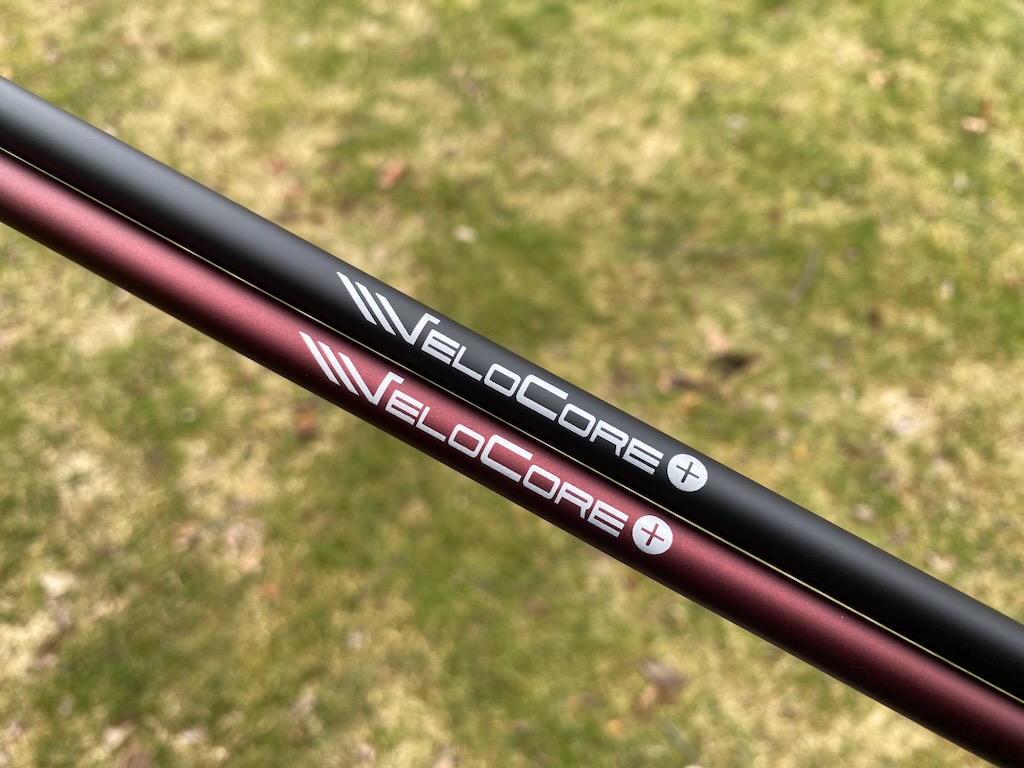
Fujikura addresses this with their VeloCore+ technology. It’s essentially a sophisticated multi-material core that runs throughout the entire shaft. It’s designed to minimize unwanted twisting, especially during transition and impact. The result? A more stable clubhead presentation at impact, leading to better contact and often, more speed.
“The moment we started testing and monitoring the performance data, we saw notable improvements across the board — a more consistent strike pattern, better centeredness of contact and, for many players, greater clubhead and ball speed. We’ve kept what golfers already love about Black and Red, but taken the performance to a new level.” -TJ Spidle
This quote from TJ Spidle perfectly encapsulates why technologies like VeloCore+ are so crucial. When you have better control over the clubface, you naturally hit the sweet spot more often. And as I tell my students, consistent sweet spot contact is the holy grail for both distance and accuracy.
Meet the Ventus TR Family: Black, Red, and Blue
Fujikura has completed their Ventus TR lineup, now offering three distinct profiles to match various swing characteristics and desired ball flights. Understanding these differences is key to finding the right fit for your game.
Ventus TR Black: For the Aggressive Swinger
If you’re a golfer with a high swing speed who tends to generate a lot of spin or launch the ball too high, the Ventus TR Black might be your answer. This shaft is engineered for low launch and low spin.
It’s built with an ultra-stiff handle section, a stiff mid, and an ultra-stiff tip section. This incredible stiffness is designed to provide maximum stability, especially for players who load the shaft aggressively during the downswing. The spread tow carbon fiber fabric, wrapped near the grip, reinforces this handle section, offering even more control.


Ventus TR Red: The Mid-Launch Workhorse
The Ventus TR Red offers a different feel, tailored for golfers looking for a mid/high launch with mid/low spin. It achieves this balance with a softer tip section, which allows for a bit more “kick” through impact, but maintains an ultra-stiff handle and stiff mid-section for stability.
This design is fantastic for players who might need a little help getting the ball up in the air without sacrificing control. It provides a more responsive feel while still benefiting from that VeloCore+ stability in the transition. In my experience, many golfers find this profile offers an excellent blend of feel and performance.


And let’s not forget the original Ventus TR Blue, which provides a mid-launch, mid-spin option – a fantastic all-around performer for many players.

Why Custom Fitting is Non-Negotiable
You might be reading this and thinking, “Which one is for me?” And that’s exactly the question your local golf fitter is there to answer. While I can describe the characteristics, your unique swing dictates which shaft will perform best for you. Your golf swing is like a fingerprint – entirely yours.
“The new Ventus TR Black is the low-launch, low-spin model, while the Ventus TR Red is going to be more mid/high launch with mid/low spin. Both shafts are built using spread tow carbon fiber fabric, like the originals, that is wrapped up near the grip area on both shafts.”
This explains the engineering, but a fitter translates that engineering into real-world performance for *your* swing. They’ll measure your swing speed, launch angle, spin rates, and dispersion with different shafts, helping you find the perfect match.
Actionable Drills to Optimize Your Current Setup (and Prepare for a Fitting!)
Even if you’re not getting a new shaft tomorrow, understanding how your current shaft performs, and working on your center contact, can yield immediate benefits. These drills will help you optimize your contact, which is what these advanced shafts are designed to enhance.
Try This: The Face Tape Feedback Drill
This is a classic for a reason. Grab some face tape or even impact spray from your local pro shop. Apply it to your driver face before hitting balls. The tape will leave an impression of where you struck the ball. Hit 5-10 shots and then analyze the impact patterns. Are you consistently hitting off the heel, toe, high, or low? This instant feedback tells you a lot about your swing path and clubface control. The goal is to see as many impacts as possible in the center! This drill helps you internalize the feeling of a centered strike, which contributes directly to consistent speeds and ball flight.
Here’s a Drill: The “Slow-Motion Transition” Drill
One of the biggest culprits of shaft twisting is an overly aggressive or out-of-sync transition from backswing to downswing. VeloCore+ helps mitigate this, but good technique is always paramount. Take your normal setup with your driver.
- Make a full backswing, pausing briefly at the top.
- From this paused position, initiate your downswing slowly, focusing on getting your lower body to start the movement first. Feel how the club ‘lags’ behind.
- Gradually increase speed as you approach impact, maintaining the feeling of a smooth, connected transition.
You don’t need to hit balls with this. The purpose is to feel the sequence and reduce any sudden, jerky movements that can cause the shaft to twist excessively. Better control of your transition means the shaft can do its job more effectively.
One More: The “Controlled Finish” Drill
Believe it or not, a good finish helps your impact quality. If you’re struggling for balance or feeling out of control at the finish, chances are your impact wasn’t perfectly stable either. After making your swing, hold your finish position for a full three seconds. Your chest should be pointing at the target, your weight mostly on your lead foot, and your club should be resting comfortably behind your head. If you wobble or can’t hold it, it’s a sign your balance and swing mechanics weren’t fully in sync through impact. Practicing a balanced, controlled finish cultivates a more stable and powerful impact.
Your Path to Better Golf
Anyone can improve with proper instruction and the right tools. Understanding your equipment and how it interacts with your swing is a vital part of that equation. Technologies like Fujikura’s VeloCore+ are pushing the boundaries of what golf shafts can do for your game, offering unprecedented stability and control. But remember, the ultimate match is made on the launch monitor with a skilled fitter.
So, get out there, try these drills, pay attention to your equipment, and keep working on that swing. I know you’ll see the improvements you’re looking for!
