


As the Equipment Editor for The Daily Duffer, I’ve seen countless golf gadgets come and go. Every year brings a new wave of drivers promising 20 more yards and irons touting revolutionary feel, but very few truly deliver meaningful performance gains for the average golfer. One area where genuine innovation has drastically changed the game, however, is launch monitor technology. What was once the exclusive domain of touring pros and high-end fitters is now increasingly accessible, and that’s a good thing. Which brings us to Shot Scope’s latest announcement: their first-ever launch monitor, the LM1.
Shot Scope isn’t new to the game; they’ve built a solid reputation for GPS watches and performance tracking systems. This new foray into launch monitors, however, presents a different challenge. The market for affordable launch monitors has exploded, and separating the wheat from the chaff requires a keen eye for data and realistic expectations. So, does the LM1 bring something genuinely valuable to the table, or is it just more noise?
The Promise of Simplicity and Affordability
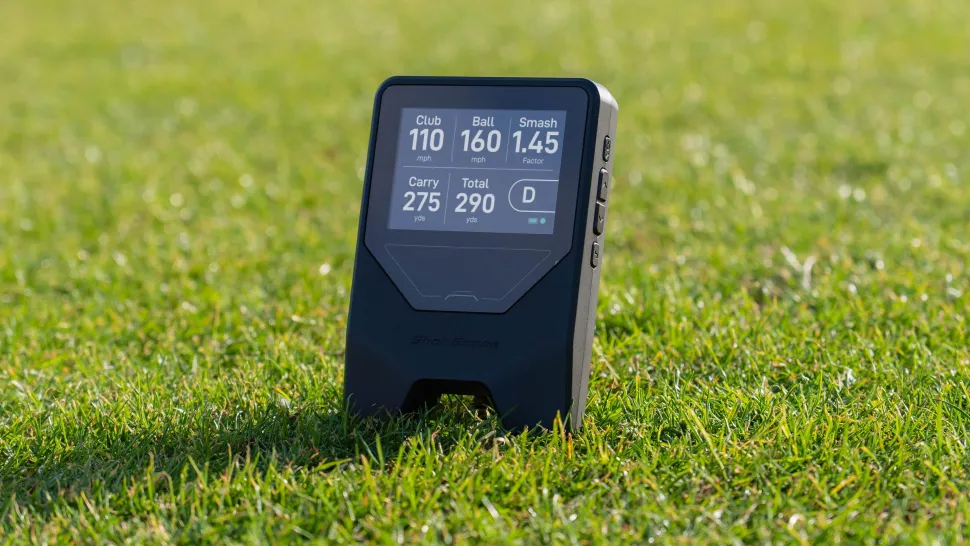
The core message from Shot Scope about the LM1 is clear: simplicity and affordability. The source article highlights:
“There’s no complicated setup or calibration process. You just place the unit around five feet behind the ball, select your club and start hitting. Data is displayed instantly on the built-in 3.5-inch colour screen…”
This “plug-and-play” ethos is critical for the target audience. After fitting hundreds of golfers, I can tell you that the biggest barrier to entry for many new technologies isn’t always the price, but the perception of complexity. If a golfer can’t easily integrate it into their practice routine, it’s going to collect dust in the garage.
At an RRP of just £199.99, the LM1 is firmly planted in the budget segment. For context, this is significantly less than competitors that offer similar core metrics. The question then becomes one of accuracy and consistency, especially when measuring crucial data points like ball speed and carry distance.
The Data That Matters (and Some That Doesn’t)
The LM1 tracks club speed, ball speed, smash factor, carry distance, and total distance. These are, without a doubt, the most important metrics for the vast majority of golfers looking to improve. Club speed tells you about your power potential. Ball speed and smash factor (ball speed divided by club speed) are direct indicators of how efficiently you’re transferring energy from the club to the ball – a critical measure of contact quality. And, of course, carry distance is king for understanding how far your shots actually fly on the course.
Shot Scope claims the LM1’s performance lines up with more established systems like Trackman and Toptracer for these five core metrics.
“Shot Scope says the LM1 has been put through six months of in-house testing, with performance lining up alongside more established systems such as Trackman and Toptracer across those five core metrics.”
This is a bold claim for a sub-£200 unit. While I don’t expect it to rival a Trackman 4 in terms of comprehensive data points (things like spin axis, launch angle, and angle of attack are vital for a deep dive, but are usually estimated in cheaper units), if it can accurately measure ball speed and carry, it’s a huge step forward. I’ve tested numerous budget launch monitors that consistently under-report ball speed or wildly miscalculate carry for anything but perfectly struck shots. Consistent, reliable data, even if fewer metrics, is always preferable to a flood of inconsistent numbers.

For a fitting perspective, while angle of attack and true spin rate (not just an estimate) are ideal for optimizing launch conditions, the LM1 provides enough data to help golfers understand their tendencies and make basic adjustments. For example, if your smash factor is consistently low (e.g., 1.35 with a driver when 1.50 is optimal), it tells you you’re not making center-face contact, prompting you to work on ball striking.
Beyond the Numbers: The Ecosystem Advantage
One of the most compelling aspects of the LM1 isn’t just the unit itself, but its integration with the existing Shot Scope ecosystem.
“Sessions can be synced to the app, allowing golfers to build up a lifetime history of their data with no subscription fees. It also means you can start to connect what you’re doing in practice with what happens on the course, all in one place.”
This is a significant value proposition. A common frustration with many entry-level launch monitors is that the data lives in isolation. By integrating practice session data with on-course performance tracking, golfers can gain a holistic view of their game. Did a dedicated speed training program actually translate to longer drives on the course? Did working on iron dispersion in the backyard lead to more greens in regulation? This kind of linked data is invaluable for real improvement and understanding cause and effect.

The added speed training mode is also a smart inclusion. Speed is the game’s new frontier, and combining a dedicated mode with trackable data in the app provides a structured way for golfers to work on increasing their clubhead speed effectively.
Who is the Shot Scope LM1 For?
Based on the specs and price point, the Shot Scope LM1 is clearly aimed at a specific segment of the golf market:
- The Golfer Curious About Their Numbers: If you’ve been practicing blindly, wondering how far you actually hit your 7-iron, this is a very accessible way to gain a baseline understanding.
- The Dedicated Practicer on a Budget: For those who regularly hit balls into a net at home or frequent the range, the LM1 offers valuable feedback to make practice more purposeful.
- Mid-to-High Handicappers: While advanced players might crave more detailed spin and launch data for fine-tuning, the core metrics offered by the LM1 are perfect for golfers focused on improving consistency, contact quality (smash factor), and gaining a better understanding of their actual distances.
- Existing Shot Scope Users: The seamless integration with the Shot Scope app makes it a no-brainer addon for anyone already invested in their performance tracking ecosystem.
It’s important to manage expectations. This isn’t a replacement for a professional fitting session with a high-end Trackman or GCQuad. Those systems provide the granular data necessary to truly dial in your equipment, accounting for subtle changes in launch, spin, and even horizontal dispersion (which the LM1 likely won’t accurately measure without additional sensors). However, for golfers primarily looking at ball speed, club speed, and carry distance, the LM1 could be a game-changer.
My advice, as always, is to prioritize accuracy. If Shot Scope’s claims of matching Trackman/Toptracer on those five core metrics hold true in independent testing, then the LM1 at £199.99 is an incredibly compelling option. It has the potential to elevate practice from mindless ball-hitting to data-driven improvement, and that’s a trend I’m always happy to see in golf technology.

