

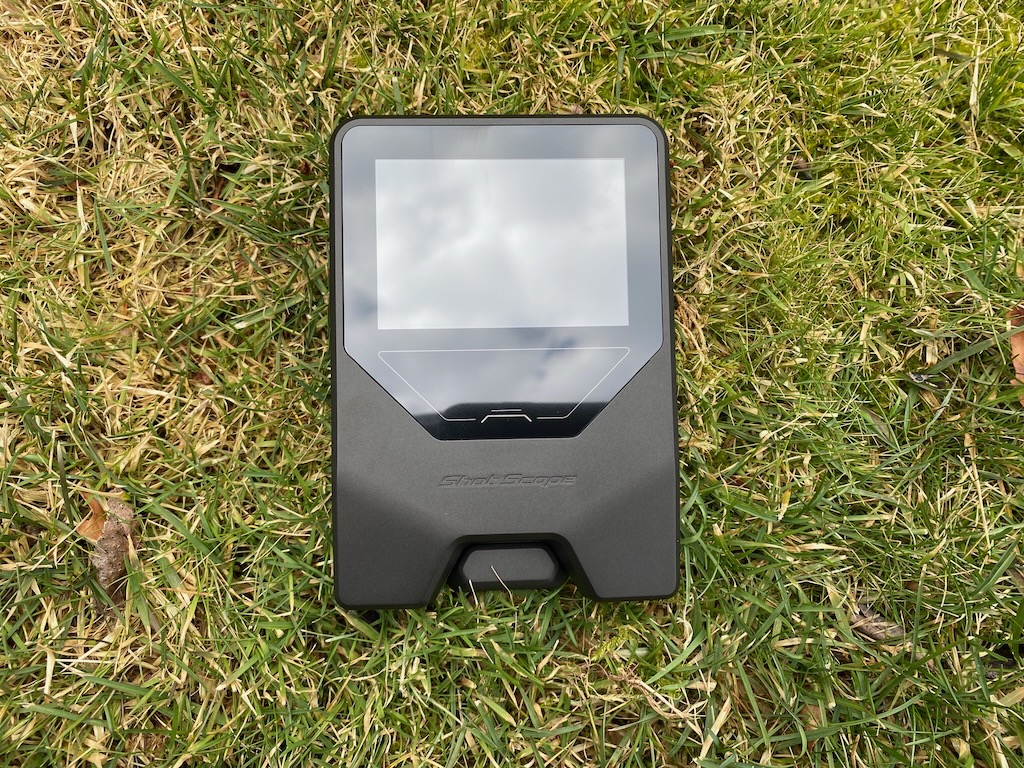

Let’s be honest, the world of golf equipment is awash in buzzwords and marketing sizzle, especially when it comes to technology. Every year, I wade through countless claims from manufacturers, separating the genuinely innovative from the merely iterative. So, when the Shot Scope LM1 launch monitor hit the scene at the 2026 PGA Show with a head-turning $199 price tag, my club fitter’s radar immediately went up. Could something that affordable truly deliver useful data?
Having tested hundreds of clubs on everything from Trackman to GCQuad, and fitting countless golfers across the handicap spectrum, I’ve seen firsthand the power of data. But I’ve also seen the barrier to entry for many. High-end launch monitors are incredible tools, but their cost often restricts them to professionals and serious teaching academies. This is where Shot Scope is making a very deliberate play, and it’s something I appreciate.
The LM1’s core proposition is compelling: simplicity, portability, and affordability. Immediately, the claim of a standalone device that needs “no phone or app during use and can be ready within seconds” caught my attention. In the fitting bay, time is money, and even for personal practice, fumbling with Bluetooth connections and app glitches can be a real momentum killer. This plug-and-play approach is a significant user experience win, especially for the golfer who just wants to hit balls and see numbers.
While the $199 price point screams “entry-level,” the question is whether the data it provides is merely a novelty or genuinely actionable. The source article highlights its focus on five core metrics: ball speed, clubhead speed, smash factor, carry distance, and total distance. This selection is crucial.
From my experience, these five data points form the bedrock of understanding a golf swing’s impact on the ball. Ball speed directly correlates to distance. Clubhead speed tells you how much juice you’re delivering. Smash factor – ball speed divided by clubhead speed – is a pure measure of efficiency. It’s the ultimate indicator of center-face contact and how well the club performs. A 1.50 smash factor is the theoretical maximum, and anything consistently below 1.40 for a driver, for instance, tells me there’s a serious contact issue or potentially a wildly ill-suited club. Carry and total distance are obvious and essential for course management.
The article states:
“In terms of performance, the LM1 delivers impressive accuracy for its price point, especially when compared to far more expensive launch monitors.”
This is a bold claim, and one I’d put to the test immediately in my bay. While it’s unreasonable to expect Trackman-level precision at 1/100th of the price, “impressive accuracy” for these key metrics is all a recreational golfer needs. If it’s within 2-3% of pro-grade data for ball speed and carry, it’s a game-changer for the casual user. Knowing your actual carry distances is perhaps the single most impactful piece of data for improving on-course scoring.

Another significant point is the no-subscription model.
“Also notable: all features are included in the purchase, with no subscription fees or locked data.”
This is a massive win for the consumer and something I firmly believe in. Many companies are moving to subscription models for basic functionality, which can add significant hidden costs over time. Shot Scope’s transparency here is admirable. You buy it, you own its full capabilities. End of story.
Who is this for? After fitting hundreds of golfers, I can definitively say this isn’t for the scratch player obsessed with every degree of launch and spin, or the teaching professional trying to diagnose complex swing faults. The LM1 lacks crucial data like launch angle, spin rate, attack angle, and club path, which are non-negotiable for advanced fitting and instruction. The article explicitly acknowledges this:
“Rather than offering a wide range of advanced metrics, the LM1 provides five core data points: ball speed, clubhead speed, smash factor, carry distance, and total distance. It doesn’t connect to a simulator, and it doesn’t provide enough data for an instructor to use it as a replacement for, say, a Trackman.”
And that’s perfectly fine. For the average golfer – the 10+ handicapper, the weekend warrior, or even the aspiring junior – this is an incredibly powerful practice tool. How far *do* you actually hit your 7-iron? Is your driver contact consistently costing you yardage because your smash factor is low? Are you gaining clubhead speed with that new training aid? These are the questions the LM1 can answer immediately and effectively.
Its compact design, IPX3 rating, and 5-hour battery life make it genuinely portable. I can see golfers throwing this in their bag and taking it to the range for a quick 30-minute practice session focused purely on distances, or using it to validate their yardage gapping. It forces you to be more intentional with your practice, moving beyond just “hitting balls” to “hitting balls with purpose.”
For those looking to gain speed, the immediate feedback on clubhead speed is invaluable. I’ve seen countless golfers try to swing harder without understanding *how much* harder they’re actually swinging. This provides that critical feedback loop. However, without knowing launch and spin, it’s hard to optimize those speed gains for maximum distance. More speed isn’t always better if it comes with wildly inconsistent strike or excessive spin.
In conclusion, the Shot Scope LM1 appears to be a legitimately disruptive product, not just marketing fluff. It carved out a niche by focusing on what truly matters for the average golfer’s practice: core data, ease of use, and accessibility. While it won’t replace the advanced diagnostics of a $20,000 system, it offers an astonishing amount of value for $199. For golfers looking to gain a better understanding of their game without breaking the bank, and who prioritize actionable numbers over esoteric data points, the LM1 seems like a fantastic entry point into the world of data-driven practice.
View this post on Instagram

