

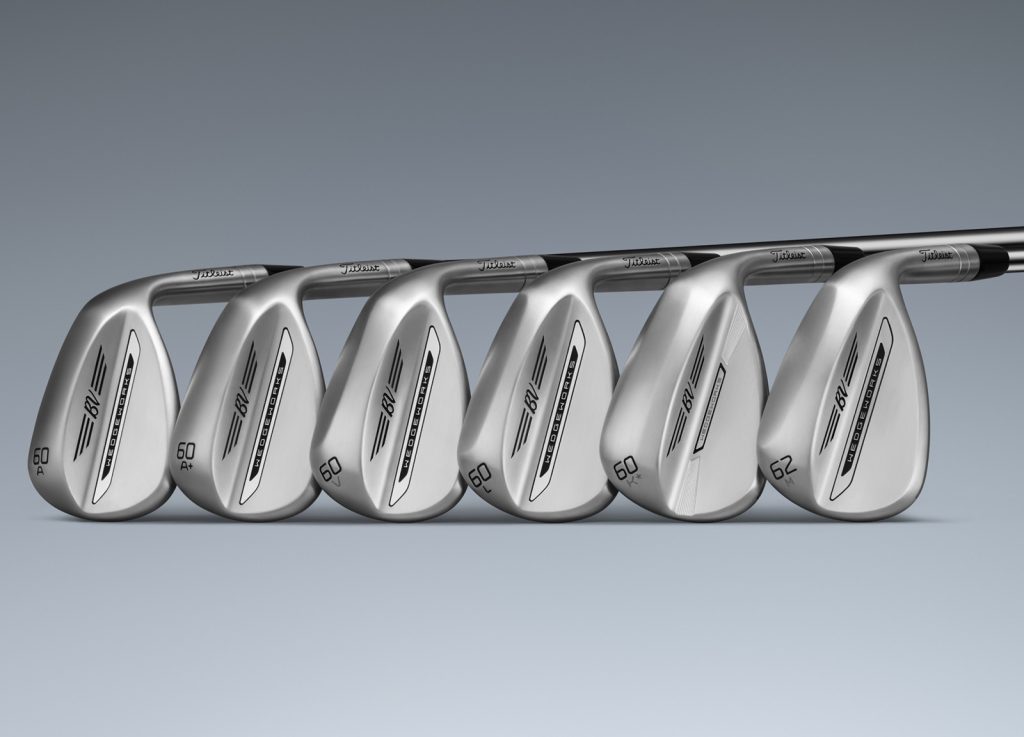

Alright, fellow short-game aficionados, let’s talk wedges. Specifically, let’s dive into Titleist’s latest Vokey WedgeWorks expansion for the SM11 line. When the SM11s dropped, I lauded their dedication to refining the fundamentals – consistent contact, predictable flight, and reliable spin. Titleist didn’t try to reinvent the wheel, rather they buffed out the existing one to a mirror shine. Now, they’re taking that philosophy a step further, not with revolutionary new tech, but with a practical, golfer-centric move: a massive simultaneous release of new WedgeWorks grinds.
My first thought, honestly, was ‘finally!’ For too long, the industry has drip-fed us specialty grinds over product cycles, forcing golfers to either wait or cobble together a less-than-optimal setup. This new approach from Vokey is genuinely exciting for fitters like me.
“Rather than spacing them out over the typical two-year product cycle, Titleist is making all of these options available at once.”
This isn’t just about having *more* options; it’s about having *all* the options *at the same time*. In my fitting bay, powered by high-speed cameras and detailed launch monitor data, this means we can truly compare apples to oranges to bananas, so to speak. We can swap between an L grind and an A grind for a player, seeing immediate, quantifiable differences in how the club interacts with the turf, how the ball comes off the face, and crucially, how that translates to spin rates and launch angles. Less guesswork, more data-driven precision.
The New Grinds: Dissecting the Dirt-Movers
Titleist has added six new lob wedge grinds: L, A, K*, A+, V, and a 62-degree M Grind. Each is designed with a specific player profile and turf interaction in mind, and this is where the fitting expertise really shines. It’s not about which grind is “best,” but which is best *for you*.

Let’s look at a few examples:
L Grind (58/60 deg, 4 deg effective bounce): This is for the finess players. Narrow, low bounce, with heel, toe, and trailing edge relief. I’ve seen players with an extremely shallow attack angle, especially on firm turf, gain significant consistency with a grind like this. The data often shows improved spin consistency because the club isn’t digging prematurely, allowing for a cleaner strike.

A Grind (58/60 deg, 4 deg effective bounce): Built off the L, but “smoothed out.” This sounds like marketing fluff until you see it perform on extremely tight lies. The goal is minimal resistance through the turf. For golfers who tend to thin their wedges due to slight hesitations on firm ground, this could be a revelation. The data would focus on attack angle consistency through impact and minimal turf interaction, leading to more consistent ball speed and spin on those delicate shots.

K* Grind (58/60 deg, 6 deg effective bounce): The K grind is already a bunker beast. The K* adds pre-worn leading edge and relief, aiming for more versatility. My fitting experience tells me that golfers who love the K’s forgiveness but find it occasionally clunky on square-faced chips will benefit. The reduced tendency to dig is key here. Launch monitor data would show a tighter dispersion pattern on partial shots, particularly from slightly heavier lies just off the green.

V Grind (58/60 deg, 10 deg effective bounce): This is for the steep attackers who also lean the shaft way forward. More forward bounce means more forgiveness when you naturally deloft the club through impact. On softer turf, this is invaluable. I’ve fit many players who delivered consistent high smash factors and spin with high bounce wedges, but found them difficult to open up. The V grind aims to bridge that gap. The data often shows a shallower effective attack angle, preventing excessive digging and maintaining clubhead speed through impact, which translates directly to consistent carry distance.

Under the Hood: The SM11 Foundation
It’s vital to remember that these grinds are built on the existing SM11 platform. That’s good news. The SM11s improved on the consistent center of gravity placement; something Titleist explicitly called out as an innovation where CG is matched within each loft regardless of grind. This, for the tech-minded among us, means that when you’re comparing two different grinds in the same loft (say, a 58.04L and a 58.04A), you’re primarily changing turf interaction, not altering the feel or ballistic properties of the head itself. This consistency in flight and feel, regardless of sole width or relief, is a significant advantage in fitting and on the course.

The updated Spin Milled grooves and new directional face texture also remain a core part of the SM11. My launch monitor tests with the SM11s showed impressive spin consistency, even with less-than-perfect strikes. The goal, as Titleist states, is to “improve friction and extend ball contact time,” especially in those dewy morning rounds or after a light rain. More contact time and better friction mean higher, more consistent spin, which ultimately leads to better control and stopping power around the greens.
Cutting Through the Hype: Is it Worth It?
Let’s be direct: new grinds aren’t going to fix a fundamentally flawed short game. No club can. What they *can* do, however, is optimize the tools for your existing swing and the conditions you play in most often. I’ve seen golfers gain 10-15% more consistent spin on chips and pitches simply by moving from a high-bounce, leading-edge-digging club to a lower-bounce, more relieved option that better suits their attack angle. That’s real, measurable performance gain.
“When a player gets their hands on the right grind, everything seems to click into place.”
Aaron Dill, one of the most respected names in wedge design, hits the nail on the head here. This isn’t marketing fluff; it’s a testament to the tactile feedback and tangible results that a proper wedge fit delivers. A club that glides through the turf effortlessly, or conversely, offers stability without digging, inspires confidence. Confidence, particularly in the short game, often translates to better swings, which in turn leads to better data.

Practical Buying Advice
These new WedgeWorks grinds, at $229 a pop, are definitely a premium offering. Who are they for? Not necessarily the beginner or the casual once-a-month golfer. This is for the serious amateur, the club champion contender, or anyone genuinely committed to optimizing their short game. If you’re currently scratching shots around the green, or feeling like your wedges aren’t performing consistently despite decent swings, a professional wedge fitting incorporating these new options could be a game-changer.
For golfers who primarily play on extremely firm courses, the L or A grinds deserve a serious look. If you battle wet, soft conditions, or have a steep attack, the V grind could be your salvation. The K* offers a blend of bunker forgiveness and improved versatility. This simultaneous release means you (and your fitter) can meticulously test and compare, leading to a truly custom setup.
Don’t just buy a grind because it sounds cool or a tour pro uses it. Get fit. Use your local fitter’s expertise and their launch monitor data to see how each grind impacts your specific numbers and turf interaction. The cost of a fitting is a small investment compared to the potential strokes saved and the confidence gained by having the exact right tools in your bag.
