

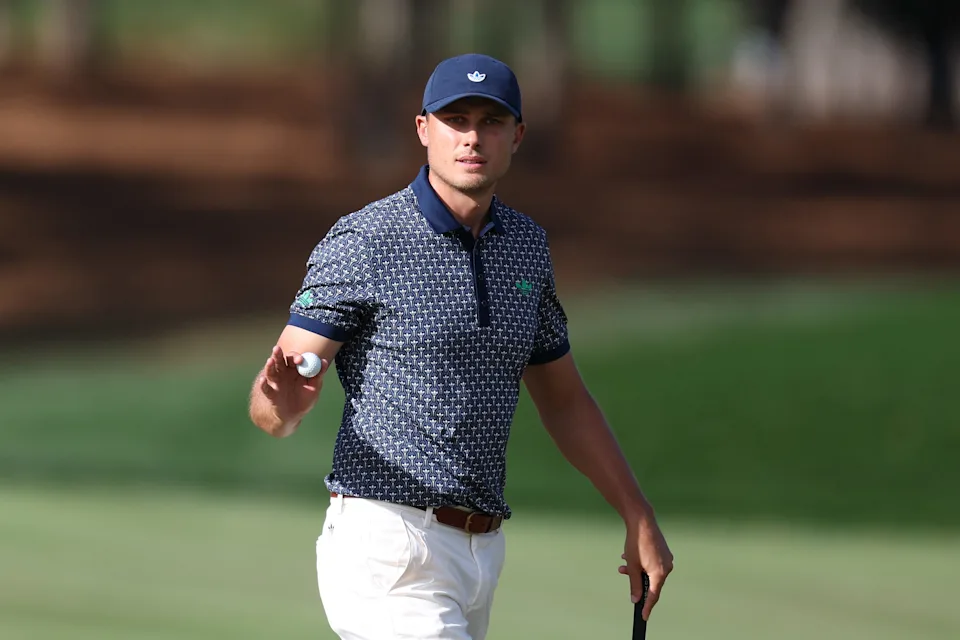

Ludvig Aberg’s Quiet Confidence and the Art of Holding It Together
I’ve watched a lot of golfers lead major championships heading into Sunday. Some swagger. Some look terrified. The smart ones—the ones who actually win—they look like Ludvig Aberg looked on Saturday evening at TPC Sawgrass: calm, matter-of-fact, already thinking three moves ahead.
After his absolutely scorching 9-under 63 on Friday, I half-expected the 26-year-old Swede to come out Sunday morning and play like he was trying to break the course record again. Instead, he shot 1-under 71 on Moving Day and somehow stretched his lead to three shots. That’s not luck. That’s not some cosmic gift. That’s a kid who understands something about tournament golf that takes most players years—sometimes a lifetime—to figure out.
The Underrated Art of Treading Water
Here’s what most fans and, frankly, a lot of golfers miss: the par round on a tough Saturday is often more valuable than the 65 on Friday. Aberg’s caddie Joe Skovron nailed it when he said:
“He showed that battle that you have to have. You always have that nine holes or 18 holes where you win a tournament and you don’t really have it like you did the other days but you hang around. That even par on the front nine was really good.”
I caddied for Tom Lehman back in the ’90s, and the thing I remember most about his run at major championships wasn’t his great rounds—it was how he handled the mediocre ones in the middle of tournaments. Tom understood that shooting 71 when you don’t have it is basically a victory. Saturday at Sawgrass, Aberg demonstrated that same maturity.
The front nine was sluggish. He dropped a shot at the fourth, didn’t birdie until the par-5 ninth. By any measure, a frustrating start. But instead of letting the round deteriorate, Aberg did what championship-caliber players do: he stabilized, regrouped, and then executed when the opportunity came. That eagle at 11—a smashed 5-iron to 17 feet that found the cup—that’s the shot that separates the pretenders from the actual contenders.
The Data Backs Up the Eye Test
What strikes me most about Aberg’s position heading into Sunday isn’t just the three-shot lead, though that’s obviously significant. It’s that he leads the field in both Strokes Gained: Tee to Green and proximity to the hole this week. That’s not variance. That’s not one hot putter carrying a mediocre ballstriker. That’s genuine, comprehensive excellence across all the shot-making categories.
Six eagles in nine rounds at TPC Sawgrass—the most of any player in the last three years. Three of those in the last two days. That stat sits differently when you consider that Aberg has been converting his opportunities at a rate that suggests this isn’t some temporary hot streak. In my 35 years covering this tour, I’ve learned to trust the metrics. They don’t lie.
What’s equally telling is what didn’t happen on Saturday. Aberg had chances at 16 and 17 to expand that lead and didn’t convert. Then came the three-putt at 18 from 25 feet—the kind of finish that can creep into a player’s head. Most guys, I think that gnaws at them. Aberg took it in stride, already doing the math that he went from a two-shot lead to three. That’s the mindset of someone who understands this isn’t a sprint; it’s about managing a 72-hole event.
The Context of the Florida Swing
I want to be careful not to overstate things here, but the narrative of 54-hole leaders folding in the Florida Swing is real and worth considering. Shane Lowry couldn’t close at the Cognizant Classic. Daniel Berger went to a sudden-death playoff at the Arnold Palmer Invitational last week and lost. That’s the pressure Aberg walks into on Sunday.
But here’s what gives me confidence in Aberg’s chances: he’s already demonstrated resilience this week. After a disappointing West Coast Swing, he came to Pebble Beach and started dialing in his iron play. By the time he arrived at TPC Sawgrass, his driver had returned to its reliable self. That’s the process working. That’s a player who knows how to make adjustments and who isn’t defined by one bad tournament or one slow stretch.
The Ponte Vedra Beach resident will sleep in his own bed on the lead for the second straight night, which is its own kind of advantage. Knowing where the coffee is, sleeping in your own sheets, having your routine dialed in—these things matter more than casual fans realize.
Sunday’s Challenge
Aberg knows what’s coming. He acknowledged it directly:
“Sawgrass tomorrow is going to be a challenge. It’s all about executing, you’re going to get punished if you don’t, which is a fun way to play golf.”
That’s refreshing honesty. Not bravado. Not false humility. Just a clear-eyed understanding of what the Stadium Course demands and what awaits him Sunday afternoon.
After 35 years of covering this game, I’ve learned that the players worth watching are the ones who think about winning without being consumed by it. Aberg said it perfectly earlier in the week:
“I think a lot about what it would look like, what it would feel like. I think a lot about the different scenarios that might happen…So I think I’m trying to embrace it. I’m trying to be OK with all those things that comes with it, which is why we play golf.”
That’s not arrogance. That’s preparation. That’s a young player who understands that visualization and mental rehearsal are as important as swing mechanics. It’s the kind of thinking that wins majors.
Sunday at TPC Sawgrass will tell us a lot about Ludvig Aberg. But what I’ve seen the last three days tells me we’re watching a player who might be on the cusp of something significant. Not just for this week, but for his career.
