


Asterisk Talley’s Balancing Act: Why This 17-Year-Old’s Path Matters More Than Her Trophy Case
I’ve been covering professional golf for 35 years, and I’ve learned that you don’t always need a crystal ball to spot the next big thing. Usually, it’s the player who makes you stop and actually think about what you’re watching—not just reflexively type up the leaderboard.
Asterisk Talley is doing that. And what intrigues me most isn’t her 250-yard drives or her recent three-tournament winning streak on the junior circuit. It’s her head.
This 17-year-old from Chowchilla High School in California represents something I haven’t seen much of lately in elite junior golf: genuine perspective. She’s going to Stanford. She’s studying calculus. She takes mid-terms. And yes, she’s about to tee it up against the world’s best professionals at the Ford Championship this week, but she’s somehow managed not to let that define her entire existence.
In my three decades around this game—having caddied for Tom Lehman back when we thought that was the pinnacle, covering 15 Masters, watching countless phenoms either bloom or wilt under pressure—I’ve learned that the players who stick around are rarely the ones who needed it most at 17.
The Confidence Without the Arrogance
Here’s what strikes me about Talley’s approach: She’s aggressive without being cocky. When asked about her game plan at Whirlwind Golf Club’s Cattail Course, she said she was “looking forward to playing some aggressive golf.” Her swing coach Elliot Busichio noted something equally telling:
“Her game has always been very aggressive, so just teaching her how to read and putt aggressively. I’m seeing more confident strokes out of her.”
That distinction matters enormously. I’ve seen plenty of juniors with aggressive swings. What separates the ones who make it from the ones who flame out is whether that aggression is rooted in genuine confidence or desperate overcompensation. Talley’s coach is specifically teaching her to channel that aggression into her short game and decision-making, not just her driver.
Even more revealing is how she’s described the evolution of her mindset in professional events. After her breakout at the 2024 U.S. Women’s Open at Lancaster Country Club, she admitted:
“Not feeling as much of an outcast as when you first get on the tour. Feeling like you belong a little more.”
That’s maturity talking. The best athletes I’ve covered don’t arrive at the professional level fully formed psychologically. They arrive with talent, then gradually—sometimes painfully—build the mental framework to handle it. Talley seems to be doing this in real time, publicly, without pretending she’s already figured it all out.
The College Decision That Signals a Shift
Here’s where I think the real story lives: Talley has committed to Stanford, rejecting the conventional wisdom that elite juniors must turn pro immediately. The catalyst? Watching Rose Zhang, a two-time NCAA champion and Olympic gold medalist, choose to finish her degree.
I’ve seen the pendulum swing on this before. In the ’90s, there was still a sense that college golf was a finishing school for the elite. Then came the LIV Golf era and its immediate paydays, and suddenly staying in school felt quaint. Now, with players like Zhang and Talley making deliberate, thoughtful choices to prioritize education alongside golf, I’m sensing another swing—this one healthier.
What Talley said bears repeating:
“She showed that not all great golfers need to turn pro right out of high school. She showed that there’s more important things than getting out there as fast as you can.”
Those are words you don’t typically hear from a 17-year-old with legitimate LPGA credentials. In my experience, that kind of wisdom usually comes with a few years of scars. Talley’s got it preemptively, which suggests either remarkable maturity or—more likely—genuinely grounded family support.
The Miles Russell Factor
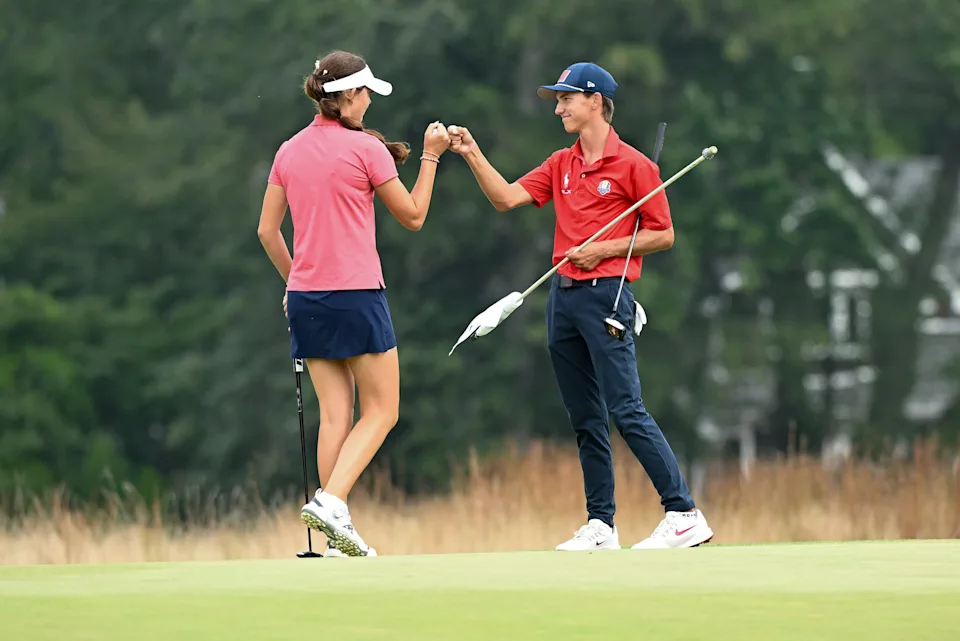
There’s also something worth noting about Talley’s decision to have her close friend Miles Russell caddie for her at Augusta National Women’s Amateur Championship. Russell, like Talley, is the No. 1 recruit in the Class of 2027 and has committed to Florida State. Her father’s suggestion was strategic: getting Russell familiar with Augusta before he plays in the Masters eventually.
This tells me something important about how the best young players now think about the game. They’re building networks. They’re thinking long-term. They’re not treating their peers as competitors to crush, but as colleagues with whom they’ll likely compete for decades. Having watched junior golf evolve, I can tell you that mindset shift is significant.
The Unresolved Question
Look, I’ll be honest: There’s a real possibility that a few strong weeks on the LPGA could change Talley’s trajectory entirely. She admitted as much. “I’m kind of just going with the flow about what happens before college,” she said. That’s refreshingly honest, even if it’s also genuinely uncertain.
The question isn’t whether Asterisk Talley will become a great professional golfer. Her game suggests she will, if she wants to. The more interesting question is whether she’ll become a great golfer who also has a life, which is rarer than you’d think. In 35 years, I’ve learned that the best long-term stories in golf aren’t about the fastest rise. They’re about the ones who figured out how to stay.
She’s 17 and already figuring that part out. That’s the extraordinary part—not the 9-under 65 or the LPGA exemptions or the 250-yard drives.
That’s a player worth watching.
