

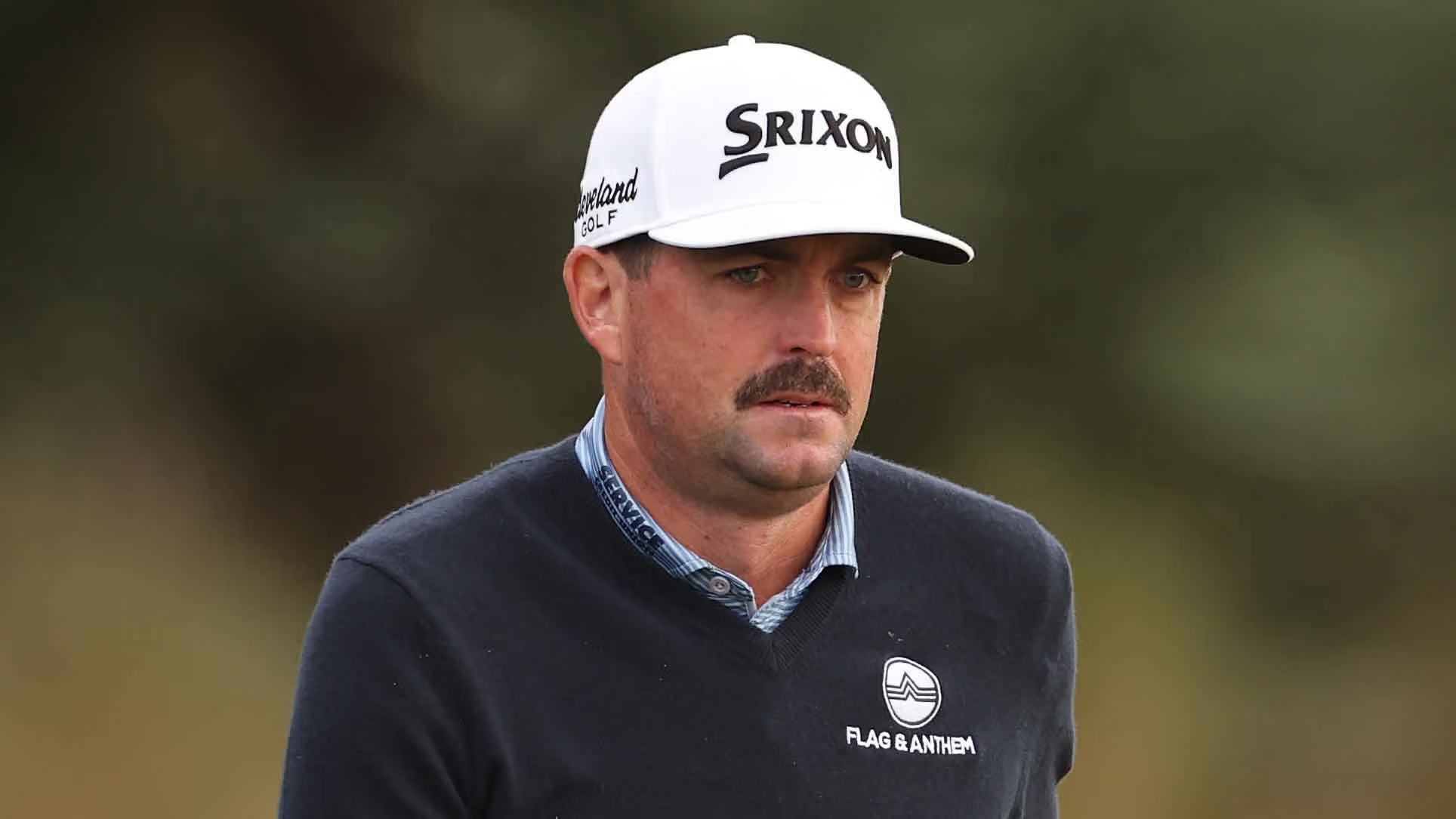

Bradley’s Burden: Why a Ryder Cup Captain’s Scars Run Deeper Than Most
In my 35 years covering professional golf, I’ve watched plenty of grown men absorb devastating losses with remarkable grace. I’ve seen tour pros shake off missed cuts, blown leads, and even major championships gone sideways. But I’ve never quite seen anything like what Keegan Bradley is processing right now — and that’s precisely what makes his situation so compelling.
There’s a particular kind of heartbreak that comes with captaining a Ryder Cup team. I’ve interviewed enough of them over the decades — Faldo, Watson, Furyk, Harrington, Johnson — to know that losing sticks differently when you’re the guy who made the pairings, picked the wildcards, and set the strategy. It’s not just a loss. It’s a referendum on your decisions, your judgment, your leadership.
But here’s what separates Bradley’s predicament from his predecessors: he still has to play for a living.
The Unique Burden of a Playing Captain’s Defeat
Most Ryder Cup captains are either retired or semi-retired when they take the job. They’ve had their run. They’ve made their money. A loss stings, sure, but they can retreat to their foundations, their families, their golf course design projects, or whatever comes next. They can nurse that wound in private.
Bradley, at 38, is still trying to maintain his status as one of the best players in the world. And now he’s doing it while carrying the weight of a 15-13 defeat that — by his own admission — he doesn’t think he’ll ever fully process.
“Listen, it’s been a little difficult. I’m still heartbroken from the Ryder Cup. So trying my best to separate myself and move on, but it’s hard. I think about it a lot. I think about the guys a lot, and I’m still in the process of getting past all that.”
That’s not the sound of someone who’s moved on. And frankly, I respect the hell out of him for saying it out loud.
In my experience, the golf world doesn’t always make space for this kind of vulnerability. We expect our champions to compartmentalize, to move forward, to focus on the next tournament. And Bradley is trying to do that. You can see it in how he attacked Friday’s round at The Players Championship — an eagle on the par-5 2nd and five back-nine birdies that got him to six-under 66 after a brutal opening 77. That’s not a guy who’s given up. That’s a guy fighting.
But there’s a tension there that casual fans might miss: he’s fighting on two fronts now. Against the course, against the field, and against himself.
When Captaining Becomes a Career Complication
Here’s something that strikes me about Bradley’s candid admission: he’s the first Ryder Cup captain in recent memory to have to immediately return to competitive tour golf after a loss. Most captains are basically done playing at that level. They never again have to tee it up knowing their decisions — who they benched, who they paired together, what course setup they chose — are still haunting them.
“Unless you’re a captain of the Ryder Cup team you just have no idea what goes into it and the emotional toll that it takes on you. I think like a lot of guys that do it, they’re basically done playing, so they never again — I’m the first person to have to sort of deal with this, get back out there, try to be one of the best players in the world and make the next team.”
That’s a legitimate insight, and it reveals something important about modern golf: the calendar is collapsing. The tour is more competitive at every level. Guys are staying relevant longer. And captaincies are falling to guys who still have competitive golf in front of them.
It’s a new problem, essentially. And Bradley is its first subject.
The Path Forward (If There Is One)
So what comes next? In my three decades following this tour, I’ve learned that resilience often looks like stubbornness. Bradley has always had that in spades. He’s someone who commits fully — to tournaments he loves, to people he cares about, to ideals he believes in. That same intensity that made him agonize over captaincy decisions is now making it nearly impossible for him to move past the loss.
But here’s the optimistic read: Friday at Sawgrass suggests he’s still got the game to compete. One top-30 finish in 2025 isn’t a death knell. It’s early. And guys like Bradley — guys who feel things deeply — often channel that pain into something constructive.
“I think any Ryder Cup captain that loses would like to do it again. But that’s not up to me.”
That line tells you everything. He’s not ruling it out. He’d take another shot if offered. Most losing captains would, if we’re being honest. But there’s also resignation there — the recognition that you don’t get to choose when lightning strikes twice.
What Bradley can control is the next tournament, the next cut, the next opportunity to make a Ryder Cup team as a player rather than a captain. That might sound like a step backward. But for him, it might be the only way through.
In my experience, the best comebacks aren’t always about winning again. Sometimes they’re just about playing again — with clarity, with purpose, and with the weight off your shoulders enough to swing freely. Bradley’s working on that part now. Friday’s 66 was a start.
