


Unlocking Your Driver’s Potential: Say Goodbye to that Over-the-Top Move!
Hey there, fellow weekend warriors! If your driver swing looks promising until that moment of impact, only for the ball to awkwardly drift to the right—trust me, you’re not alone. That pesky over-the-top move has infiltrated the swings of countless golfers, leading to those frustrating outside-in paths that just muck up both distance and accuracy.
But guess what? There’s some good news on the horizon. You won’t need to undergo a complete swing overhaul to get things back on track. In fact, with some targeted tweaks, you can ditch this swing saboteur while maintaining your swing’s core fundamentals. Let’s dive into how you can get your driver game on point!
Why the Over-the-Top Move is a Game-Killer
First off, let’s unpack what’s going on. Many folks get so fixated on hitting at the ball that they forget to swing through it. What happens? Shoulders kick into action too early, and the arms take over, forcing the club outside that sweet swing plane. It’s a recipe for disaster!
And let’s not ignore ball position. Tipping that tee too far forward is asking for trouble. You’ll wind up reaching for the ball instead of meeting it smack on during impact. It’s all about the details, and one critical piece of the puzzle is often neglected: the transition.
Most amateurs barely give this pivotal moment—where you switch gears from backswing to downswing—a second thought. But trust me, nailing this transition is what separates the pros from the weekend warriors. Get this part right, and you’re well on your way to fixing a lot of the other issues.
Simple Setup Adjustments for Success
Now, as you prepare for your shot, remember that the downswing is like a well-choreographed dance. The lower body kicks things off, then the upper body follows, and finally, the arms make their entrance. Understanding this order is super important because it takes the pressure off and makes everything feel more connected.
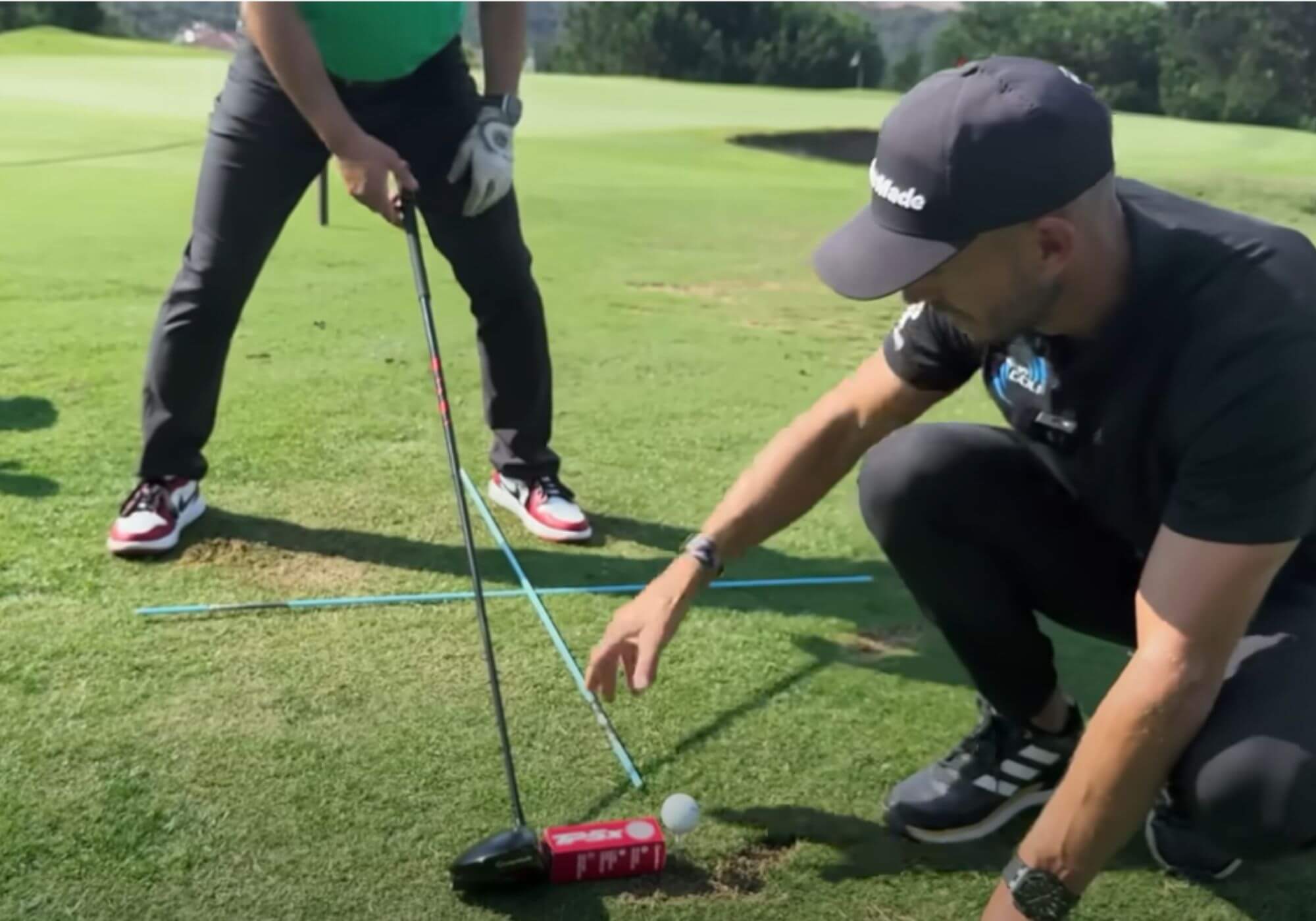
Keep that ball position locked in place with your driver—off your front heel, never the front toe. Staying true to this will help avoid the dreaded reach-and-slice move. And don’t sleep on your spine angle either! Tilting slightly away from the target can lead to the inside-out attack angle you’re desperately searching for.
Mastering the Transition Like a Boss
Alright, here’s a juicy nugget for you: right-handed golfers should feel that left hip slide toward the target while the upper body lingers back. This creates the separation you need to keep things on track.
And here’s where the magic happens—drop that right elbow close to your side as you begin your downswing. This small, but mighty adjustment keeps the club on the right path and prevents that soul-crushing over-the-top disaster.
Oh, and those shoulders? You want them to be as still as a statue during this transition. If you start spinning them open, you’re inviting that nasty over-the-top fiasco right back into your life. Remember, patience is key at the top of your swing. Let the club drop into its sweet spot before your upper body makes its move through impact.
Tee Height and Positioning Secrets
Let’s chat about the tee height. Ideally, half of the ball should be sitting pretty above your driver’s crown when you tee it up. You’d be surprised how many golfers overlook this! Low tee heights encourage that descending blow, which is the perfect recipe for an over-the-top move.
Consistency is your best friend when it comes to ball position. The ball should be off your front heel every single time—swinging too far back creates a steep angle, while being too far forward makes you reach and inevitably crash back into that over-the-top move.
Develop Better Swing Feels
You know how you swing a baseball bat? You likely wouldn’t go over-the-top with that swing, right? Apply that same inside-out feeling when you’re swinging your driver.
Try the "skip a stone" drill—it’s a fun way to mimic that sidearm action which follows the correct inside-out path through impact. You want to focus on hitting the back-inside quadrant of the ball rather than the back-outside. This encourages the right attack angle while sending unwanted slice spin packing.
And take this advice to heart—keep your back facing the target longer during your downswing. Most cases of the over-the-top disaster are rooted in early upper body rotation, so fixing this will vastly improve your game.
Timing and Tempo Fixes for Consistency
One vital key to success? Slow things down a notch. A quicker backswing leads to a rushed transition, prompting an out-of-control dive into over-the-top territory.
Try out the "pump drill": take the club back, pause at the top, and then make a slow, deliberate downswing focused purely on maintaining that proper sequence. Count "one-two" during your swings—"one" for your backswing and "two" for impact. This rhythm is golden and will help keep your swing smooth and under control.
Make your downswing feel longer than your backswing—even if it’s not! This little mental trick can help you maintain timing and sequencing, making your swing feel more fluid.
Practice Strategies That Stick
Ready to put this knowledge into action? Start with slow-motion swings, focusing solely on transition mechanics. Speed can come later! With an emphasis on sequence first, you can build your way up to a full-speed swing.
One simple yet effective tip is to tuck a towel under your right armpit during practice. This helps eliminate that over-the-top throwing motion and gives you instant feedback.
Start with shorter clubs like a 7 or 8-iron to groove that inside-out path before progressing to your driver. Initially, try hitting balls off a tee at iron height. Once this movement feels natural, elevate the tee to a normal driver height.
Smart Course Management While You Improve
Listen, kicking that over-the-top move to the curb is a process. It’s important to play within your current abilities instead of trying to pull off that perfect swing during actual rounds.
Be strategic on the tee box. If you’re battling a slice, tee it up on the right side—it gives you more room for error. Aim for targets that fit your current ball flight; if you’ve got a slice going on, aim at the left side until you find a better groove.
Consider using a 3-wood off the tee for a bit. It has a shorter shaft and more loft, making it easier to avoid those over-the-top moves while you’re still building up your confidence.
A Mental Game to Complement Your Swing Changes
One last note—over-the-top moves often come from trying too hard to help the ball into the air. Trust that your technique is built to give you both distance and accuracy.
Focus on swinging through the ball instead of trying to hit at it. This shift in mindset leads to a beautiful inside-out attack angle. Visualize success before each swing. Picture that ball sailing straight and long, then execute the swing that’ll produce that result.
And remember: patience is key! Most golfers notice immediate improvements once they resolve the over-the-top moves. Stay dedicated and work on those fundamentals consistently, and soon your driver will transform from a source of frustration to your best buddy on the course—delivering the distance and accuracy you’ve been longing for!
So there you have it, friends! By making these adjustments and embracing a positive mindset, you’ll be well on your way to a more satisfying and successful golf game. Let’s hit that fairway!
