
There are golf courses, and then there are golf courses that etch themselves into the very soul of the game – courses that transcend mere sport and become touchstones of natural beauty and architectural genius. Pebble Beach Golf Links, carved into the very edge of the wild, dramatic Monterey Peninsula, is undoubtedly one such place. And as Collin Morikawa discovered this past weekend, it’s also a place where dreams, and perhaps a little bit of drama, come to life.
My first pilgrimage to Pebble felt like stepping into an oil painting. The air, thick with the scent of salt and cypress, immediately grabs you. The roar of the Pacific, a constant companion, promises both beauty and challenge. Alister MacKenzie famously said, “The chief object of every golf course architect is to preserve the natural features of the ground, and to take the fullest advantage of its possibilities,” and nowhere is this more evident than at Pebble Beach. The early inland holes weave through pine and cypress, offering a serene, strategic build-up before the majestic reveal of the oceanfront back nine, often heralded as one of the game’s greatest stretches.
The routing at Pebble is nothing short of brilliant. Architects Jack Neville and Douglas Grant, with later touches from Chandler Egan, didn’t fight the land; they embraced it. They understood the power of anticipation, leading you gently away from the grand reveal before swinging back with a breathtaking embrace of the coastline. The 6th, 7th, 8th, and 18th holes, in particular, are a masterclass in using natural topography to create both strategic interest and visual spectacle. That short par-3 7th, plunging down to a postage stamp green with waves crashing below, is perhaps the most photographed hole in golf. It’s not just a hole; it’s an experience, a moment of pure golfing poetry.
Morikawa’s victory at the AT&T Pebble Beach Pro-Am underscored the course’s enduring ability to create indelible moments. The 18th hole at Pebble, a sweeping par-5 hugging the coastline, serves as one of golf’s most iconic finishing holes. Its dogleg left around Carmel Bay, with the famed cypress tree standing sentinel in the fairway, is as much about psychological fortitude as it is about shot execution. I’ve stood on that tee many times, feeling the pressure, even when simply playing for bragging rights among friends.
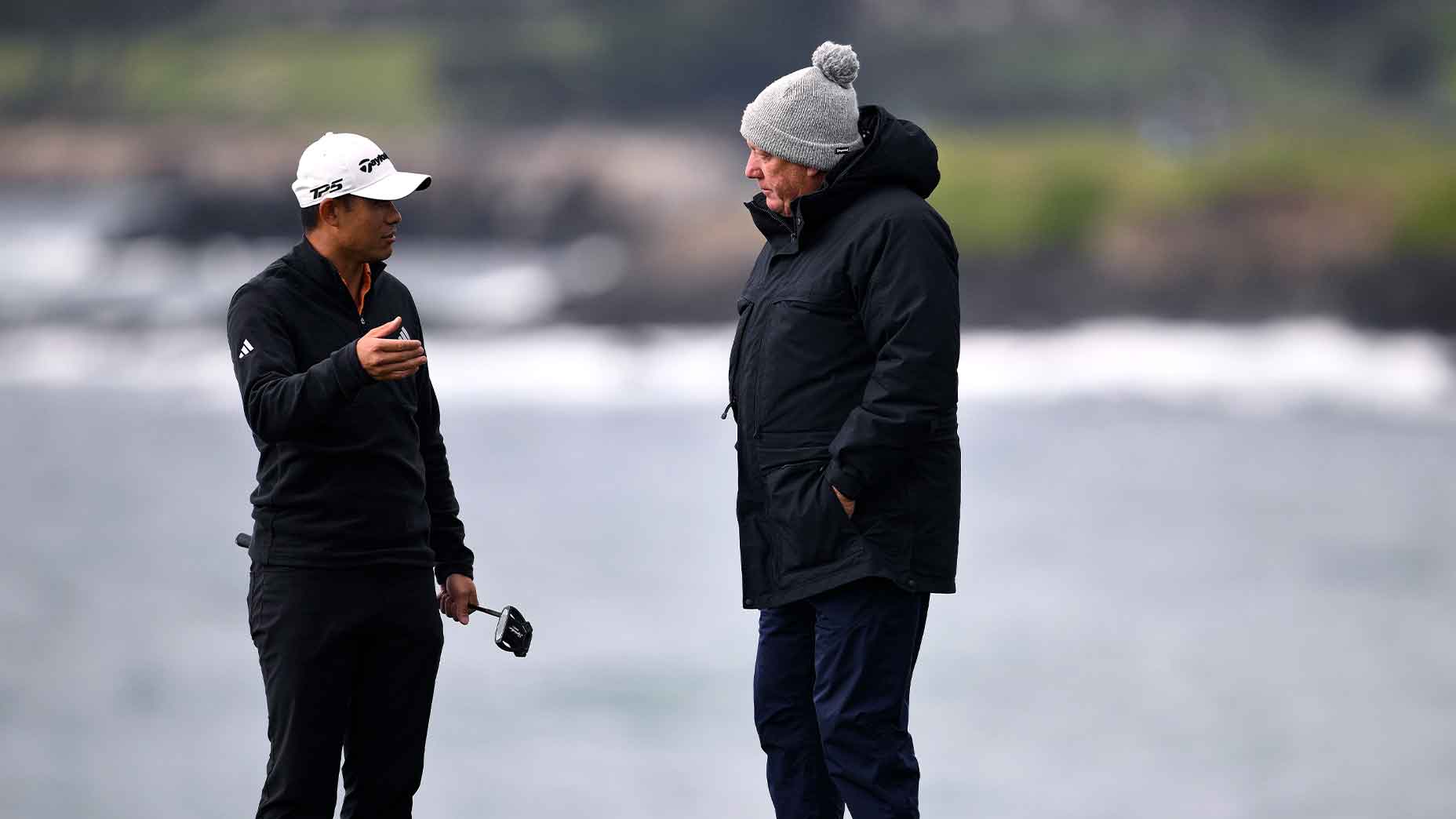
This past Sunday, however, the pressure was ratcheted up to eleven. Morikawa, needing a birdie to secure his first PGA Tour win in years, found himself caught in an unexpected, nearly farcical, delay at the 18th, courtesy of playing partner Jacob Bridgeman’s wild adventure by the rocks and ocean.
“When the intensifying winds at Pebble Beach sent Bridgeman’s ball oscillating around the green, requiring a third rules intercession, the fans at home could do little but laugh. Mercifully, Bridgeman ultimately holed his putt for an adventurous — and time-consuming — bogey. Back in the fairway, it was now, finally, Morikawa’s time.”
The delay, stretching more than 20 minutes, is the kind of curveball only a dramatic course like Pebble can throw. Imagine standing there, the wind whipping off the Pacific, your destiny hanging in the balance, and having to cool your heels while a rules official deliberates. It speaks to the raw, untamed nature of links golf and Pebble’s unyielding challenge.
This kind of drama isn’t new to Pebble. The course is storied, having hosted six U.S. Opens and a PGA Championship, consistently ranked among the world’s best. Its green complexes, often subtle and flowing with the natural contours, demand precision and imagination, reflecting the golden age of golf architecture. They aren’t oversized, overtly dramatic features, but rather clever designs that reward strategic thinking and excellent short-game touch. Even the inland holes, often overlooked due to the coastal majesty, feature some brilliant bunkering and green sites that truly test your mettle.
For Morikawa, the wait was agonizing, but it also forced a moment of introspection, a return to his core beliefs as a competitor.
“I knew what I had to do,” Morikawa said later. “I think I paced all the way to the ocean, like, 10 times at least. I just had to keep moving. You know, it’s weird to say, but these long breaks. I mean, it’s just not good for anyone to stand still.”
When his turn finally came, with the weight of expectation heavy on his shoulders, Morikawa played perhaps the most crucial shot of his young career. Over the iconic lone tree on 18, safely onto the green, setting up a routine birdie that sealed the win. This is the magic of Pebble. It extracts every ounce of courage, every bit of skill, and then, just sometimes, it delivers a storybook ending.
For those looking to experience this architectural gem, Pebble Beach is famously accessible, albeit at a premium. Reserving a room at the Lodge, the Inn at Spanish Bay, or Casa Palmero is generally required to secure a tee time. But trust me, the investment is worth it. To walk these hallowed fairways, to feel the ocean breeze, to gaze out at the Pacific from the 8th tee as the waves crash against the cliffs – it’s an unforgettable experience. It’s a testament to how natural beauty and masterful design can combine to create something truly transcendent in golf.
What a moment for Morikawa, and what a stage for it to unfold.
“Shoot, we’re at Pebble Beach right now, so I’m gonna enjoy this one.”
And so should we all, Collin. So should we all.