


As a lifestyle editor deeply immersed in the world of golf, I’m constantly looking for those hidden facets of the game that truly speak to the human experience. We often talk about the mental game, the physical demands, the fashion statements, but what about the invisible scaffolding that shapes our on-course battles and triumphs? I’m talking about something as seemingly technical as stroke indexing and Course Rating, but I promise, this isn’t about dry statistics. It’s about understanding the soul of your course and, in turn, connecting more deeply with your own game.
Think about it: every time you step onto a tee box, there’s a silent conversation happening between you, the course, and the handicapping system. Knowing where your strokes land isn’t just about strategy; it’s about appreciating the thoughtful design, the deliberate challenges, and the human interpretation that goes into making a golf course… well, a golf course. It’s about more than just numbers on a card; it’s about the underlying narrative of difficulty and fairness woven into the very fabric of play.
For countless golfers, myself included, the concept of stroke index can feel like a bit of a mystery. We know it dictates where we get our vital extra shots in a match, but how exactly are those precious strokes assigned? It’s a question I’ve heard debated over 19th-hole beers and pondered during slow rounds. This is where the story gets really interesting, bridging the gap between rigorous data and the nuanced art of golf course evaluation.
Decoding the Course’s Personality
Many of us assume that a Course Rating, which tells a scratch golfer what to expect, is directly tied to a hole’s stroke index. But here’s a fascinating insight:
“Some of the confusion stems from the relationship between stroke index and the Course Rating System™. In short, there is none — at least not officially.”
This revelation from the USGA highlights that while Course Rating (the overall expected score) and Slope Rating (difficulty for non-scratch players) are crucial, they are distinct from the individual hole stroke indexes. Yet, they work in concert to define your Course Handicap, which then dictates where your strokes actually fall.
So, who’s the architect behind this intricate system? It’s not just computers spitting out numbers. While technology and data, like those gathered by Scott Hovde, the USGA’s director of Course Rating and Handicap Research, play an increasingly significant role, there’s still a deeply human element at play.
The difference between course rating and slope rating, explained By:;)
Josh Sens
The Art (and Science) of Evaluation
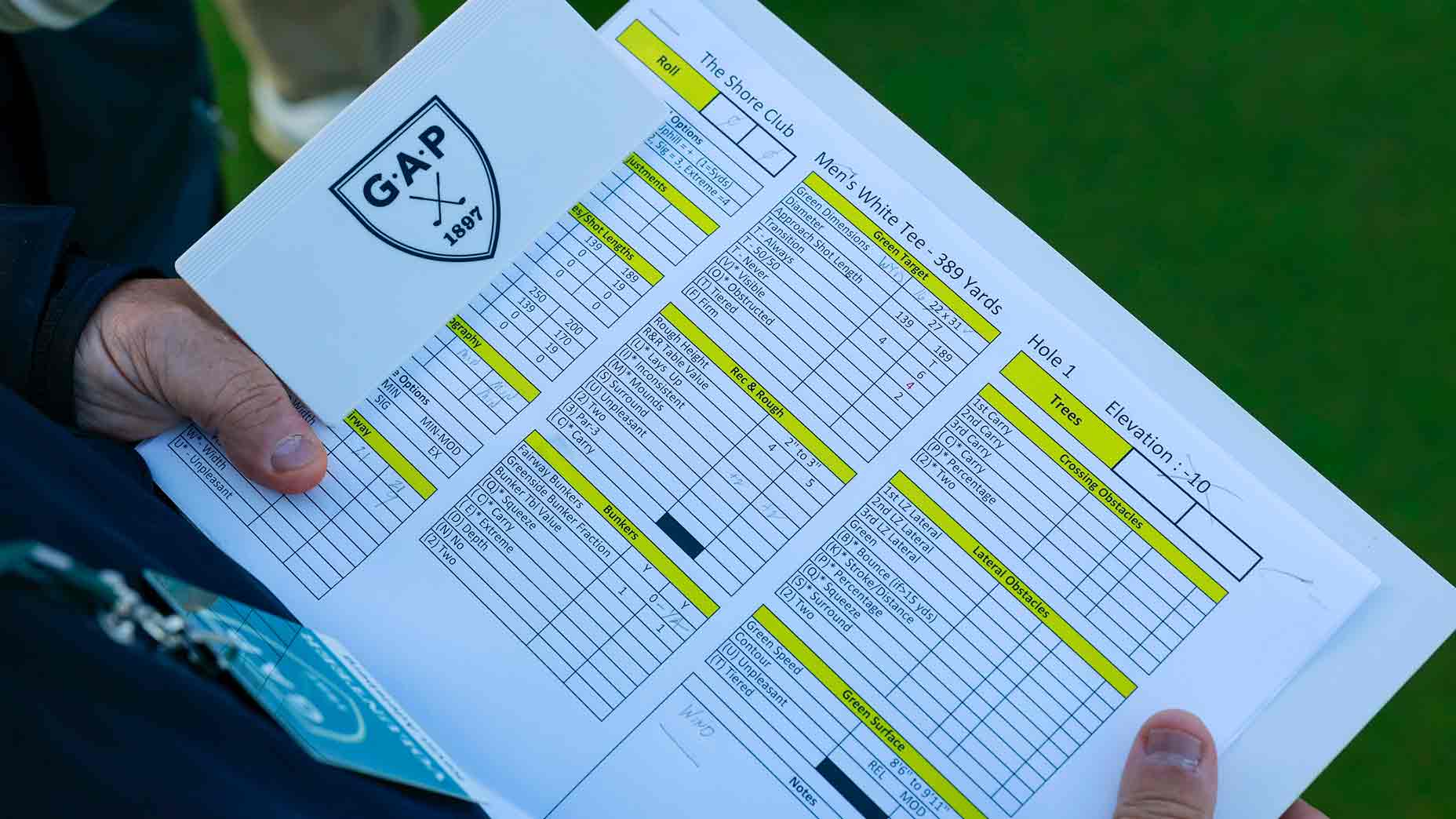
Imagine walking a golf course not just as a player, but as an evaluator, meticulously cataloging every detail. That’s what the Allied Golf Association (AGA) raters do. They look at everything from hole length, the strategic placement of bunkers, the size and contour of greens, to the height of the rough. These objective data points are then used to generate recommended stroke index tables.
But here’s the kicker, and where the “lifestyle” aspect truly shines:
“We walk the course to do field work, measuring and rating from tee to green,” says Koch. “Then, we’ll play the course to see and feel it from the perspective of a player.”
This quote from Hunter Koch, director of Course Rating for the Golf Association of Michigan, perfectly encapsulates the blending of science and human experience. They don’t just crunch numbers; they *feel* the course. They experience the firm greens that reject seemingly perfect shots, the optical illusions, the subtle shifts in elevation. They try to understand what makes a hole genuinely challenging, not just on paper, but in practice. It’s this empathetic approach that makes the system truly reflective of the playing experience.
;)
Courtesy USGA
Your Course, Your Way
Perhaps the most empowering takeaway for us everyday golfers is this: while AGAs provide data-driven recommendations, the final say on stroke index allocation rests with the individual course or club. Derek McKenzie, USGA manager of Course Rating Administration and Handicapping Research, confirms this:
“Oftentimes, the local committee will simply adopt it or maybe make small tweaks. It’s not the USGA or even the AGA that’s assigning stroke-index values. We’re coming up with recommendations for the club’s consideration, then they’re deciding what they want the assignments to be.”
This means your local committee, imbued with years of playing experience and intimate knowledge of the course’s quirks and character, makes the ultimate call. They consider things like evenly distributing strokes between nines, avoiding consecutive low-stroke holes, and even the drama of a demanding finishing stretch. This local touch ensures that the stroke index system truly serves the spirit of competition and enjoyment for their specific members and guests.
Actionable Takeaways for Your Game and Life
So, what does all this mean for you, the everyday golfer, beyond winning a few more match-play holes? It means a deeper appreciation for the thought and care that goes into shaping your golfing experience. Here are a few ways to apply this knowledge:
- Study Your Scorecard with New Eyes: Don’t just look at the par. Pay attention to the stroke index. Understand why certain holes are ranked harder or easier. Is it length, an intimidating water hazard, or a subtle green contour you’ve never fully appreciated? This awareness can transform your course strategy and even help you manage expectations.
- Embrace the “Human Element”: Just like course raters, you can learn to see your home course as a living entity. Notice how the conditions change with the seasons, how the rough grows, or how green speeds vary. This sensitivity to your environment is a key aspect of living an intentional, mindful life, both on and off the course.
- Connect with Your Club: If you have questions about your course’s stroke indexing, chat with your club professional or a committee member. Understanding their rationale deepens your connection to the club community and enhances your appreciation for the game.
- Play with Purpose: Knowing the strategic importance of stroke holes can elevate your match play. If you’re getting a stroke on a hole, approach it differently. Play smarter, safer, and with confidence, leveraging that advantage.
6 reasons you should keep a Handicap Index By:;)
Kellie Stenzel, Top 100 Teacher
The world of stroke indexing, initially perceived as purely technical, reveals itself as a beautiful blend of objective data and subjective experience. It’s a testament to the belief that golf, at its core, is a deeply human endeavor. The next time you’re on the course, take a moment to consider the hidden story behind those numbers on your scorecard; it might just be the key to unlocking a richer, more strategic, and ultimately more enjoyable round.
