


Brian Rolapp’s Schedule Revolution: Solving Golf’s Biggest Paradox
After 35 years covering this tour, I’ve seen plenty of schedule shake-ups. But what Brian Rolapp is attempting? This feels different. And frankly, more urgent than anything I’ve witnessed since the Saudi money started reshaping professional golf.
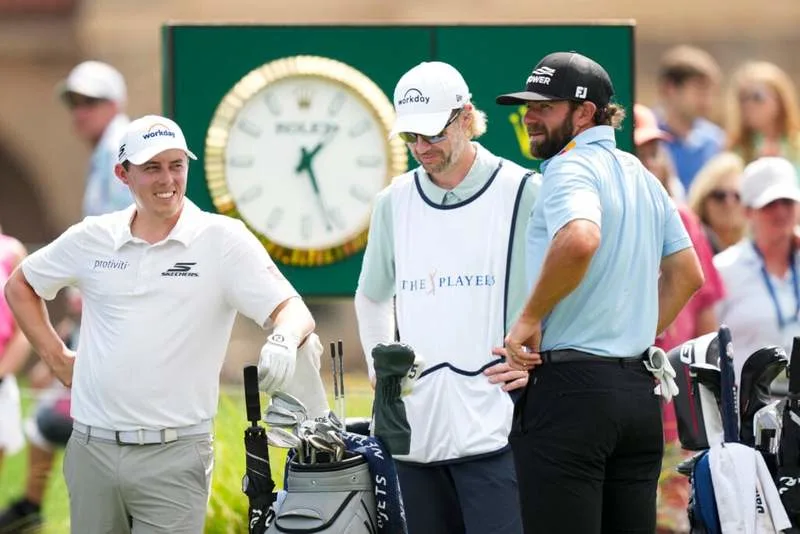
Here’s the paradox that’s been gnawing at the PGA Tour for years: the tour has never had more quality events, yet the best players have never been more selective about which ones they’ll actually play. It’s a problem that shouldn’t exist, but it does—and Matt Fitzpatrick articulated it perfectly when discussing why Valspar gets the stars while Cognizant gets the also-rans.
“I really wanted to play the Cognizant this year, but if I play that, it’s then seven in a row if I’m playing this one as well. It just becomes a lot. When you look at the best golfers in the world, they’re not playing seven in a row, the majority of them.”
Let me be clear: this isn’t a complaint about lazy millionaires. This is a structural problem. Having caddied for Tom Lehman back in the ’90s, I remember when the tour calendar was predictable, almost boring in its consistency. You knew where you’d be month to month. Now? The scheduling has become so congested with marquee events that even the most committed players face an impossible choice: miss something you want to play, or burn yourself out.
The Real Problem Rolapp Inherited
When Rolapp took the helm as the tour’s first-ever CEO in 2025, he inherited a schedule that looked fantastic on paper but failed in practice. The issue wasn’t the quality of tournaments. It was the architecture of competition itself. The tour created so many “can’t-miss” events—The Players, the Arnold Palmer Invitational, the Genesis Invitational—that the top players literally cannot attend them all without playing themselves into exhaustion.
What strikes me most is that this problem reveals something deeper about modern professional golf: we’ve built a system optimized for television and sponsors, but not necessarily for sustainable player performance. From my vantage point covering 15 Masters Tournaments, I’ve watched the schedule creep closer and closer to those majors, compressing the calendar until it feels less like a tour and more like a sprint.
Rolapp’s solution is to go smaller and smarter. Instead of the current sprawl, he’s proposing a condensed schedule of 21 to 26 premier events, including majors. No more signature events. Every tournament carries equal weight.
Why This Matters More Than You Think
The proposed two-tiered system with a “First Track” is essentially the CEO bringing NFL-style organizational thinking to a sport that’s always resisted it. Here’s the innovation: by doubling signature events to 16 and enforcing consistent 120-player fields with 36-hole cuts, Rolapp is creating genuine scarcity and consequence.
“The way it is, you know, I think if you swap this one for Cognizant this week you would probably get the same strength field. You would get a stronger field at Cognizant.”
This observation from Fitzpatrick is the heart of the problem. The tournament quality becomes almost secondary to the scheduling logistics. Swap two events on the calendar, and suddenly one is stacked and one is weak. That’s not a flaw of the events—that’s a flaw of the system.
In my experience, the tour has always struggled with the tension between growth and focus. We wanted more tournaments, more cities, more television windows. We got them. But we forgot that professional athletes—even elite ones—have finite energy. There’s only one Xander Schauffele, one Viktor Hovland, and fans can’t see them everywhere simultaneously.
The Relegation Model: Golf Learns from Soccer
What I find most intriguing about Rolapp’s framework is the promotion-and-relegation system. This is genuinely new territory for golf at this level. By making every appearance high-stakes and meritocratic, the tour creates a dynamic where finishing poorly actually has consequences—you could lose your place on the elite tier.
Now, I understand the skepticism. Golf has always resisted the notion that big names should be demoted. But hear me out: this could actually solve the participation problem organically. If you know that playing poorly means missing the next tier of events—which includes the majors and the biggest purses—you’ll probably show up ready to compete rather than treat it as a warm-up.
The proposed bye weeks around majors and other key tournaments are crucial here. Players have screamed for recovery time for years. Getting guaranteed rest without sacrificing access to the events they want to play? That’s actually progressive thinking.
The Optimistic Reading
Here’s what gives me hope: Rolapp seems to understand that professional golf isn’t better when it’s busier. It’s better when it’s sharper. A 21-to-26-event schedule with the world’s best players competing against each other regularly sounds, frankly, like what fans actually want to watch.
I’ve covered enough tours to know that change this fundamental usually has unintended consequences. But I also know that the status quo wasn’t working. Players were choosing between events. Fields were weakening based on calendar placement rather than course quality. That’s not sustainable.
What Rolapp is building resembles less a traditional tour and more a genuine competition circuit—one where your standing matters, where every event carries weight, and where the best players aren’t exhausted trying to play everything.
Whether it works is still an open question. But after three and a half decades of watching golf’s professional landscape, I can tell you this: sometimes the tour needs someone from outside the golf bubble to see what we’ve all been too close to notice. Brian Rolapp might be exactly that person.
