


Alright, Daily Duffer faithful, Tyler Reed here, and today we’re dissecting a bag that’s got some real firepower, not just marketing fluff. We’re talking about a setup that, frankly, tells a story about maximizing performance for a high-speed, high-skill player. Tony Finau’s WITB isn’t just a collection of clubs; it’s a meticulously crafted arsenal built for consistency and power, and there are some serious takeaways for us mere mortals.
The Driver: Low Spin, High Velocity, Controlled Chaos
Let’s start with the big stick:
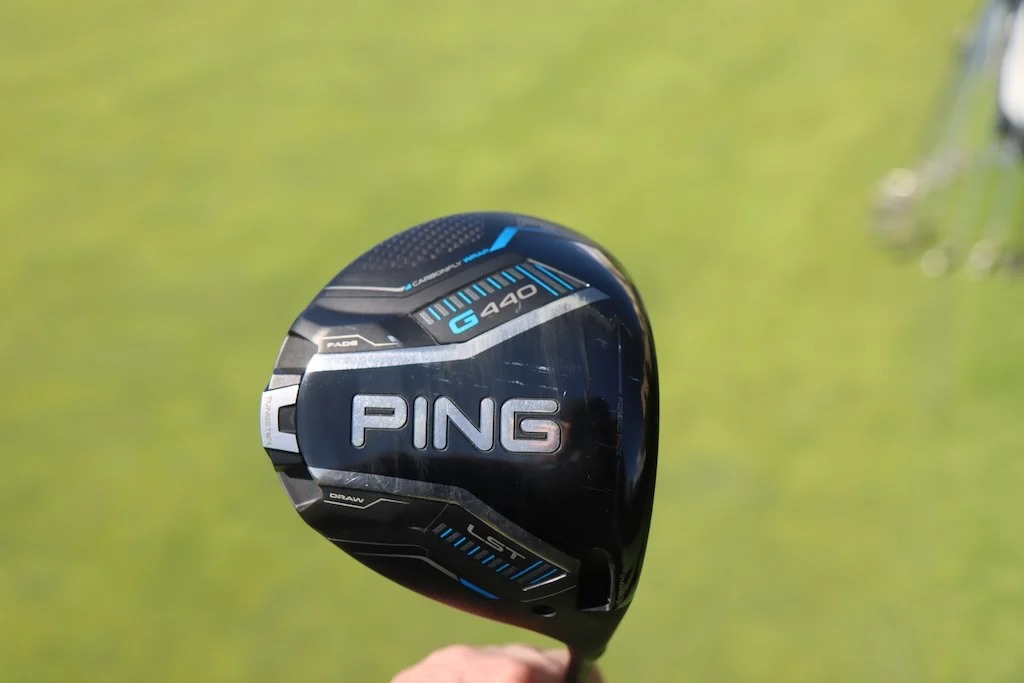
“Driver: Ping G440 LST (9 degrees @7.75) Shaft: Fujikura Ventus Black VeloCore+ 7 X”
This isn’t your average off-the-rack setup. The Ping G440 LST, an older model, but critically, an *LST* model. LST stands for Low Spin Technology, and that’s exactly what Finau, with his incredible clubhead speed, needs. When I’m fitting players hitting over 110 mph, spin often becomes the enemy of distance. Too much spin, and the ball balloons, costing carry and total yardage. The G440 LST, even though it’s not the latest and greatest, was designed to keep spin down, a fundamental truth in driver performance that hasn’t changed. The adjustability down to 7.75 degrees further indicates a clear focus on reducing launch and spin. For someone with Finau’s power, this low loft helps flatten the trajectory and increase roll. I’ve tested countless drivers on a launch monitor, and while new models offer marginal gains in ball speed and MOI, the fundamental equation for long, straight drives remains: optimize launch angle and spin for your individual swing speed.
The shaft choice, the Fujikura Ventus Black VeloCore+ 7 X, is equally telling. The Ventus Black is infamous for its ultra-stiff tip section. In my fitting bay, when I put a Ventus Black in the hands of a player who needs to tame their excessive spin and inconsistent strike, it’s often a revelation. The VeloCore technology, which incorporates a multi-material core from butt to tip, provides exceptional stability. What does that mean in real terms? Less unwanted twist during the swing, particularly at impact. For a high-speed player, this translates to tighter dispersion and more consistent energy transfer, meaning more ball speed and a more stable clubface through impact. I’ve seen firsthand how a shaft like this can transform a chaotic high-speed swing into a controlled missile launch. It’s not for everyone – if your clubhead speed is below, say, 100 mph, this shaft will feel like a rebar, making it harder to load and release effectively. But for someone like Finau, it’s about precision and maximizing efficiency at extreme speeds. The “7 X” signifies 70-gram weight and extra-stiff flex – pure power player specs.
Fairway Wood: Precision and Penetration
Moving to the 3-wood, we see a similar theme:
“3-wood: Callaway Paradym Ai Smoke Triple Diamond T (14 degrees) Shaft: Mitsubishi Diamana D-Limited 80 TX”
The Callaway Paradym Ai Smoke Triple Diamond T (14 degrees) is a low-launch, low-spin head designed for strong players who prefer workability and a penetrating flight. The “T” often signifies a tour-specific head with a slightly smaller profile and more neutral weighting – again, not prioritizing forgiveness as much as raw performance and control. At 14 degrees, this is an aggressive loft, demanding a clean strike and significant speed to get it airborne consistently. I often advise recreational players to opt for a higher lofted 3-wood or even a 5-wood, as the lower loft can lead to low launch and excessive spin, resulting in short, squirrely shots. But for a player of Finau’s caliber, this loft is about getting maximum distance and control off the tee on tighter holes or from the fairway on long par 5s. The deep face on these “tour” woods also helps minimize spin, preventing the ball from ballooning at high swing speeds.
The Mitsubishi Diamana D-Limited 80 TX shaft is another classic tour-spec choice. The D-Limited series is known for its incredible stability and low-launch, low-spin characteristics, much like the Ventus Black. The 80 TX means an 80-gram extra-stiff shaft – serious hardware. In my experience fitting with the D-Limited, it’s a shaft that feels incredibly stout, offering a very connected feel to the clubhead. Players with higher swing speeds generate tremendous centrifugal force, which can cause the shaft to deform excessively. A shaft like the D-Limited minimizes this deformation, leading to a more consistent impact position and tighter dispersion patterns. This entire 3-wood setup screams “power and precision” – far from an easy-to-hit club for the average golfer, but perfect for a bomber like Finau.

Irons: A Blend of Old and New, Forgiveness and Feel
The iron setup is where things get really interesting, showcasing a pragmatic approach to optimizing performance across the bag:
“Irons: Nike Vapor Fly Pro (3), Ping Blueprint T (4-PW) Shafts: Graphite Design Tour AD DI 105 Hybrid X (3), KBS $-Taper 130 (4-PW)”
A 3-iron from the Nike Vapor Fly Pro line? This is a throwback. The Vapor Fly Pro was a hollow-body, speed-focused iron from Nike’s last gasp in the golf club market. The hollow body design allowed for more perimeter weighting and a thinner face, generating higher ball speeds and a lower center of gravity (CG) for easier launch than a traditional blade long iron. It offers a surprising amount of forgiveness for its compact shape, particularly useful for those demanding 230-240 yard shots into the green. The Graphite Design Tour AD DI 105 Hybrid X shaft in this Nike is a premium graphite iron shaft known for its stability and mid-launch characteristics. Using graphite in long irons is a common strategy even for tour pros, providing vibration dampening and a slightly softer feel than steel, which can be beneficial for those crucial long-iron strikes.

Then we shift to the Ping Blueprint T for 4-PW. These are players’ irons, pure and simple. “Blueprint T” signifies a tour-designed, compact, muscle-back blade iron built for ultimate feel, workability, and shot-shaping control. For a pro, these irons offer immediate feedback on strike quality and allow for precise trajectory and spin manipulation. The KBS $-Taper 130 shafts are heavy (130 grams) and extra-stiff steel shafts that promote a mid-launch with low spin. I’ve fit many scratch golfers into $-Taper shafts, and the consistent feedback is how stable they feel through impact, even on aggressive swings. This combination screams “control.” Finau wants to know exactly where the face is and how much spin he’s generating on every shot, and this muscle-back/$-Taper combo delivers that. For the average golfer, these Blueprint T irons would be incredibly unforgiving, exposing every mishit. But for someone whose “mishit” is still better than most people’s perfect strike, they are the tools of choice for surgical precision.

Wedges: Fresh Faces and Familiar Grinds
His wedge setup is a mix of new and custom:
“Wedges: Ping Glide S259 (50-12S, 56-12S), Titleist Vokey Design WedgeWorks Proto (60-04T) Shafts: Nippon N.S. Pro Modus3 125 Wedge S”
Ping Glide S259 is Ping’s latest wedge line, featuring a new face texture and optimized grooves for consistent spin. The “S” grind (Square sole) is a versatile option that works well for a variety of conditions and swing types. The 12 degrees of bounce on both the 50 and 56-degree wedges is a mid-to-high bounce, offering good turf interaction and preventing digging – especially useful for a player who takes a healthy divot. The Vokey WedgeWorks Proto (60-04T) is the interesting piece here. “Proto” implies a custom, perhaps unreleased or tour-specific grind. The “04T” likely refers to a very low bounce (4 degrees) and a T-grind, which is known for its aggressive heel and toe relief, making it incredibly versatile for open-face shots around the green and from tight lies. This specific Vokey is for those delicate, precise short-game shots where maximum versatility is key. This setup highlights the importance of matching wedge bounce and grind to specific course conditions and shot requirements. The Nippon N.S. Pro Modus3 125 Wedge S shafts, weighing in at 125 grams, are stout enough to provide control and consistent feel across all three wedges, ensuring continuity with his iron set.

Putter, Grips, and Ball: Personal Preferences Matter
Finally, the putter, grips, and ball round out the bag:


The Ping Scottsdale Tec Ally Blue putter is an older choice, but putters are highly personal. If it rolls true, it stays in the bag. The Lamkin UTx Mid grips are a high-performance grip known for their firm feel and excellent all-weather performance – popular among tour pros who want maximum control without excessive vibration dampening. And the Titleist Pro V1 Left Dot ball is a special tour-only variant of the Pro V1, designed for slightly lower spin and a more penetrating flight than the standard Pro V1, again catering to a high-speed player who wants to control spin off the driver and long irons while maintaining feel around the greens. The “Left Dot” is often chosen by players who generate a lot of speed and spin, as it offers a slightly more penetrating flight and less spin across the board, without sacrificing green-side control. This is the definition of optimizing every last detail for performance.
The Tyler Reed Takeaway
What can the everyday golfer learn from Finau’s bag? It’s not about playing exactly what the pros play – that would be a disaster for most amateurs. Instead, it’s about understanding the *principles* behind their choices. Finau’s bag is a masterclass in custom fitting to optimize every club for his specific swing characteristics and desired ball flight. He prioritizes low spin and stability in his driver and fairway wood to maximize distance and accuracy at high speeds. He blends a forgiving utility iron with tour-level blades for a balance of playability and precision. And he fine-tunes his wedges and ball for specific short game and full swing needs.
My advice, after fitting hundreds of golfers, is this: don’t chase the latest marketing hype alone. Go get fit. Understand your launch numbers – ball speed, launch angle, spin rate. That G440 LST from a few years ago might actually be better for your game than the latest model if it’s properly fit to your swing. Don’t be afraid to mix and match brands or even older models. The goal is performance, not necessarily marketing dollars. Finau’s bag proves that perfectly: it’s a collection of tools chosen for ultimate effectiveness, not just what’s new on the shelf. This level of optimization is what separates the best, and it’s a lesson we can all apply, albeit at our own skill levels.
