

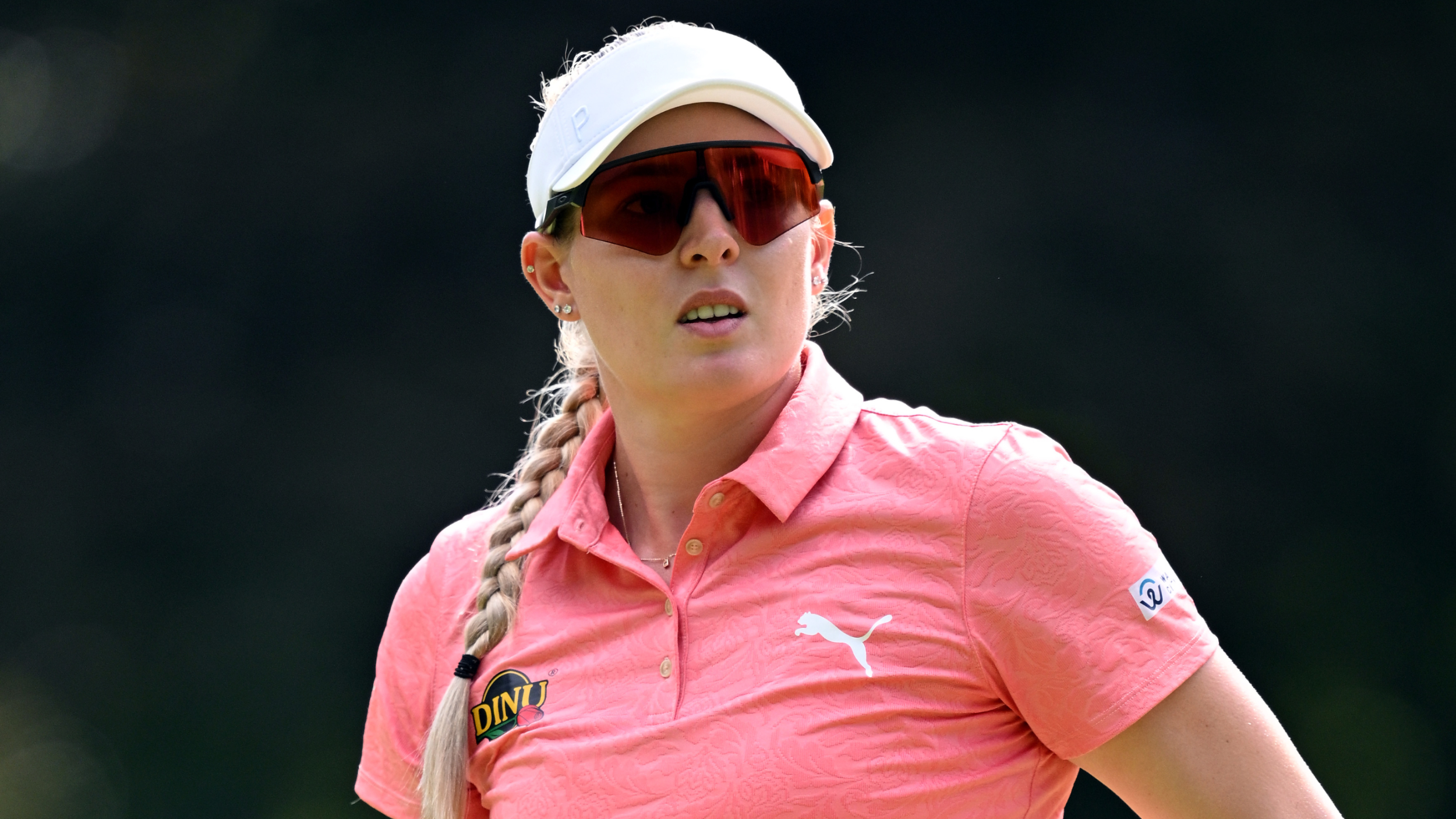

Charley Hull’s Saudi Masterclass Signals Something Bigger for Women’s Professional Golf
There’s a moment in every tournament when you can feel the shift—when a player stops simply competing and starts taking control of the narrative. For Charley Hull at the PIF Saudi Ladies International, that moment came around the turn at Riyadh Golf Club, and what unfolded over the back nine told us something important about where women’s professional golf is heading.
Hull’s one-stroke victory over Casandra Alexander and Akie Iwai wasn’t just another LET win. It was a clinic in tournament golf during the moments that matter most, and having spent 35 years watching the best players in the world navigate pressure situations, I can tell you that what Hull demonstrated on Friday was the kind of composure and execution that separates champions from contenders.
The Momentum Shift Nobody Should Ignore
Here’s what strikes me about Hull’s performance: she started the day tied for 11th, three shots back. In today’s professional golf landscape, especially in events with this kind of prize money, that’s not a comfortable position. Most players would be playing for a top-10 finish and a solid paycheck. Instead, Hull made the decision—consciously or subconsciously—to attack.
“Hull clearly meant business, as evidenced by a brilliant approach at the par-four ninth, leaving her a tap-in to make amends for a bogey on the eighth.”
That’s the language of a player who’s decided the tournament is hers to win. The bogey at eight could’ve derailed her mentally—I’ve seen it happen a thousand times. Instead, the response was immediate and emphatic. In my experience caddying for Tom Lehman back in the ’90s, that’s the tell-tale sign of a player operating at peak confidence. One bad hole doesn’t become two; it becomes motivation.
What really impressed me, though, was how Hull handled adversity mid-round. The bogey at the 10th came right when she was building momentum. A lesser competitor might’ve tightened up. Instead:
“She responded magnificently with another birdie at the 11th to go back to two under for her round, which she followed with an eagle at the par-5 12th, holing a long putt to take a share of the lead at 16 under.”
That eagle was the inflection point. And then came the finishing flourish—birdies at 13, 15, and 18 for a closing 65 that essentially secured the trophy.
The Money Tells the Real Story
Let’s talk about something that doesn’t get enough attention: the purse structure here. The LET’s $5 million total prize fund for this event, with Hull pocketing $750,000, represents a seismic shift in professional women’s golf. When I started covering the tour in the ’90s, that kind of money would’ve been unthinkable for a regular-season LET event—or any women’s golf event, frankly.
What the Saudi investment is doing isn’t just increasing prize money; it’s fundamentally changing the competitive calculus. Players like Hull now have real, substantial financial incentives to compete aggressively from day one. The purses are large enough that even a top-10 finish has meaningful financial consequences. That breeds better golf, more drama, and higher stakes.
Is there complexity around this funding? Of course. That’s a legitimate conversation. But I’m not here to litigate geopolitics—I’m here to tell you what I see on the golf course, and what I see is professional women golfers competing for purses that finally, finally reflect the quality of play and the audience that watches it.
Hull’s Clutch Gene and What It Means
Charley Hull has won five LET titles now, and this is her first since returning to the same venue last year (the 2024 Aramco Team Series Riyadh). That’s not coincidence—that’s a player who knows how to win at venues where she’s succeeded before. She understands the course, understands herself on that course, and understands what it takes to close.
The real story isn’t just that she won. It’s that she had to beat two other players—Alexander and Iwai—who were playing excellent golf themselves. Alexander was leading at one point; Iwai reeled off three consecutive birdies to get right back in it. This wasn’t a walk; this was genuine, high-level competition.
“Needing a birdie to force a playoff with Hull, Alexander could only par the 18th, condemning her to a tie for second with Iwai as Hull sealed her fifth LET title.”
That 18th hole is always the lesson, isn’t it? Alexander needed to force extra holes and couldn’t get it done. Hull, meanwhile, had already secured the clubhouse lead and forced Alexander into a position where she had to birdie. In my experience, that’s winning from a position of control—not flashy, but effective.
What This Tells Us About the Season Ahead
This is the opening event of the LET season, which means it’s essentially a statement of intent. Hull’s statement is clear: she’s ready to compete at the highest level against the best players in the world. The LET circuit just got sent a message that when the purses are significant and the competition is strong, Hull’s the kind of player who steps up.
I think we’re going to see more performances like this throughout the year—the money is too good, the competition too fierce, and the global audience watching too large for anything less than your best golf to succeed. That’s good for the sport. That’s what women’s professional golf deserves.
