


As a golf course architecture enthusiast who has trod the fairways of over 200 courses across the globe, I’ve developed a keen appreciation for the subtle artistry and strategic genius that goes into crafting truly memorable golf holes. You hear about the ‘Bear Trap’ or ‘Amen Corner,’ these formidable sequences of holes that have etched themselves into golfing lore. But what about those individual holes that, through a compelling design, a quirk of history, or a sheer stroke of descriptive brilliance, earn a nickname that captures their very essence?
My recent travels, and a deep dive into some fascinating insights, brought to light a collection of such holes. These aren’t just holes with names; they’re holes where the moniker itself is a whispered premonition, a nod to the architectural daring, or a tribute to moments that have become part of the game’s rich tapestry. Let’s delve into a few that truly capture the imagination.
The Art of the Apt Alias: What Makes a Named Hole Special?
The best individual hole names do more than simply identify a spot on the scorecard. They imbue the hole with character, sometimes even a touch of menace or majesty. They can perfectly foreshadow the challenge ahead, hint at a clever design element, or memorialize a significant event. And sometimes, they just evoke the visceral, gut-wrenching, or heart-swelling feelings a golfer is almost certain to experience.
“Such an alias may foreshadow the challenges ahead. It sometimes reflects specific architectural elements. It could serve as a tip of the cap to historical events that transpired there. And it might even tap into the visceral responses golfers are certain to have while they play the hole. Regardless of the association, these names are nothing if not appropriate.”
This sentiment perfectly captures the magic we golf tragics seek. It’s about the deep connection between the name, the design, and the experience.
A Gambler’s Delight: Where Risk Meets Reward
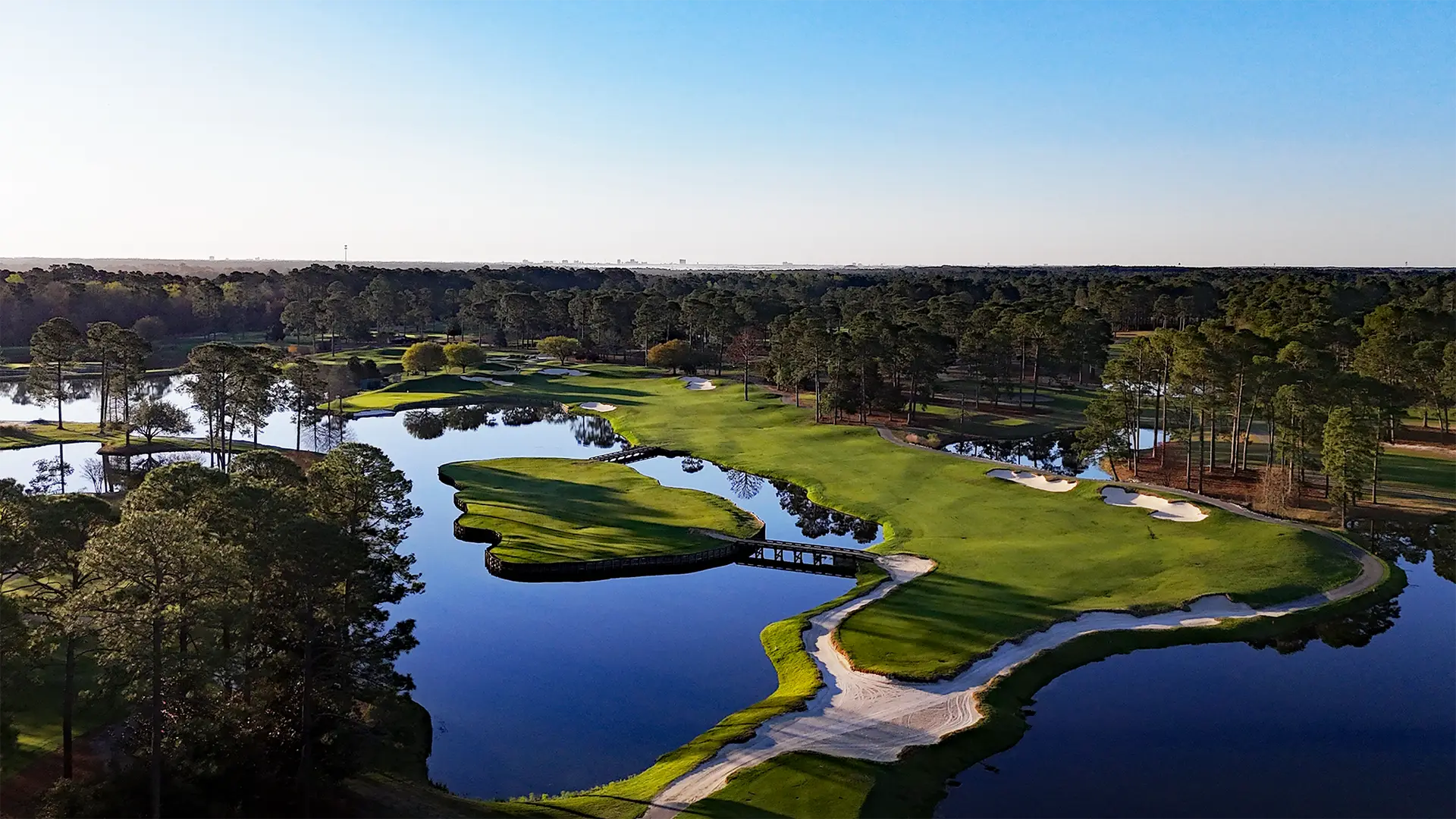
Take the 6th hole at King’s North at Myrtle Beach National, known simply as “The Gambler.” This is a par-five that immediately tells you what’s at stake. Most par-fives offer a sliver of hope for the longer hitters to get home in two, but always with the concession of pulling out a hybrid or fairway metal for a heroic, yet less precise, second shot. Not here.
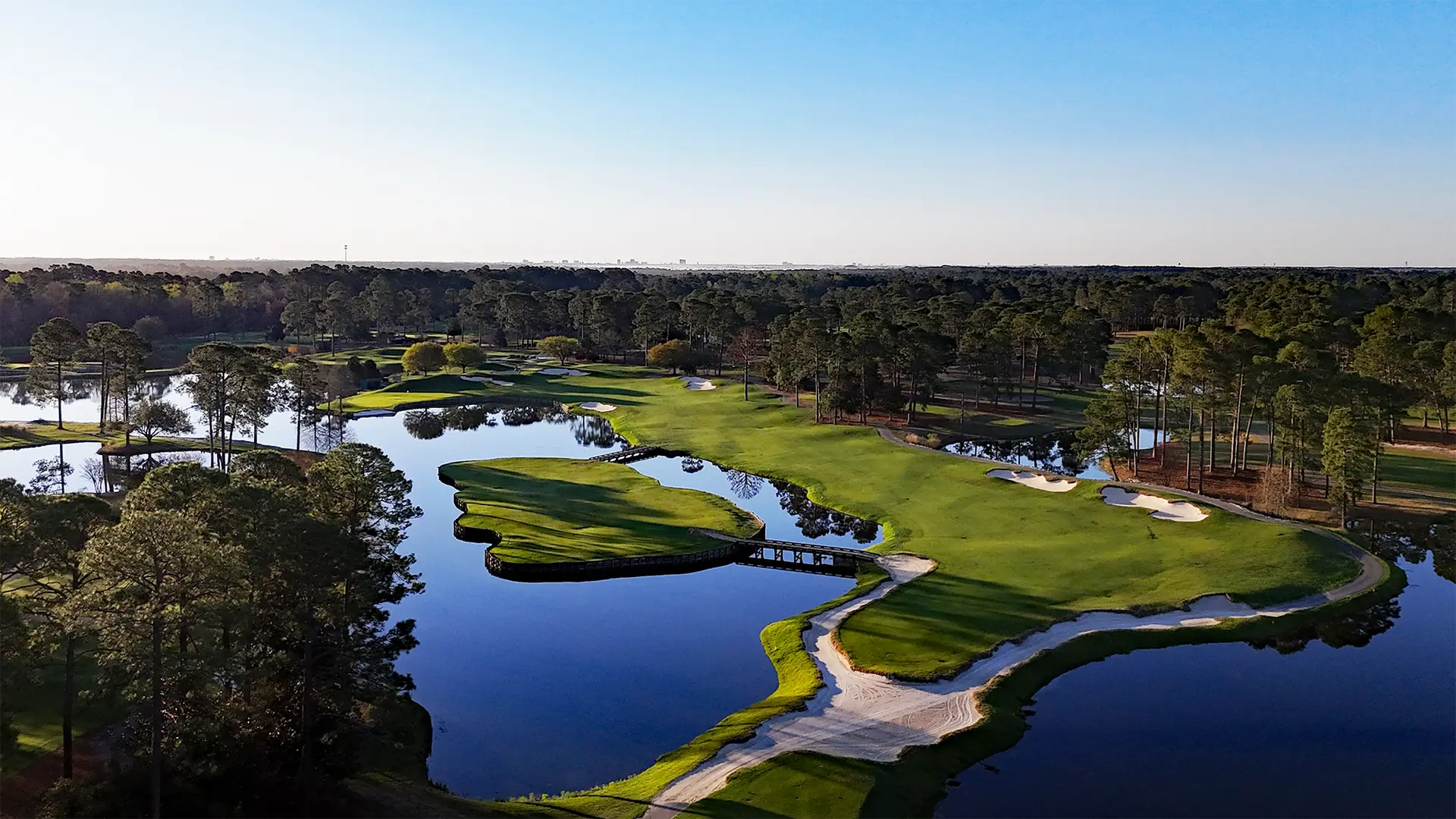
The ingenious design move here is an island fairway, a daring shortcut off the tee, positioned to the left. Hit it, and you’re potentially looking at a mere 150-160 yards into the green. Miss it, and the penalty is severe. This is Pete Dye-esque risk-reward in its purest form, compelling the ego to take command. As the article states, “such a tee shot comes with plenty of risk—hence, this hole’s name: The Gambler.” It’s an iconic hole in a region packed with golf, and one I always look forward to playing and, inevitably, wrestling with that decision from the tee.
Deceptive Peaks and Buried Lies: Design Dictates Drama
Moving from the Carolina coast to the desert landscapes of Arizona, we encounter “Hidden Green,” the 1st hole on Troon North’s Monument course. From the elevated tee box, the vista is expansive, inviting. But the name itself, a quiet warning, tells you that all is not as it seems. The fairway dips, recessing the green from view, save for a sliver of its front right. This strategic concealment, a brilliant design stroke, ensures that local knowledge or a good yardage book is paramount. Uninformed players aiming for the center of the green, a prudent choice on most courses, might find themselves on the wrong side of a significant slope bisecting this green. It’s a masterful piece of design, immediately reminding you that desert golf demands precision and strategic thinking, not just power.

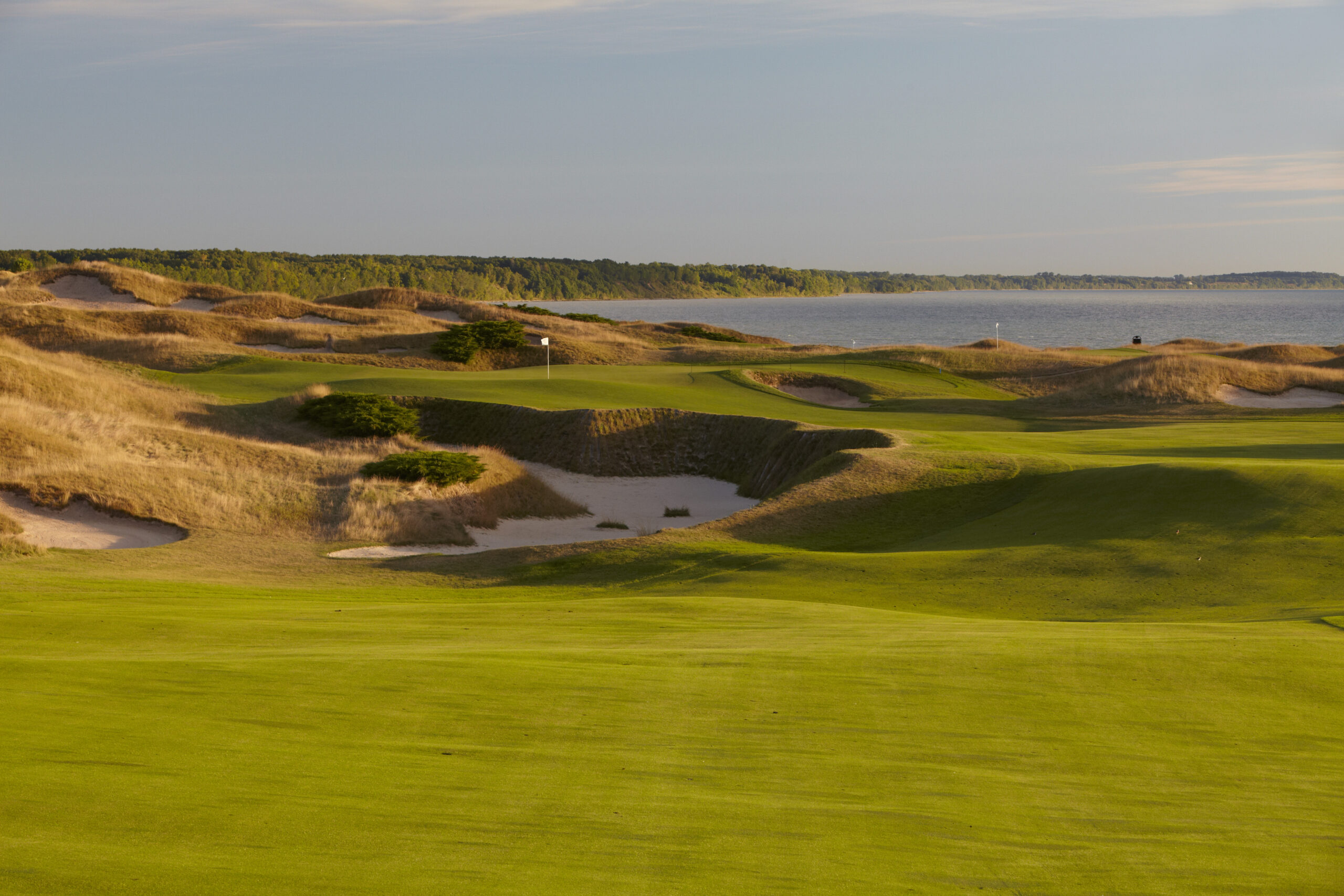
Then there’s the legendary Whistling Straits, a Pete Dye masterpiece, where “Sand Box” on the 11th hole is a name that doesn’t just describe, it punishes. This 645-yard par-five is a behemoth, littered with Dye’s trademark bunkers – over 100 within eyeshot. But the true terror, the one that solidifies the name, is the monstrous, gaping bunker that guards the final 100 yards of the left side. It’s less a bunker and more a geologic feature, capable of swallowing balls and spirits whole. I’ve witnessed more than one golfer emerge from its depths looking like they’ve wrestled a badger. The name “Sand Box” might sound playful, but this particular sandbox is anything but. It’s raw, intimidating, and quintessential Dye.
Just a few miles away, at Kohler’s other gem, Blackwolf Run, the 2nd hole on the River course is chillingly named “Burial Mounds.” This par-four is a prime example of how even a slightly off-target tee shot can lead to golfing purgatory. Miss left, and you’re in dense, impenetrable woodlands. Bail out too far right, and you’re into a series of massive moguls covered in thick, unforgiving rough. I’ve been there, staring at an obstructed view, wrestling with awkward lies, and understanding exactly why it earned its name. As the article vividly describes: “Awkward stances, gnarly lies, and obstructed views of the green await players whose drives venture into that rugged area, which reinforces the 2nd hole’s name. Miss to the right, and there’s a good chance you’ll be dead.” It’s a testament to Dye’s genius in creating holes that are as visually daunting as they are strategically challenging.

A Journey to Heaven… and a Calamitous Corner
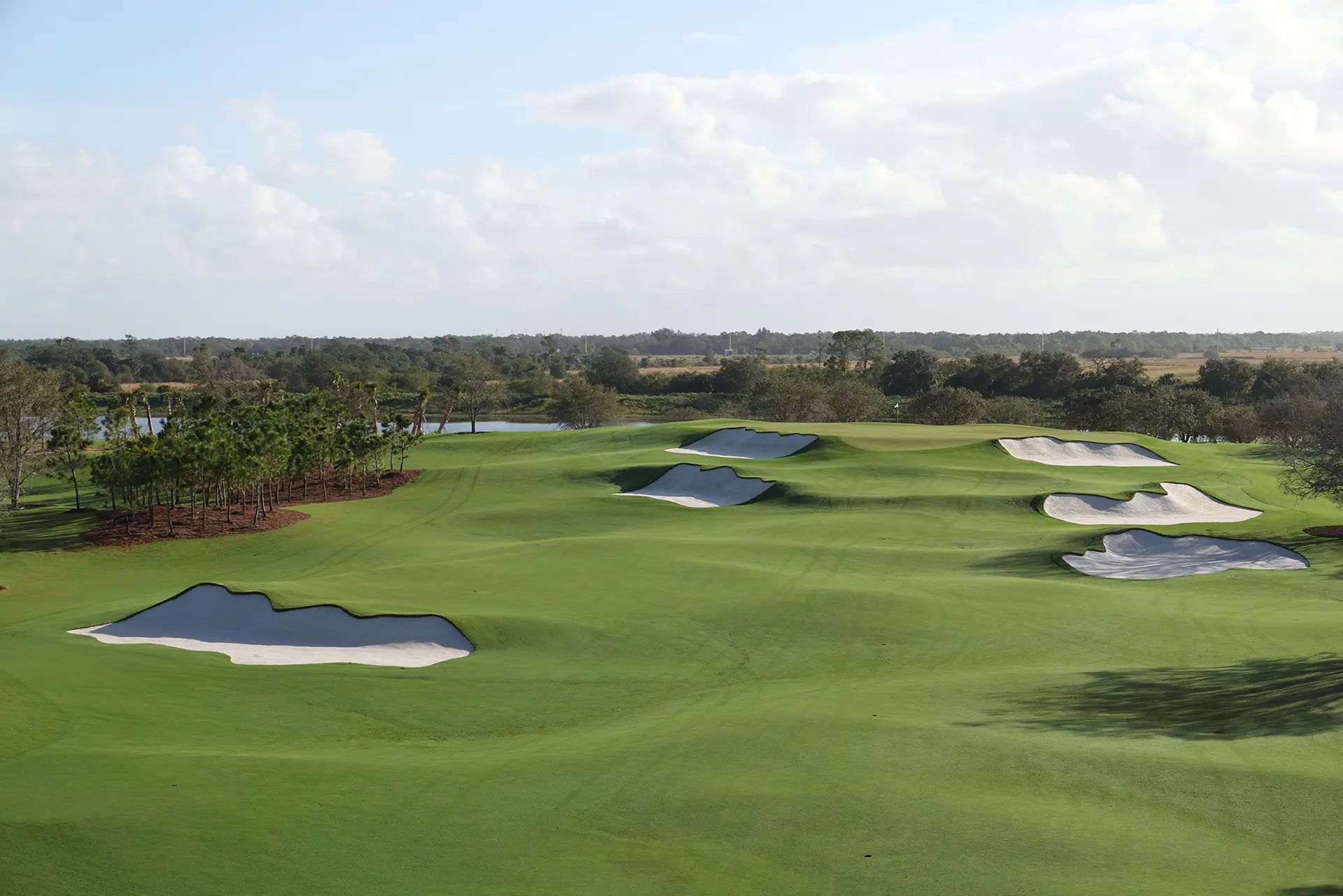
Contrast this with the almost lyrical “Stairway to Heaven,” the 13th at Apogee’s Apex course in Indiantown, Florida. Conceived by Tom Fazio II and Mike Davis, this course is a masterclass in earthmoving, creating a dramatic, undulating landscape from what was once flat. This short, potentially drivable par-four climbs significantly uphill, featuring distinct ledges that present a literal staircase of finely manicured turf leading to the putting surface. The name evokes not only the physical climb but also the hopeful ambition of a well-struck approach finding one of those advantageous flat lies for a short wedge in. The prospect of a birdie here truly feels like a divine reward.
Across the pond, linksland offers some of the most memorable holes, and none are more aptly named than “Calamity Corner,” the 16th at Royal Portrush’s Dunluce course. This par-three is a beast, playing well over 200 yards, often into the wind, and demanding a supreme carry over a cavernous, 50-foot ravine. I’ve stood on that tee, the Irish sea breeze whipping, and felt the sheer terror of that chasm. It’s a hole where mere survival feels like a victory. This is a hole that leaves an indelible mark on your scorecard and your psyche. Its name is not a suggestion; it’s a stark warning.

A Tribute to Legends: Hogan and Morris
Finally, we revisit the hallowed ground of Scotland, where two legendary names are immortalized on the courses they graced. Carnoustie’s 6th hole, a par-five, is forever known as “Hogan’s Alley.” This name, bestowed in 2003 by Open Champion Paul Lawrie, recognizes Ben Hogan’s incredible feat in the 1953 Open. Hogan flawlessly navigated the narrow passage between out-of-bounds left and central fairway bunkers, hitting precise drives to that tight landing zone all four days, ultimately birdying each of them and winning by four strokes. It’s a testament to surgical precision under pressure, and a name that resonates with the history of the game.
While the 17th at St. Andrews is famed as the ‘Road Hole,’ its closing partner, the 18th is called “Tom Morris.” This name, perhaps less overtly dramatic but equally meaningful, honors the man whose legacy is woven into the very fabric of the Old Course. The course’s longtime greenskeeper, Old Tom Morris, not only worked out of a shop near this very green but is credited with shaping its contours—a design he reportedly considered one of his finest. It’s a beautifully understated tribute to a giant of golf history, concluding a round on the most iconic course in the world with a tip of the cap to its enduring steward.

These holes, from the sun-drenched fairways of Myrtle Beach to the windswept links of Ireland and Scotland, are more than just numbers on a scorecard. Their names are an extension of their architectural genius, a tribute to their history, and a promise of the golfing drama that awaits. They are a testament to how deeply interwoven story, design, and experience can be in the game we love.
