


Ah, the golf course. More than just 18 holes, isn’t it? It’s a canvas where architects paint with earth, water, and sand, shaping experiences that linger long after the final putt drops. I’ve been fortunate enough to walk over 200 of these masterpieces across the globe, from the windswept links of Scotland to the desert jewels of Arizona. What truly captivates me, though, beyond the sheer beauty, is the artistry of a perfectly named hole – one whose moniker perfectly encapsulates its challenge, its spirit, or its place in the game’s rich tapestry.
We often hear about the multi-hole legends: the “Bear Trap,” the “Snake Pit,” and, of course, the sacrosanct “Amen Corner.” These stretches are rightly celebrated, their names echoing the drama they reliably deliver. But the individual hole, too, can possess a moniker that sings, a title that whispers promises or threats of what lies ahead. Let’s delve into a few of these singular gems, holes whose names are as compelling as their design.
The Gambler: High Stakes in Myrtle Beach
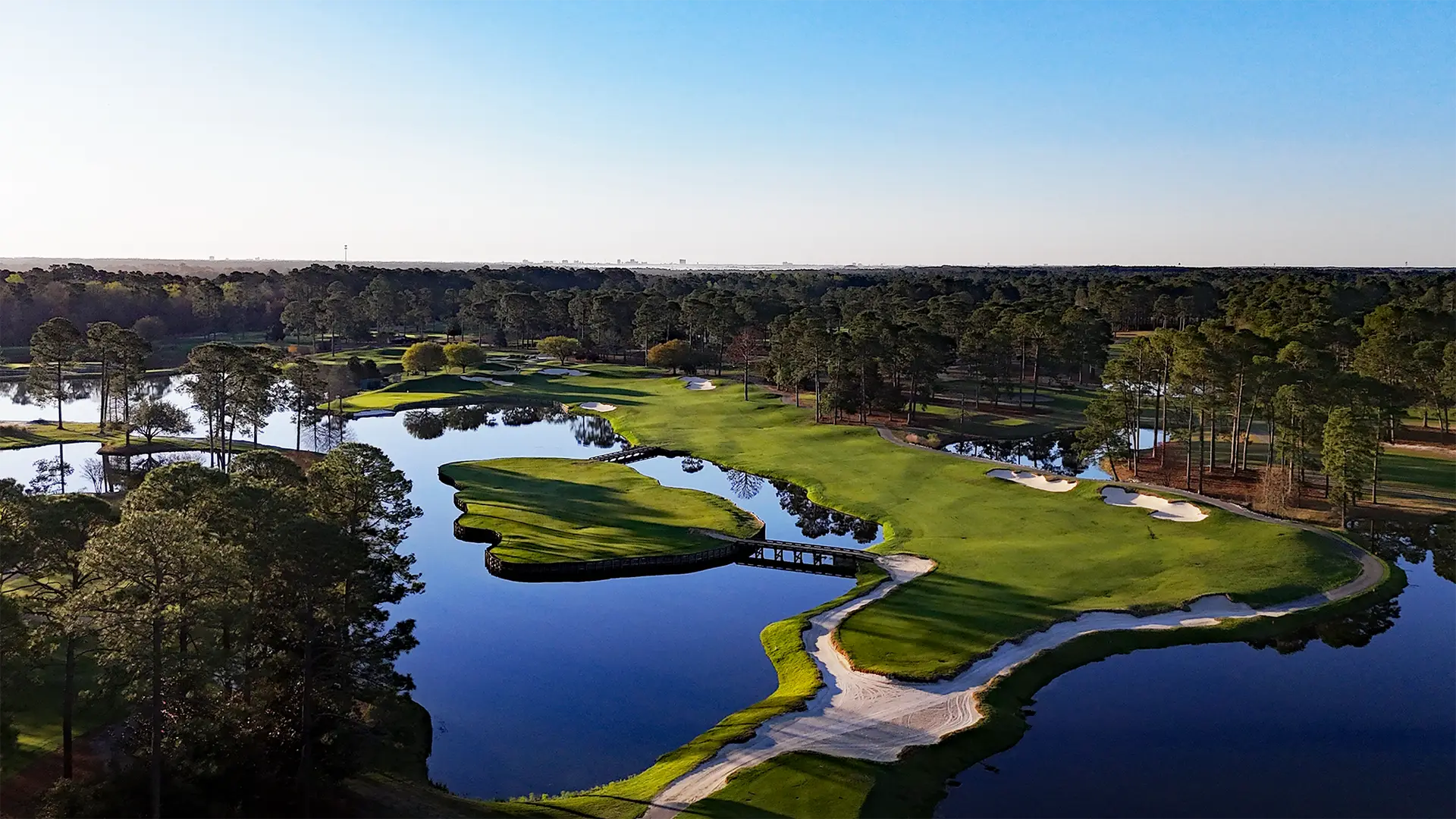
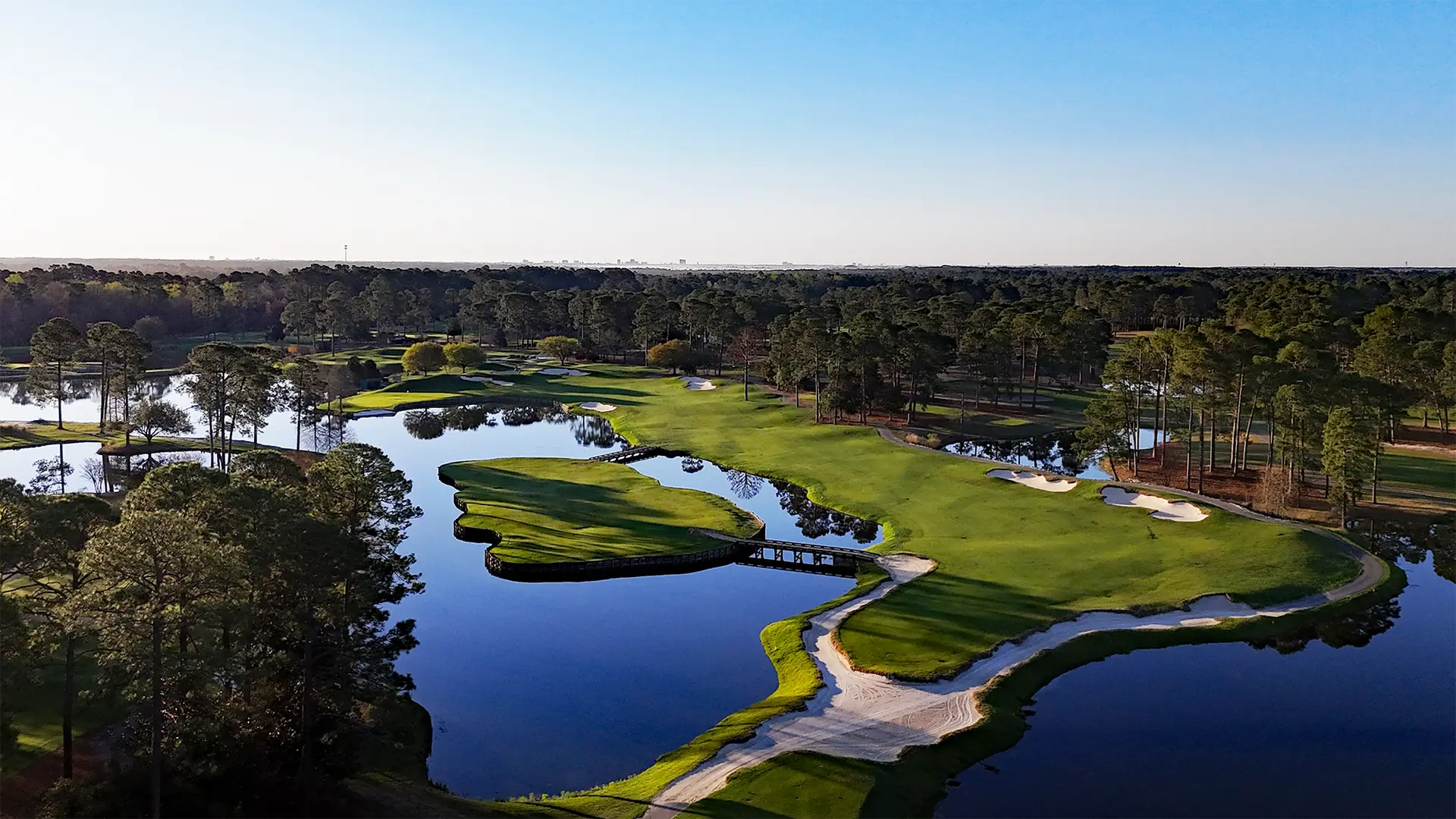
Myrtle Beach National’s King’s North layout is a beloved stop for many a golf traveler, and its 6th hole, “The Gambler,” is a masterclass in strategic temptation. From the elevated tee, the fairway unfurls before you, a wide expanse inviting a confident rip. But then, to your left, across a watery chasm, a tantalizing island fairway beckons. It’s a classic risk-reward proposition, laid out with delightful clarity by the architect.
“Those who live dangerous and take aim at that island fairway might have only 150 or 160 yards into the green, but such a tee shot comes with plenty of risk—hence, this hole’s name: The Gambler.”
A successful plunge to that island shortcut leaves you with a mere wedge or short iron into the green, an eagle or easy birdie possibility on this par five. But miss just a touch, left or right, and your ball is swallowed by the lake, leaving you to ponder whether fortune favors the bold or the wise. It’s a hole that demands a decision, and I’ve stood on that tee many times, ego battling pragmatism, the water glistening, and the island fairway winking mischievously.
Calamity Corner: The Dunluce’s Daunting Drop
Crossing the Atlantic to the rugged coast of Northern Ireland, we arrive at Royal Portrush, home to the magnificent Dunluce links. The 16th hole, notoriously dubbed “Calamity Corner,” is a par-3 that stands as a testament to nature’s formidable influence on golf architecture. This hole plays a staggering 236 yards from the back tees, often directly into the teeth of a wind whipping off the North Atlantic. But it’s not just the length that earns its ominous name.
“Some have argued that the 16th hole on Royal Portrush’s championship layout is the most dramatic and intimidating one-shot hole that isn’t set on a body of water. It’s hard to argue, given that the par three—already playing 236 yards from the back tee—curls around a ravine that drops precipitously more than 50 feet.”
The green sits precariously atop a plateau, and any shot lacking the distance to carry the chasm to the right will plummet into a gaping, unforgiving ravine, a 50-foot drop where a recovery is more prayer than stroke. Having stood on that tee, feeling the bite of the wind, the green seeming impossibly distant and small, the name “Calamity Corner” resonates deeply. It’s a place where a good swing feels heroic, and a poor one truly catastrophic. Alister MacKenzie would have admired the sheer nerve required here.

Hogan’s Alley: Precision at Carnoustie
Back to the birthplace of golf, Scotland, where tales of legendary play are woven into the very fabric of the links. Carnoustie’s Championship course, a stern test for any golfer, features the 6th hole, now famously known as “Hogan’s Alley.” This par five, long and typically into the wind, earned its reputation not from a natural hazard, but from the surgical precision of one of golf’s true legends, Ben Hogan.
“The first par five at Carnoustie was christened with its “Hogan’s Alley” moniker only in 2003, though the name was bestowed by Paul Lawrie, who won the Open Championship there in 1999, so it’s safe to say he knew what he was talking about. As the club acknowledges, this hole is ‘where Carnoustie starts to turn up the heat.'”
The ideal line off the tee is a narrow chute between out-of-bounds left and menacing bunkers in the center of the fairway. In 1953, during his Open Championship victory, Hogan famously threaded this needle four days in a row, making birdies each time. His unwavering, almost machine-like accuracy through this treacherous stretch cemented his legend and gave the hole its enduring title. It’s a name that evokes not dread, but respect for the highest level of execution, a tribute to a master of the game. For visitors, understanding this history only enhances the experience of playing a true championship course.
Building the “Burial Mounds” at Blackwolf Run
Switching gears dramatically, let’s consider Blackwolf Run’s River Course in Kohler, Wisconsin, a creation of the master himself, Pete Dye. The 2nd hole here is aptly named “Burial Mounds.” Dye is known for his dramatic, sometimes intimidating, but always thought-provoking designs, and this hole is a prime example. The left side of the fairway is guarded by dense, impenetrable woodlands, a penalty so severe it’s almost better to be in the water. The architect’s intent is clear: provoke a bailout to the right. But that’s where the “Burial Mounds” truly come into play.

These are not your garden-variety roughs. They are towering moguls, covered in thick, gnarly fescue, guaranteed to present an awkward stance, an obstructed view, or a lie so deep your ball disappears. It takes a bold, precise drive to find the center of the fairway, but finding those mounds often means a double bogey, or worse, becoming “buried” in the process. It’s vintage Dye, creating discomfort to test skill and nerve, and a name that perfectly warns of the fate awaiting a wayward shot.
These holes, from the temptations of “The Gambler” to the historical gravitas of “Hogan’s Alley,” and the architectural warnings of “Calamity Corner” and “Burial Mounds,” demonstrate the power of a name. They are more than just labels; they are invitations to understand, to respect, and ultimately, to deeply appreciate the design philosophy that makes each one special. They are memories waiting to be made, or perhaps, nightmares waiting to come true. And that, dear duffers, is why we keep coming back.
