

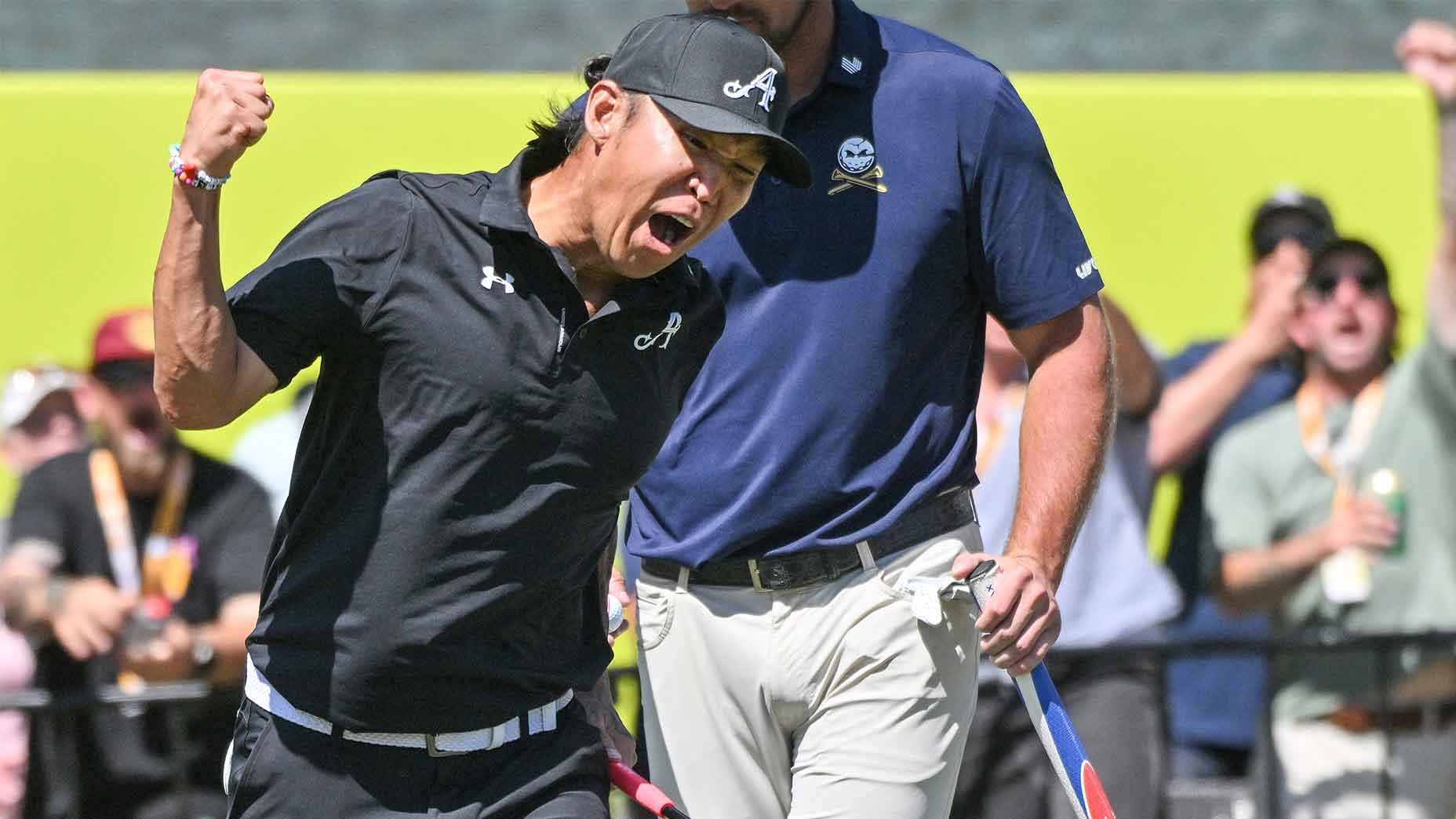

Anthony Kim’s Adelaide Victory Isn’t Just a Comeback—It’s a Referendum on Second Chances in Professional Golf
I’ve been covering professional golf for 35 years. I’ve watched players bounce back from injuries, slumps, and public embarrassment. But I’ve never seen anything quite like what Anthony Kim did at LIV Australia on Sunday morning.
Let me be direct: this isn’t just another feel-good sports story. It’s a moment that forces the entire golf world to reckon with uncomfortable questions about redemption, the limits of human resilience, and whether our sport—a game built on tradition and second-guessing—can actually embrace genuine transformation.
The Magnitude of What We Witnessed
When Kim shot 63 in the final round to defeat Jon Rahm and Bryson DeChambeau by three strokes, the golf world didn’t just witness a victory. We witnessed something that, by the metrics of modern sports narrative, should have been impossible.
Consider the timeline: Kim’s last professional victory came in 2011—during the Obama administration, when Instagram didn’t exist. He then disappeared from public life for over a decade. When he returned, he struggled visibly on LIV Golf, eventually getting relegated. Even after clawing his way back through a promotional event, there was nothing—absolutely nothing—in his recent tournament history to suggest he could execute at the highest level under maximum pressure.
And yet, he did exactly that.
“Outside of the Ryder Cup, you just don’t see guys fist-pumping a whole lot these days. But AK just kept pouring putts in the middle and unleashing haymakers. He didn’t miss a shot the last…two hours?”
That observation from Dylan Dethier captures what made Sunday genuinely special. This wasn’t a player grinding out a one-shot victory through steady play. This was a man in an almost transcendent state, where the hole looked like an asteroid crater and every stroke found its target.
The Elephant Nobody Wants to Ignore
Having caddied in professional golf during the 1990s, I learned that what happens off the course shapes everything that happens on it. The source material here doesn’t shy away from the difficult truth: Kim battled serious addiction and depression. He’s been sober for two years—celebrated that milestone publicly on Instagram just five days before this victory.
That context isn’t decoration. It’s the load-bearing wall of this entire story.
“He detailed suffering from such serious withdrawal symptoms on his first days in rehab that he needed physical assistance to walk. He suggested he had used drugs while playing in major championships.”
What strikes me most is how Kim’s willingness to share these details—progressively, carefully, at his own pace—has changed the narrative around his return. This isn’t a player pretending the lost decade never happened. It’s a man who lived through genuine darkness and emerged with something resembling peace.
In my experience, that kind of honesty terrifies sports institutions. It’s messier than a simple injury comeback. It demands empathy rather than just admiration. But it’s also infinitely more powerful.
What This Means for LIV Golf—And Professional Golf Broadly
The cynical take on Sunday’s victory is that it benefits LIV Golf immensely. The league needed a genuine sporting moment—not just spectacle, but competition. Having Rahm, DeChambeau, and Kim fighting it out on the final nine holes in front of massive crowds in Adelaide provided exactly that.
“in this moment, I have no idea. In many ways this feels like an Anthony Kim story more than it does a LIV story — but the massive crowds and frenetic energy on site contributed tremendously to a wild night of golf viewing, so the fact that it came at LIV’s flagship event has to be a win.”
But here’s where I think the analysis gets more interesting: Kim’s victory matters precisely because it’s primarily an Anthony Kim story, not a LIV story. The league can’t manufacture this kind of narrative. It can’t pay for it, market it, or manufacture it with celebrity concerts and sparklers. It happened because a player showed up, faced two world-class competitors, and played the golf of his life when it mattered most.
That’s the template. Not more gimmicks. More opportunities for genuine competition and, frankly, more humility about what fans actually want to watch.
The Deeper Lesson
In three and a half decades around this game, I’ve learned that golf rewards resilience in ways most sports don’t. There’s something about the individual nature of the competition, the constant opportunities to rebuild after failure, that makes second acts possible here in a way they aren’t in team sports.
But Kim’s story pushes past that. He didn’t just come back from a missed cut or a bad season. He came back from the abyss—from a place where the game itself became toxic, where his own mind was working against him.
The fact that he won, and won decisively, against legitimate world-class competition, suggests something genuinely hopeful about human potential. Not in a Hallmark-card sense, but in a real, gutsy, earned sense.
Whether LIV Golf can capitalize on this momentum is a separate question entirely. What matters right now is that professional golf got to witness something rare: a story where the redemption arc doesn’t feel manufactured, where the comeback feels earned, and where the final chapter—at least this chapter—ends with champagne and genuine joy.
That’s worth staying up until 1 a.m. for. That’s worth talking about. And in the landscape of modern professional golf, that’s genuinely hard to come by.
