


TGL’s First Full Season Delivers Promise, But Tiger’s Absence Raises Real Questions
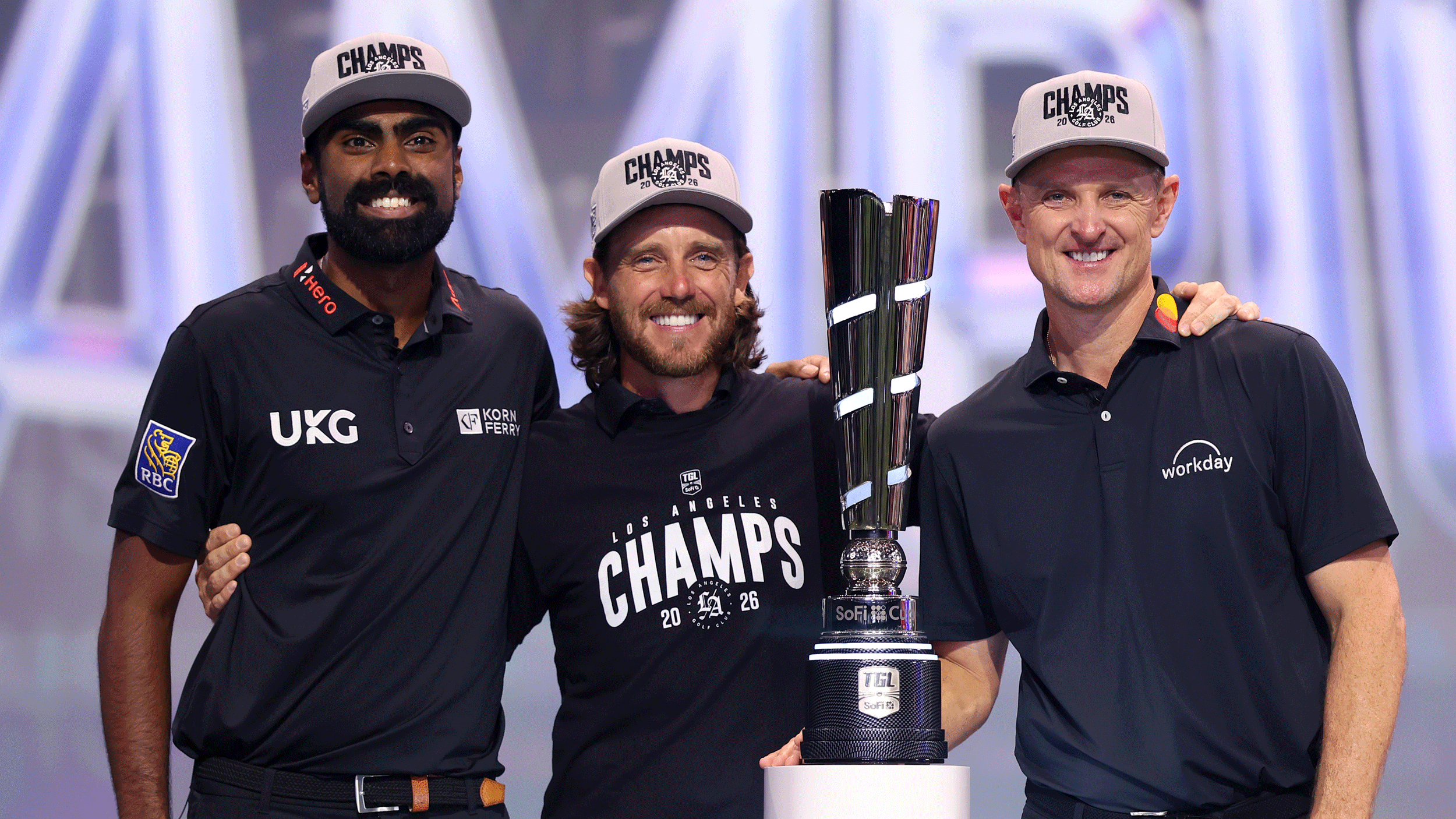
Los Angeles Golf Club’s dominant 2-0 sweep over Jupiter Links in the TGL Finals was impressive on its surface—three consecutive eagles to close it out will always look good on highlight reels. But what really caught my attention watching this inaugural season wrap up had less to do with Tommy Fleetwood’s putter and more to do with what Tiger Woods’ presence (and ultimate failure to deliver) tells us about where this league is heading.
In my 35 years covering professional golf, I’ve seen plenty of formats come and go. Some stick around because they genuinely add something to the sport’s ecosystem. Others fade because they’re solutions looking for problems. TGL, I think, is genuinely trying to solve something real—the shrinking window for golf on primetime television—but this season exposed both the format’s strengths and some uncomfortable truths about its competitive foundation.
The Fleetwood Factor and West Coast Dominance
Here’s what strikes me most: Los Angeles only lost two matches all season. Two. In a league built on parity and drama, that’s either a sign of exceptional team-building or a red flag about competitive balance. I’m inclined to think it’s the former, but barely. The combination of Fleetwood, Justin Rose, Sahith Theegala, and Collin Morikawa represents serious golf talent—these aren’t mid-tier players filling roster spots. When you stack that kind of consistency across your lineup, the format almost becomes secondary.
Having watched Fleetwood work his way through European Tour events for years, I can tell you he’s the kind of competitor who elevates those around him. Same with Rose. They don’t need perfect conditions or a gimmick-laden format to compete—they’re just good golfers. The fact that LA arrived as the No. 2 seed behind Rory McIlroy’s Boston Common, then swept through the playoffs, suggests the seeding might’ve been more about regular-season variance than actual team strength.
Tiger’s Cameo and the Jupiter Links Question Mark
Now, let’s talk about the elephant in the room. Jupiter Links brought in Tiger Woods for match two after struggles in match one. That’s not a team adjustment—that’s panic. And even with the greatest golfer of this generation, they still got steamrolled 9-2.
> “Tiger Woods was introduced into the Jupiter Links line-up for match two (and would have played match three) in place of Kevin Kisner, but even the 15-time Major winner could not help the No.4 seed turn things around.”
In my experience, when your franchise needs to call in a franchise savior mid-series just to stay competitive, you’ve got a roster construction problem, not a one-match problem. I have nothing but respect for what Tiger’s doing at his age, but this felt less like a brilliant strategic pivot and more like acknowledgment that the team wasn’t built to win.
That said, the financial incentive here is worth noting. Jupiter Links still walked away with $1.125 million per player just for finishing second. That’s real money. For Woods specifically, it’s a low-pressure check while he manages his schedule. For the league, it was compelling television. So did it work? Sure. Is it sustainable as a narrative? That’s the real question.
The Prize Money Speaks Volumes
Let me show you something telling:
| Position | Team (Players) | Prize Money (Per Golfer) |
|---|---|---|
| 1st | Los Angeles (Tommy Fleetwood, Justin Rose, Sahith Theegala, Collin Morikawa) | $2.25 million |
| 2nd | Jupiter Links (Tiger Woods, Max Homa, Kevin Kisner, Tom Kim) | $1.125 million |
| 3rd | Boston Common (Rory McIlroy, Keegan Bradley, Hideki Matsuyama, Adam Scott) | $562,500 |
| 4th | Atlanta Drive (Billy Horschel, Justin Thomas, Patrick Cantlay, Lucas Glover) | $500,000 |
| 5th | The Bay (Ludvig Aberg, Wyndham Clark, Min Woo Lee, Shane Lowry) | $437,500 |
| 6th | New York (Rickie Fowler, Xander Schauffele, Cameron Young, Matt Fitzpatrick) | $375,000 |
The winner takes home $2.25 million per player. The sixth-place team gets $375,000. That’s meaningful money at every level, and it matters for the tour. I caddied long enough to know that financial stability changes how players approach their games and their schedules. TGL is creating real economic opportunity.
What Actually Worked This Season
Before I sound too much like a curmudgeon, let me be clear: this format has legs. The three-on-three team structure creates genuine drama. The shorter format reduces variance in ways traditional golf actually can’t. And having Tiger Woods available as a mid-series option? That’s compelling sports television, full stop.
The real victory here isn’t LA’s championship. It’s that TGL completed a full season, maintained competitive integrity (despite the Jupiter Links circumstances), and paid out north of $13 million total. That’s not a gimmick—that’s infrastructure. The tour needed alternative pathways for compelling competition, and TGL delivered.
What this season taught us is that the format works best when rosters are genuinely balanced and competitive teams can’t just paper over problems with late-season acquisitions. That’s a lesson for next season’s construction, not an indictment of the league itself.
