


Ah, the golf course. More than just 18 holes and a clubhouse, it’s a living canvas, a strategic puzzle, a testament to man’s ingenuity, and sometimes, a humbling adversary. As a golf architecture enthusiast who’s had the good fortune to walk over 200 courses worldwide, I can tell you that a truly great design speaks to you. It whispers its secrets, dares you to take risks, and imprints itself on your memory, often through the very names it gives its most captivating holes.
We all know the legends – Amen Corner, The Bear Trap, The Snake Pit. These multi-hole epics are etched into golf’s lore. But as today’s inspiration reminds us, sometimes a single hole, with a perfectly crafted nickname, can tell a complete story, capturing the essence of its challenge, its history, or the sheer visceral thrill it evokes.
The Art of the Apt Alias: A Course Architect’s Whisper
What sets these named holes apart? It’s often a stroke of genius, a nod to the philosophical underpinnings of great architecture. Alister MacKenzie, the visionary behind Augusta National, understood the psychological impact of a well-designed hole, creating dilemmas that test both skill and nerve. Pete Dye, with his bold, often intimidating designs, reveled in creating holes that would forever be known by their dramatic impact. It’s this understanding that makes a name like “The Gambler” or “Calamity Corner” so profound.
Let’s dive into some of these singular moments in golf, where the name itself is a masterstroke in design analysis.
Myrtle Beach National (King’s North) – The Gambler, Hole 6
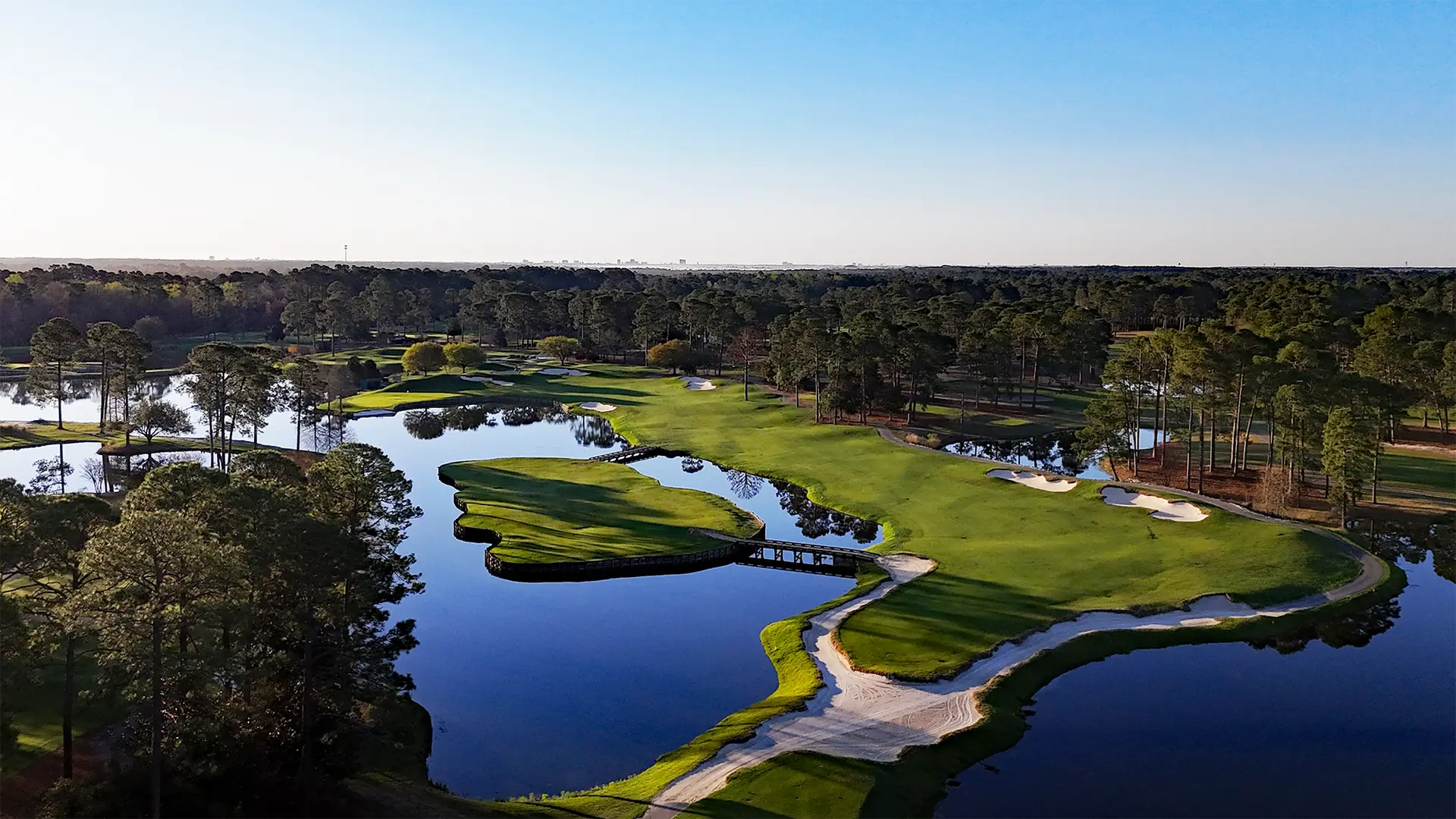
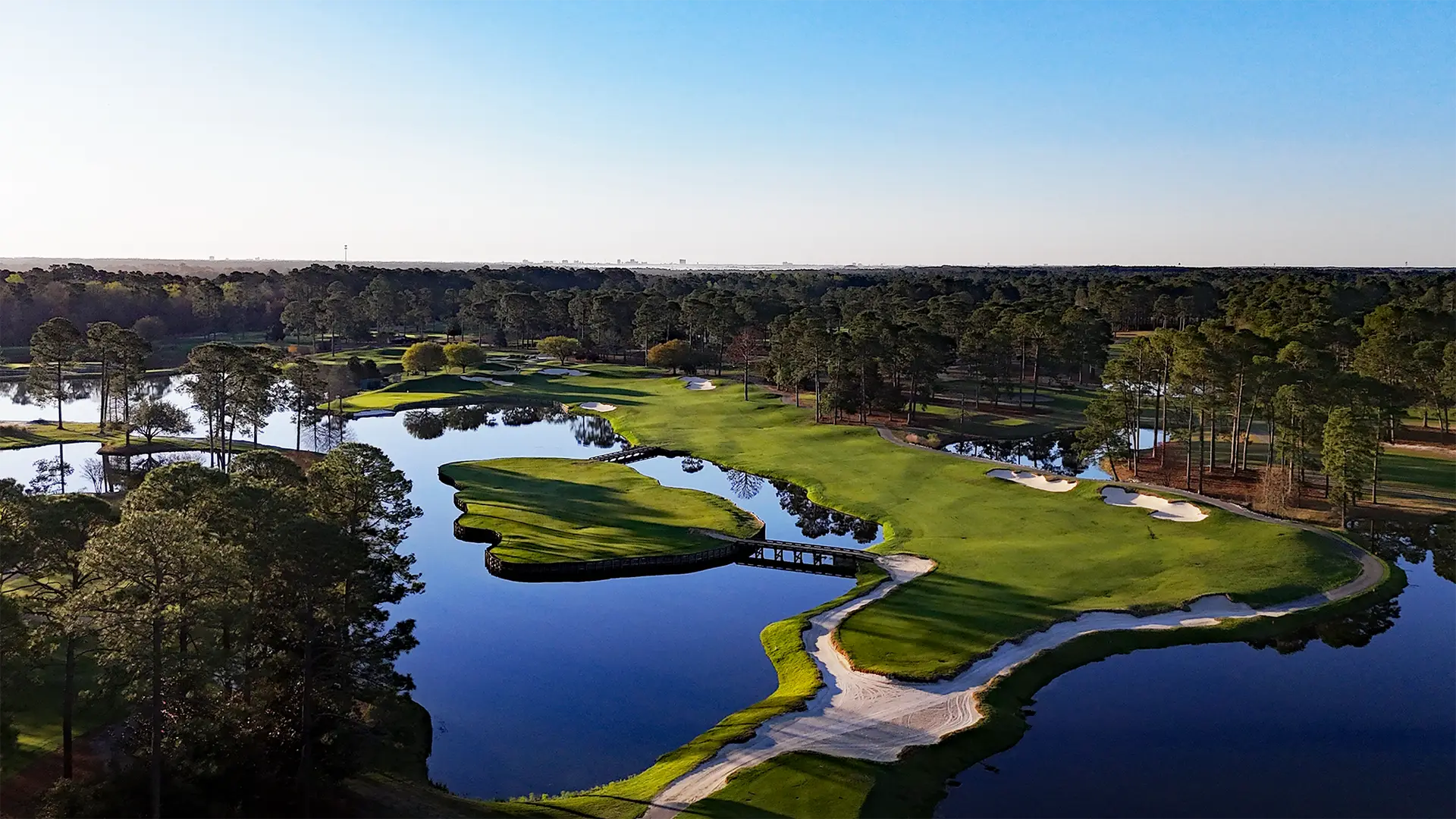
Few places embrace golf’s democratic spirit quite like Myrtle Beach, and King’s North, designed by Arnold Palmer, delivers a prime example of strategic design at its best. The 6th hole, “The Gambler,” is a par five that lays out a clear proposition: play it safe and take the long route, or risk it all for a potential eagle. The genius here lies in the optional island fairway – a tantalizing shortcut for the bold. This isn’t just about length; it’s about decision-making under pressure. It’s a classic risk/reward scenario, a true test of nerve that makes weekend warriors feel the same adrenaline rush as a Tour pro.
“Those who live dangerous and take aim at that island fairway might have only 150 or 160 yards into the green, but such a tee shot comes with plenty of risk—hence, this hole’s name: The Gambler.”
Such a design invites you to weigh your odds, to truly engage with the course rather than just mechanically hitting shots. It’s the kind of hole that fosters immediate camaraderie or profound regret in your foursome.
Whistling Straits (Straits) – Sand Box, Hole 11
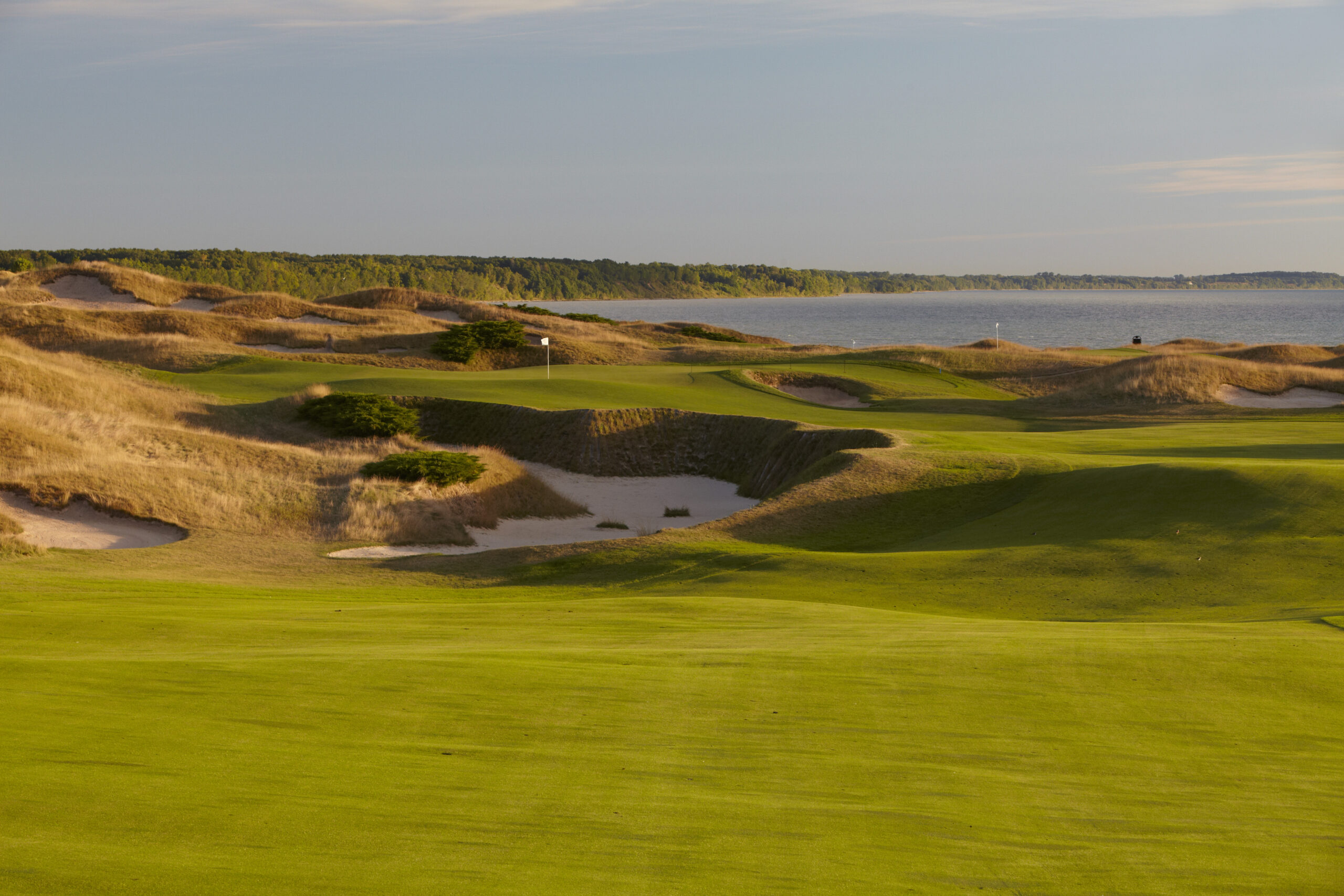
From the gentle shores of Myrtle Beach, we leap to the rugged, links-inspired landscape of Whistling Straits in Kohler, Wisconsin. Pete Dye’s masterpiece, the Straits course, carved from a flat former airfield, is a triumph of imagination and earth-moving. Here, the 11th, a monumental 645-yard par five, carries the simple yet evocative name “Sand Box.”
“Others will argue the name is based on the cavernous trap that guards the last 100 yards or so of the fairway on the left. Both perspectives would be correct, though it’s hard not to think that the gigantic trap was the initial inspiration.”
And what a trap it is! While the entire course is littered with hundreds of Dye’s signature bunkers – many just aesthetic, others truly penal – this particular chasm swallows golf balls and, occasionally, a golfer’s spirit. It’s a prime example of Dye’s philosophy: identify a hazard, then make it terrifyingly large and strategically placed. Navigating the “Sand Box” requires precision and respect for the sheer scale of the hazards he crafted. Having been to Whistling Straits, the wind off Lake Michigan often adds another layer of complexity, turning an already daunting hole into an epic struggle.
Royal Portrush (Dunluce) – Calamity Corner, Hole 16

Speaking of links, travel across the Atlantic to Northern Ireland, to the storied Royal Portrush and its Dunluce course. Here, the 16th par three is simply known as “Calamity Corner.” This name is no understatement. Without the crashing waves of the ocean, one might assume a par three couldn’t be quite so terrifying, but I assure you, this hole proves otherwise. Playing a staggering 236 yards from the back, you gaze down a chasm that drops a dramatic 50 feet. Land short and right, and your ball is gone, likely never to be seen again.
“If you want to avoid a calamity on your scorecard, follow the yardage guide’s advice and ‘take plenty of club and hit for the back left of the green.'”
This is classic links design, harnessing the natural brutalism of the landscape. It’s not about artifice; it’s about presenting a raw, fearsome challenge. When the wind howls off the North Atlantic, as it often does, “Calamity Corner” becomes a test of mental fortitude as much as physical skill. A trip to the Northern Irish coast to play Portrush is a pilgrimage for any golf purist, and this hole perfectly encapsulates the wild, untamed beauty of the region.
St. Andrews (Old Course) – Tom Morris, Hole 18
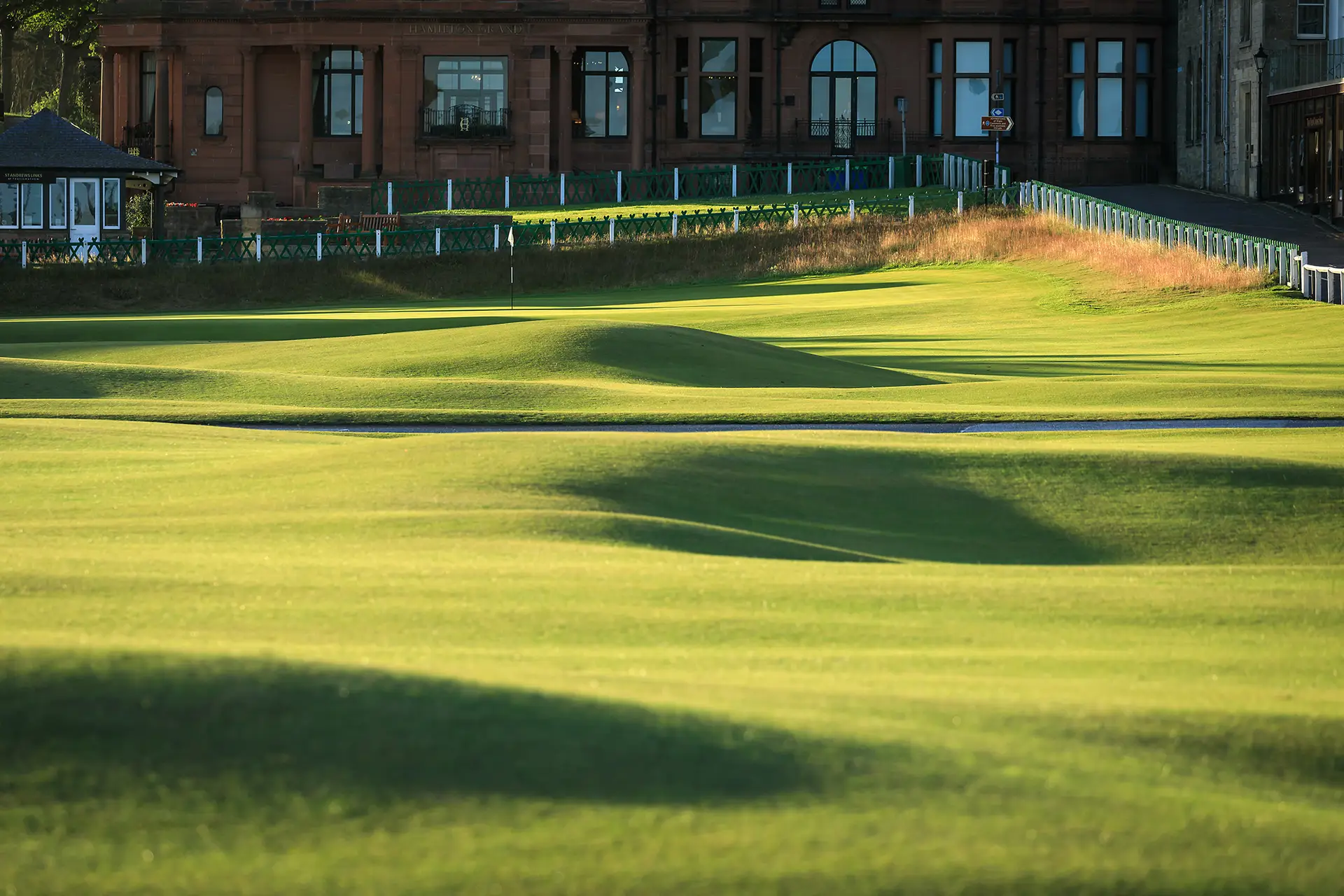
No discussion of golf course names would be complete without a nod to the spiritual home of golf, the Old Course at St. Andrews. While the Road Hole, with its infamous Road Bunker and stone wall, often grabs the headlines, the 18th is equally significant. Named “Tom Morris,” it celebrates the legendary four-time Open Champion, greenskeeper, and clubmaker who shaped much of the Old Course into what it is today. His shop sat adjacent to this very hole, and the green itself is said to be one of his proudest creations.
The 18th at the Old Course isn’t a brute; it’s a gentle, strategic par four that plays back towards the clubhouse. Its challenges are subtle – the deceptive undulations of the Valley of Sin, the strategic width of the fairway, and the nerve-wracking approach in front of the assembled crowds. Playing St. Andrews is an emotional journey, and finishing on the “Tom Morris” hole brings you face-to-face with the game’s rich history. It’s a moment of reflection, a silent acknowledgment of the giants upon whose shoulders we stand.
These holes, with their evocative names, are more than just numbers on a scorecard. They are architectural statements, historical markers, and personal tests. They remind us that the greatest golf courses are those that not only challenge our swing but also engage our minds and stir our souls. When you step onto one of these holes, the name is not just a label; it’s an invitation to a story.
