


As a golf course architecture enthusiast, I’ve often pondered the role of technology in our game. We talk endlessly about the spirit of the game, the timelessness of linksland, the strategic genius of architects like Alister MacKenzie or Pete Dye. Yet, when we step onto the first tee, many of us are wielding clubs that are marvels of modern engineering, born in labs and refined with AI. This subtle tension – the ancient pursuit of golf enhanced by cutting-edge industrial design – fascinates me.
I’ve walked the hallowed grounds of hundreds of courses worldwide, from St. Andrews to Sand Hills, and while the landscapes and routing are etched into my memory, it’s also true that the tools we use profound affect how we navigate these masterpieces. Today, we’re not dissecting a C.B. Macdonald template green or a Doak “punchbowl” but rather the very instruments intended to help us conquer them. Let’s delve into the latest advancements in hybrids and fairway woods for 2026, clubs designed to master those longer, often pivotal, second shots on some of golf’s most strategic holes.
The Hybrid Revolution: Bridging the Gap
For years, the void between a golfer’s longest iron and shortest fairway wood was a chasm of inconsistency. Enter the hybrid, a club that has become indispensable for many players, myself included. The beauty of a well-designed hybrid lies in its versatility – a club capable of gracefully escaping thick rough or launching a towering shot from a tight lie. The manufacturers, ever keen to push performance boundaries, have focused on two key areas for 2026: feel and forgiveness.
Callaway, a longtime leader in club innovation, presents their Quantum Max. What immediately struck me about their approach is the attention paid to head shape, a nuanced detail often overlooked but critical for player confidence.
“One of the first things to determine when you’re looking at new hybrids is what your preferred head shape is. Do you play your hybrids more like an iron, with a descending blow that generally takes a divot? Or are you more of a “picker” or “sweeper”? More compact clubheads will favor the former kind of swing, while larger/wider ones are typically more appealing to the latter kind of player.”
The Quantum Max, with its midsize, compact head, is clearly aimed at the player who approaches their hybrids with an iron-like swing. Callaway’s continued use of AI in designing the variable-thickness cup face is fascinating, demonstrating how algorithmic precision can genuinely enhance playability. The movable weights and adjustable hosel offer a bespoke experience, allowing golfers to truly dial in their preferred trajectory.
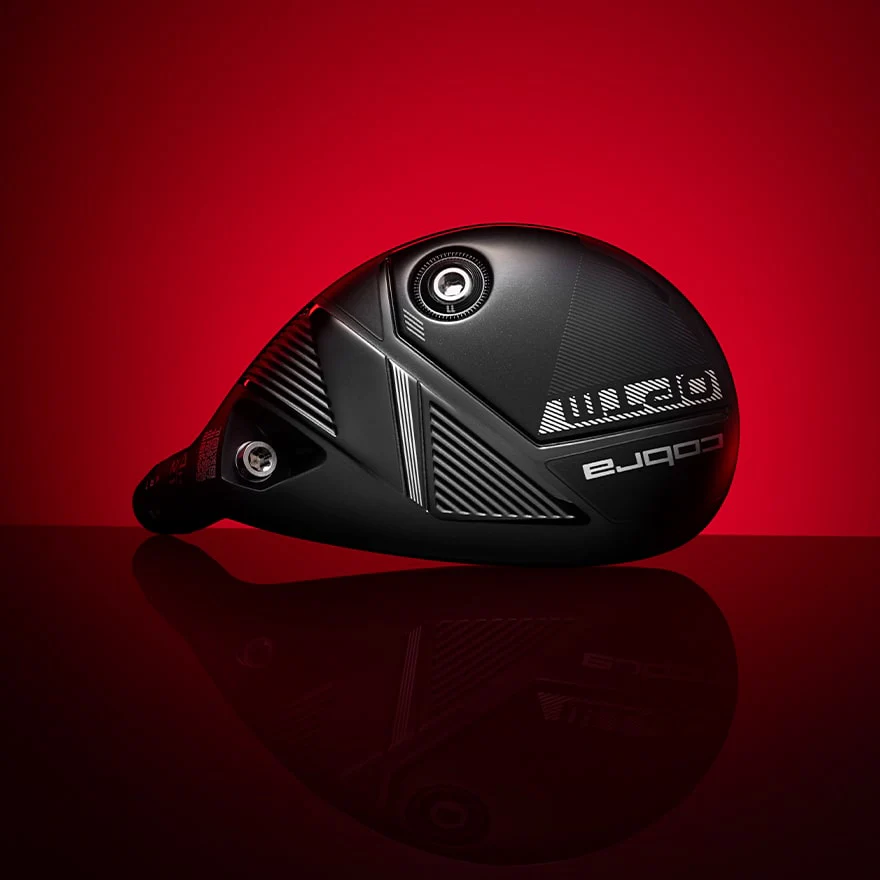
Cobra’s OPTM hybrid exemplifies the modern quest for adjustability and precision. Thirty-three independent loft and lie settings? That’s an astonishing level of customisation, reminding me of the meticulous ground contouring found on the best golf courses – every undulation serving a purpose. The larger profile and 15-zone face technology promise consistent ball speeds, a blessing on those vast, open links where a slight miss-hit can mean the difference between a reachable par-5 in two and an awkward lay-up.

PING, with their G440, continues to deliver on their reputation for stable, consistent performance. The “free-hosel” design and Carbonfly Wrap crown are clever engineering tricks to redistribute weight, much like a clever architect might use natural ground to create an illusion of greater elevation. I particularly appreciate the loft-specific biases – a subtle but profound acknowledgement that different hybrids within a set serve different strategic purposes. For instance, a 2H might need a fade bias to hold a narrow fairway off the tee, while a 7H might benefit from a draw to attack a tucked pin.

Mizuno’s JPX ONE, on the other hand, marries their legendary feel – often described as akin to hitting butter – with speed and forgiveness technologies. The uniform 1.8mm MAS1C maraging steel face and enhanced CORTECH Chamber sound like the precise, intricate shaping of a greenside bunker by a master shaper, designed to perform under pressure. Their Speed Bevel sole reminds me of the elegant subtlety of a well-groomed fairway, allowing the club to glide through the turf with minimal resistance. This is where the art of feel meets the science of speed.

TaylorMade’s Qi4D Rescue is a composite of proven technologies. The multi-material construction, pairing stainless steel with carbon fiber, is a testament to the pursuit of weight savings – a critical design philosophy mirrored in the thoughtful excavation of a natural hazard to improve drainage and aesthetics. Their Cut-Through Speed Pocket and Twist Face technologies are now hallmarks of TaylorMade design, offering a corrective elegance to those shots that stray from the sweet spot, much like a forgiving green contour that funnels a slightly off-line putt back towards the cup.

Finally, Titleist’s GT2 hybrid offers what I’d call classic utility. Their ultra-high-MOI construction and adjustable heel-toe weighting system are about meticulous control. The flatter, more playable sole design speaks volumes – it’s a club designed to perform across a variety of lies, much like a well-routed course asks for a diverse range of shots. The choice between the GT1, GT2, and GT3 echoes the architectural brilliance of offering multiple lines of play from a single tee, catering to different strengths and strategies.

Fairway Woods: Power and Precision for the Long Haul
Fairway woods have always been the elegant workhorses of the golf bag, providing distance off the tee or attacking long par-5s. For 2026, the focus has clearly shifted to transferring the explosive power of drivers into these more versatile clubs, delivering distance coupled with control. This mirrors the best architecture, where power must often be tempered by precision.
Callaway’s Quantum Max fairway wood continues their innovative stride. Their Speed Wave 2.0 technology, placing weight “low and forward,” is a masterstroke for those of us who tend to catch fairway woods a bit thin. This design ensures that even a slightly mishit shot still launches with considerable power, and crucially, maintains its carry. The AI-optimized face, again, speaks to the scientific pursuit of consistent performance across the entire club face. Much like a well-bunkered green by a strategic architect, it challenges you but offers a reward for a well-executed plan.
Mizuno’s JPX ONE fairway wood echoes the hybrid’s commitment to feel and technology. The re-engineered CORTECH Chamber creates an “additional energy source,” a phrase that resonates with the raw, untamed power of a Pete Dye design. It implies an inherent spring in the face, converting more of your swing into ball speed. The multi-thickness face and composite crown are about finding every ounce of performance, making these clubs enticing for players who appreciate the tactile feedback of a Mizuno iron but long for modern distance.

PING’s G440 SFT, with “Straight Flight Technology,” is a clear nod to addressing the perennial slice. The draw-biased CG placement offers a tangible benefit, particularly for those players who find themselves flirting with the deeper fescue out to the right. This approach to shaping a shot reminds me of a clever dogleg, where the architect almost guides your eye and swing down a preferred line. The taller face and optimized heel and toe ensure that forgiveness is paramount, a design philosophy that many club golfers will deeply appreciate on courses that demand precision.

PXG’s Lightning Tour fairway wood, with its “progressive face geometry,” is designed to tighten dispersion on off-center strikes. This is the holy grail for many golfers – not just distance, but staying in play. The emphasis on reduced vibration through the “Spined Sole Design” speaks to a desire for clean, powerful contact, ensuring more energy is transferred to the ball rather than dissipating into the clubhead. It’s the engineering equivalent of sculpting a firm, fast fairway that rewards solid contact with extra roll.
“PXG’s Precision Weighting System, with adjustable front and back ports, gives players the ability to dial in launch and spin preferences, while the compact Tour‑preferred shape supports workability and tighter shot dispersion.”
Srixon’s ZXi fairway woods are pitched as having a “classic-looking” aesthetic, a detail that immediately appeals to the architecture purist in me. This blend of form and function highlights a key design philosophy: a club should not only perform but also feel good in your hands and look right at address. The i-FLEX face and Rebound Frame technology sound like powerful engines under a beautiful hood – dual flex zones ensuring consistent ball speeds, even when facing the architectural challenges of a heavily bunkered landing area or a tight driving chute. The adjustable hosel is a thoughtful addition to this sleek package, offering that extra layer of customisation without compromising the traditional appeal.

TaylorMade’s Qi4D Tour Fairway emphasizes its “most technologically advanced line yet.” The Trajectory Adjustment System (TAS) with its movable weight and 4-degree adjustable loft sleeve offers a level of fine-tuning that borders on the surgical. This precision is akin to a master greenskeeper adjusting pin positions to create different challenges and rewards throughout the week. The integration of their Speed Pocket and Twist Face technologies further cements their commitment to forgiveness and consistency, critical elements on any demanding golf course.

Finally, Wilson’s DYNAPWR Carbon fairway wood offers that compelling blend of “Tour-inspired design” and “modern club technology.” The AI-powered PKR-360 face is a statement about how much data and advanced modeling now influence club design, much like a modern architectural firm uses sophisticated modeling to understand wind patterns and runoff on a new course. The lightweight carbon crown and tungsten sole weight are all about optimizing launch and spin, leading to a penetrating trajectory – a flight that cuts through the wind on a championship links with authority. The six-way adjustable hosel, again, provides the player with the power to adapt their equipment to the conditions and the strategic demands of the course.

Ultimately, these clubs are not just about raw power; they are about control, adaptability, and consistency. They are designed to stand up to the rigorous demands of course architecture – from the tight doglegs of a parkland course to the expansive, windy challenges of coastal links. While no club can replace strategic thinking or a well-executed swing, these advancements offer every golfer a better chance to navigate the architectural brilliance of our game with confidence and, dare I say, a touch more joy.
