


Hello, Daily Duffer readers! Sarah Chen here, and I’ve just been reading an fascinating article about Anthony Kim’s return to professional golf and his unique approach to equipment. His journey back to the winner’s circle on LIV Golf, after a 12-year absence, is truly one of a kind. What really struck me is how he built his new bag setup – a method that, in some ways, harks back to an earlier era of golf, yet still produced a winning result.
As golf instructors, we often preach the virtues of data, launch monitors, and meticulously optimized equipment. And don’t get me wrong, those tools are incredibly valuable. But Kim’s story reminds us that at the heart of it all, golf is about feel, connection, and understanding how the ball reacts to your swing.
The Art of “Ball-Related” Feedback
The article highlights how Anthony Kim, now 40, emerged from his sabbatical into a golf world transformed by technology. The first adjustable loft driver hadn’t even arrived when he won his first two PGA Tour titles in 2008. Custom fitting has evolved dramatically since then. Yet, Kim’s approach to finding new clubs was surprisingly old-school and intuitive.
“It’s been interesting,” Wunder said. “You’re talking to a person, trying to help them and answer questions for them and they don’t know Trackman, they don’t know Foresight. They don’t even speak modern golf ball.”
Johnny Wunder, co-host of GOLF’s Fully Equipped and a friend of Kim’s, observed that when Kim tested equipment, he wasn’t looking at numbers. He was feeling the ball. He was observing its flight. “He would get stuff and he would test it and he would say I like it because it does this. It was all very ball-related,” Wunder explained. “It was, ‘I swing this way and the ball goes that way.’ There’s no numbers.”
This isn’t to say we should abandon our launch monitors – far from it! But Kim’s success underscores a crucial point: ultimately, the feedback that matters most is what the golf ball tells you. Every swing, every contact, provides a rich stream of information about what’s working and what needs adjustment. For high-level amateurs and professionals, it’s easy to get lost in the data and forget to connect with that fundamental ball flight feedback.

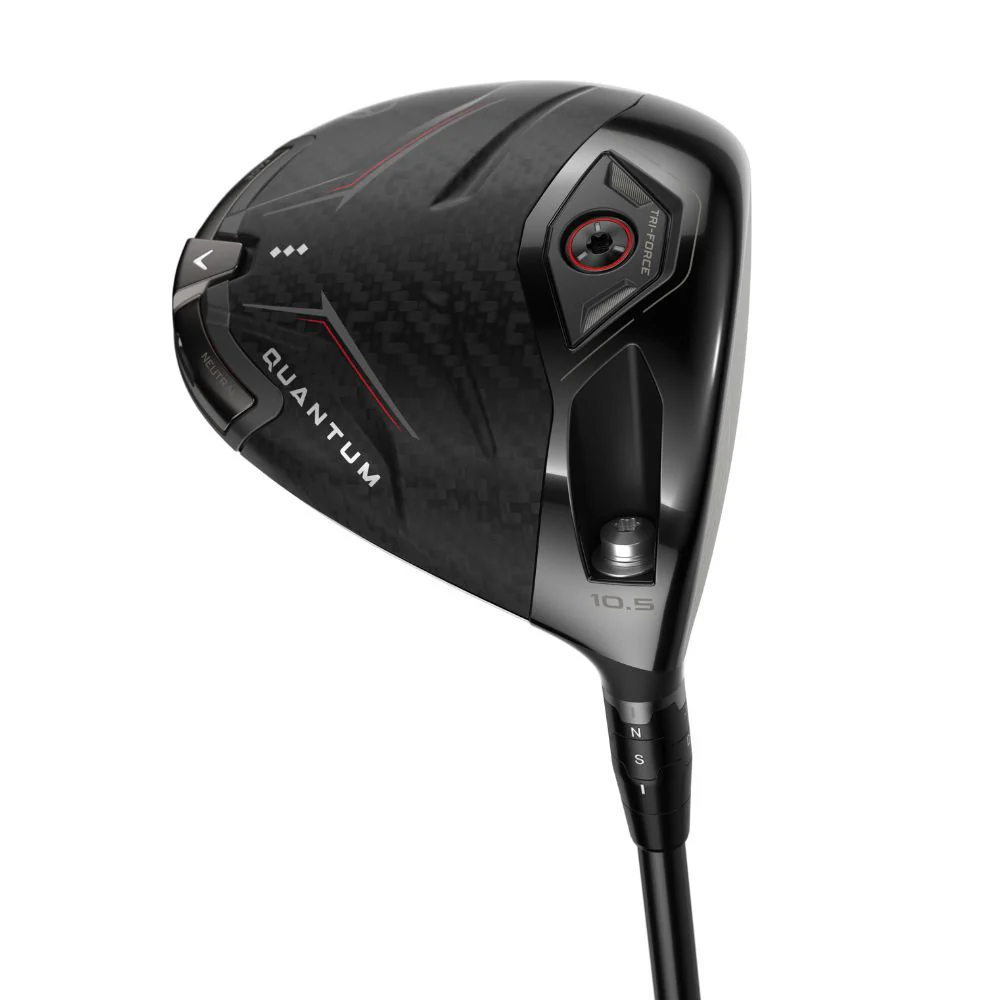
Callaway Quantum Triple Diamond Custom Driver
View Product
ALSO AVAILABLE AT: PGA Tour Superstore, Callaway
Cultivating Your “Feel” for the Ball
So, how can you, as a golfer, tap into this “ball-related” feedback like Anthony Kim? It’s about developing greater awareness of your impact and the resulting ball flight. I tell my students all the time that the ball never lies. It’s the most honest teacher you’ll ever have.
Drill 1: The “Blind Confirmation” Ball Strike
This drill helps you focus solely on the feel of impact before you even see the result.
- Set up to hit a short iron (e.g., 7-iron or 8-iron) on the range.
- Place a towel or small barrier in front of you, just high enough so you can’t see the ball flight immediately after impact. You should only be able to see where the ball lands, not its trajectory.
- Hit a shot, but rather than immediately looking up, pause and register the feel of the clubface meeting the ball. Was it solid? Did you catch it thin or fat?
- Only after you’ve processed that tactile feedback, look up to see where the ball landed.
The goal is to start correlating the feel in your hands with the ball’s behavior. Did a solid strike feel different from a poor one? This sharpens your internal feedback loop.
Drill 2: The “Trajectory Control” Challenge
Anthony Kim’s method emphasizes getting the ball to do what he wants. This drill focuses on conscious control over ball flight.
- Choose a target on the range that’s about 100-120 yards away for a mid-iron.
- First, try to hit a low shot that barely gets off the ground but flies straight to the target. Feel how the club moves through impact for this shot.
- Next, try to hit a high shot that goes as high as possible while still landing near the target. Again, pay attention to the impact feel.
- Finally, hit a standard shot with your normal trajectory.
By intentionally manipulating trajectory, you learn to feel how subtle changes in your swing path, clubface angle, and point of contact influence the ball’s flight. This builds incredible touch and control.
Wunder said Kim has built his bag around feel and that’s a non-negotiable for him.
This statement is powerful. For Kim, “feel” isn’t a luxury; it’s the foundation. While modern technology empowers us with incredible fitting accuracy and data analysis, we can’t forget that golf is played by humans who rely on their senses. If you’re struggling with a club, sometimes the best analysis isn’t on a screen, but in how it feels in your hands and how the ball responds.
Integrating Feel with Modern Tools
My advice is not to choose between “feel” and “data,” but to integrate them. Use your launch monitor to understand the numbers behind your best shots – the ones that feel right. Identify what launch angle, spin rate, and speed correspond to that pure strike. Then, when you’re on the course, you have a stronger internal reference thanks to your enhanced feel.
In my 15+ years of teaching, from tour players to weekend warrior, I’ve seen that the most enduring improvements come from individuals who understand their own swing and how it interacts with the ball. Anthony Kim’s return is a testament to the core principles of golf: talent, hard work, and an innate understanding of how to make the ball go where you want it. This innate understanding often stems from a finely tuned sense of feel.
“>
Keep Practicing, Keep Feeling
Golf is a journey of continuous improvement. Embrace the technology available today, but never lose sight of the most important feedback source: the ball itself. Start paying more attention to what your hands, arms, and body tell you at impact. With consistent practice and an open mind, you too can develop that intuitive “ball-related” feel that separates good golfers from great ones. You’ve got this!
Happy golfing!
Sarah Chen
Golf Instruction Editor, The Daily Duffer
