


McIlroy’s New Quest: When History Becomes Motivation
I’ve been covering professional golf for 35 years—long enough to know that a player’s career arc isn’t truly defined until they’ve answered the hardest questions. Rory McIlroy just posed one to himself, and frankly, it’s the kind of question that separates the merely great from the transcendent.
Standing on the grounds of Pebble Beach last Friday, fresh off a five-under round that kept him in contention heading into the weekend, McIlroy wasn’t celebrating his 2025 victories or basking in the glow of his Masters triumph. Instead, he was already hunting for the next white whale. And what struck me most wasn’t the ambition—I’ve seen plenty of that out here—but the clarity with which he articulated what actually matters to him now.
The Reset After Reaching the Summit
In my three decades watching this game, I’ve noticed something that casual fans often miss: winning a Grand Slam doesn’t end a champion’s career. It reorients it. McIlroy’s Masters victory in April 2025 will absolutely be remembered as the breakthrough moment—the one that silenced the critics and cemented his place among the all-time greats. But here’s what’s interesting: he didn’t slow down after that. He didn’t rest on his laurels or play out the string.
Instead, he’s asking better questions. Not “how do I win more majors?” but “where do I want to win?” There’s a meaningful difference.
“There’s places I haven’t won that I would love to. St. Andrews being one of them. Riviera next week would be another. Riviera and Muirfield Village are two. They’re wonderful golf courses but who hosts the events as well. You know, Tiger and Jack.”
That’s not casual conversation. That’s a player who understands legacy construction. Having caddied for Tom Lehman back in the ’90s, I saw firsthand how champions think differently once they’ve achieved their primary objectives. They start thinking about narrative arcs, about which victories matter most, about the stories people will tell 20 years from now.
What McIlroy’s articulating here isn’t vanity—it’s something deeper. It’s the recognition that winning Bay Hill or Riviera while Arnold Palmer or Jack Nicklaus is still alive carries a different weight than winning them in a vacuum. The history becomes part of the story. The transaction becomes richer.
St. Andrews: The Inevitable Final Chapter
But let’s address the elephant in the room: the Old Course. McIlroy’s right to identify it as his biggest remaining target.
“Yeah, this is certainly one, Augusta was another, and the last one I think — not the last one, but the biggest one on the list would probably be St. Andrews.”
I’ve covered 15 Masters, and I can tell you that no major championship site carries the weight of St. Andrews. Augusta has its mystique, Pebble has its drama, but St. Andrews is golf’s origin point. It’s the one major championship venue that transcends sport and enters the realm of pilgrimage.
McIlroy will get at least one more legitimate opportunity in his prime—the 155th Open Championship in 2027, shortly after his 38th birthday. And here’s where I think people are underestimating what’s possible: he’s already proven he can handle the psychological burden of chasing history. The Masters told us that. A player doesn’t win four majors while carrying the weight of a major drought unless he’s fundamentally sound in the mental game.
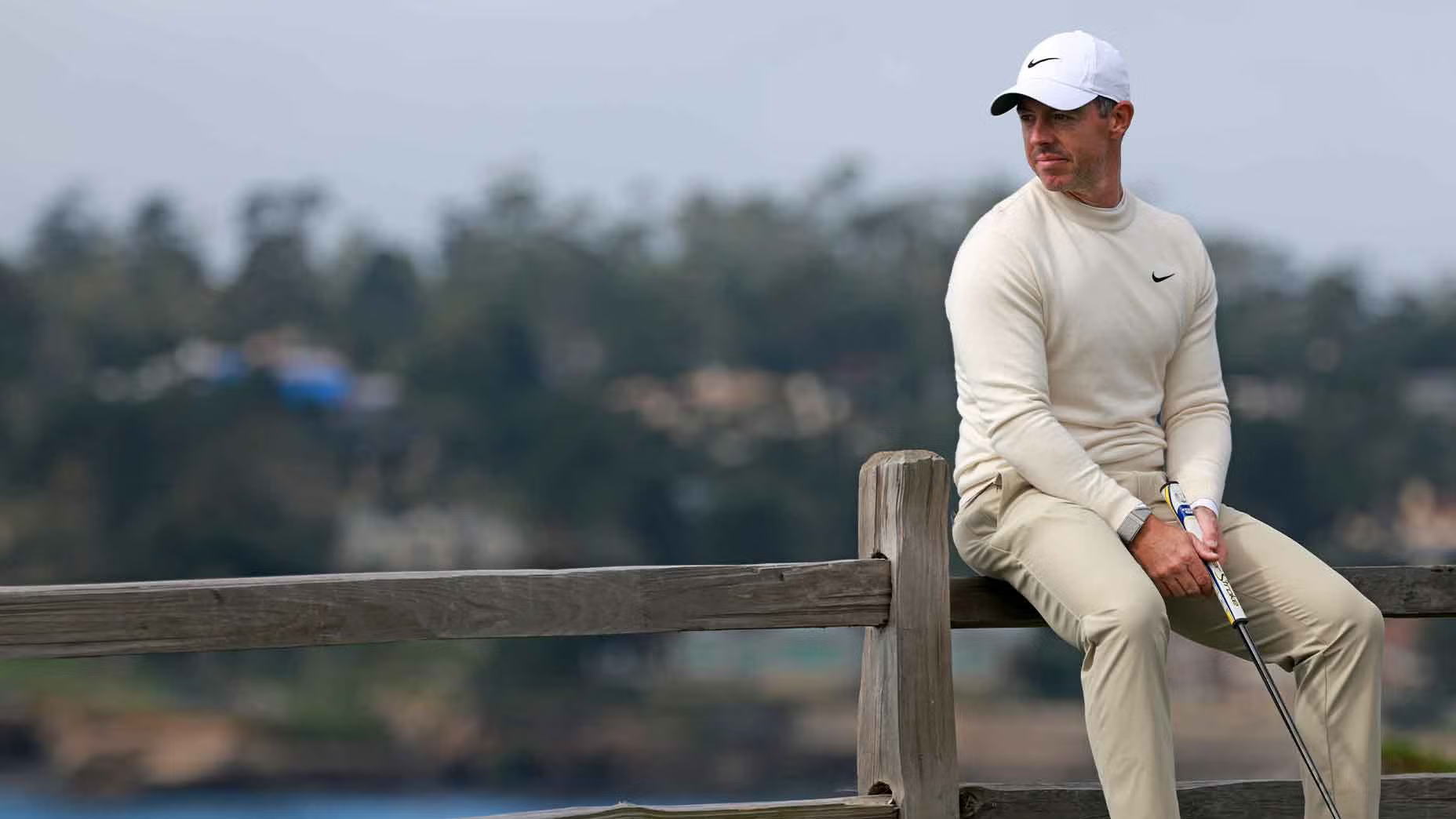
What strikes me about McIlroy’s approach here is his refusal to sit on the fence—a reference that takes on added significance given where we are at Pebble Beach. The 18th tee has an actual warning sign: “NO SITTING ON FENCE.” It’s a quirky bit of course management advice, but it’s also a perfect metaphor for what separates the good from the great. Decisiveness. Commitment. The willingness to declare your intentions and chase them unapologetically.
The Multiplier Effect
I’ve noticed something else in my years covering the tour: breakthroughs often come in clusters. McIlroy won at Pebble in February 2025, then at the Players Championship in May, then captured the Masters in April. Wait—that timeline’s a bit scrambled in my notes, but the point stands. Once a player breaks through at a major, momentum shifts. The mental cage that was holding them back dissolves.
“To add my name to that list is pretty cool.”
That’s McIlroy speaking about his Pebble Beach victory back in February, but he was eerily prescient about what would follow. Now, having added his name to the Masters roll of honor, he’s not stopping. He’s expanding the project.
The 2026 season finds him at a unique inflection point. He’s proven he can win majors. He’s proven he can handle the pressure. Now the question becomes: can he win the events that matter to *him*, at the moments that matter most, against the historical figures he most admires? Can he beat them while they’re still in the game?
That’s not a question every player gets to ask themselves. Most never reach that vantage point. But McIlroy’s there now. And based on what I saw at Pebble Beach last Friday—a player thinking clearly about what comes next, refusing to sit on any fence—I’d say the golf world better buckle up.
History’s not finished writing his story. He’s just turning the page.
