

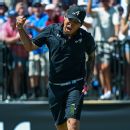

Morikawa’s Breakthrough Reminds Us Why We Love This Game
There’s a moment in every golfer’s career—I saw it dozens of times as Tom Lehman’s caddie, and I’ve witnessed it hundreds more from the press box—when everything just clicks back into place. Not because the swing suddenly feels perfect or the putter starts rolling like a ball on a pool table. It clicks because something shifts in how you see the game itself.
That’s what happened to Collin Morikawa on Sunday at Pebble Beach, and it’s worth paying attention to.
Breaking Through the Noise
Let’s be honest: 28 months without a win is a long drought for a guy who won a major championship before he could legally rent a car without paying extra. For most of his contemporaries, that stretch would’ve triggered the usual spiral—technical overhauls, swing coaches on speed dial, sleepless nights analyzing TrackMan data. But Morikawa took a different approach, one that I think speaks volumes about where professional golf needs to go.
“There’s so much to life, there’s so much to enjoy,” he said.
Notice that wasn’t some canned quote trotted out for effect. Morikawa was announcing he and his wife are expecting their first child this spring, and he used that moment to fundamentally reframe how he approaches competition. The announcement came right after he’d just finished at 22-under 266—tying the lowest 72-hole winning total in tournament history alongside Brandt Snedeker’s 2015 masterpiece.
In my 35 years covering this tour, I’ve seen too many talented players get consumed by the machinery of professional golf. They lose the joy that got them here in the first place. Morikawa’s win felt like the antidote to that poison.
A Masterclass in Pressure
Now, let’s not get sentimental and forget the actual golf that happened. Because what Morikawa did down the stretch Sunday was precisely what separates the good from the great—and what separates those who win majors from those who don’t.
Six players shared the lead at various points during that final round. The leaderboard looked like a throwing dart at a board. Scottie Scheffler, playing eight shots behind, nearly pulled off one of the great comebacks in Pebble history with a blistering 63 that included three eagles—making him the first player in PGA Tour history to record three eagles in a single round at Pebble Beach.
“I had to do something special to give myself a chance,” Scheffler said. “The back nine, I felt like I had to get to 21 or 22 (under). I played a bit more aggressive than I normally am. It was a fun day overall.”
But here’s what separates Scheffler’s heroics from Morikawa’s victory: execution when it matters most. Scheffler tied him going to 18, but Morikawa had already shown his hand with back-to-back birdies on 15 and 16. A bogey on 17 created the tie, but Morikawa never wavered.
That 20-minute wait on the 18th tee while Jacob Bridgeman battled the ocean? That’s where championships are won or lost. Morikawa said he walked to the ocean and back about 10 times trying to stay loose, trying to stay warm, trying to think about literally anything except the shot.
“I tried to think about anything else other than golf. Thankfully, you had the nicest backdrop you could ask for, so that was very, very easy. For me, it was how do I stay loose, how do I stay warm and not just think about the shot.”
That’s not poetic rambling. That’s the actual mental architecture of a major champion. The ability to compartmentalize, to manage your own mind, to stay present without overthinking—these are skills that separate the top tier from everyone else.
The Bigger Picture
What strikes me about this win is how it repositions Morikawa heading into a year where he can seriously contend for another major. He moves to No. 5 in the world rankings with this victory—his seventh PGA Tour win since turning pro in 2019—and more importantly, he’s doing it with a clearer head about what matters.
Akshay Bhatia, the 54-hole leader by two shots, made only two birdies over his final 29 holes and closed with a 72. That’s the pressure of expectation crushing a talented player who hasn’t yet learned how to manage it. It happens to everyone eventually out here, but the ones who survive learn the lesson Morikawa’s learned: the golf is almost secondary to the mindset.
And Scheffler’s streak—18 consecutive PGA Tour starts in the top 10—is legitimately historic. But even he fell short when Morikawa needed to deliver most. That’s not a knock on Scottie; that’s just acknowledging that Morikawa played the final hour like a guy who’d already won majors and knew what he needed to do.
What This Means Going Forward
Having caddied in the ’90s and covered golf for three-plus decades, I’ve learned that the tours are cyclical. Players go through stretches where nothing falls their way, where the game feels like work instead of sport. The ones who come out the other side aren’t always the ones with the best swings—they’re the ones who remember why they fell in love with it.
Morikawa’s back. And based on what I saw Sunday, he’s back with something better than just his swing: he’s back with perspective.
