

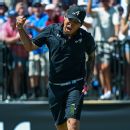

Morikawa’s Pebble Breakthrough: When Joy Trumps Technique
There’s a moment in every long drought that defines a comeback. For Collin Morikawa at Pebble Beach on Sunday, it came while standing in a fairway for 20 minutes, watching Jacob Bridgeman hack away from the beach on 18, with everything on the line.
In 35 years covering professional golf, I’ve learned that patience—genuine, grounded patience—separates champions from the rest. Morikawa walked that ocean edge about 10 times while waiting. He wasn’t pacing nervously. He was breathing. He was present. And when his moment arrived, he delivered with a 4-iron from 235 yards that had to clear an ocean wall and dance back to the green on the Pacific wind. Two putts later, he was holding his first trophy in 28 months.
What strikes me most about this victory isn’t just the technical brilliance—though that 4-iron was sublime—but the context surrounding it. Morikawa didn’t just break a winless streak on Sunday. He reframed what winning means to him.
“There’s so much to life, there’s so much to enjoy,” Morikawa said, announcing he and his wife are expecting their first child this spring.
That’s not typical tour winner’s platitude. That’s a fundamental shift in perspective from a player who admitted he’d been playing for technique rather than joy. In my experience caddying for Tom Lehman in the ’90s, I watched the best players eventually arrive at this realization: obsessing over mechanics is a path to mediocrity. Winning comes from trusting your swing and trusting yourself.
The Scheffler Factor
Now, let’s talk about what nearly happened here—because Scottie Scheffler’s near-miss is its own narrative worth examining.
Scheffler entered the final round eight shots back. By the turn on Sunday, he was 7-under through seven holes. The wind picked up, the course showed its teeth, but this man still found a way to shoot 63 with three eagles—making him the first player in tour history to post three eagles in a single round at Pebble Beach. He tied Morikawa for the lead with an eagle on 18, a 6-iron to 30 inches.
And yet it wasn’t enough.
This is the reality of modern tour dynamics that doesn’t always register with casual fans: Scheffler’s 63 and his comeback from 13 shots down at one point was genuinely exceptional. His streak of 18 consecutive top-10 finishes extended further. His play over the back nine was aggressive and smart. But Morikawa was simply better when it mattered most. That’s what separates a great day from a winning day.
“I was very aware of Scottie Scheffler’s score today. I mean, what a player,” Morikawa said.
That comment, made by the victor, speaks volumes. There’s respect there—the kind you only give someone who genuinely threatened you. In my experience, players who acknowledge their competitors’ excellence tend to develop more equanimity about their own results. They understand they’re competing at the highest level against the best in the world.
The Details That Decide
What I want to highlight here is the fragility of competitive golf at this level. Akshay Bhatia held the 54-hole lead by two shots. He made only two birdies over his final 29 holes and finished three back with a 72. That’s not a collapse—that’s just Pebble Beach being Pebble Beach. Six players shared the lead at various points during the final round. The wind was ripping off the ocean. The margins were millimeters.
Morikawa’s victory came down to back-to-back birdies starting at the 15th—a 30-foot putt followed by a 6-iron to 8 feet. Then adversity: a bogey on the treacherous par-3 17th when his tee shot nearly found the ocean. Min Woo Lee tied him with consecutive birdies and a final-round 65. Everything pushed to 18.
And there it was: the moment. The 4-iron into the wind, over the wall, the ball landing soft and checking. Two putts. Done.
“And man, I need a drink,” Morikawa said afterward.
You can feel the release in that line. 45 starts without a victory. 28 months. The questions, the doubt, the wondering if it would ever happen again. All of it drains from a player’s psyche when they finally cross the finish line.
What This Win Signals
Morikawa’s 22-under 266 tied the lowest winning total in Pebble’s 72-hole history (Brandt Snedeker, 2015). He’s now fifth in the world. The Cal alum has seven PGA Tour victories since turning professional just before the 2019 U.S. Open at Pebble Beach—and winning here again is the kind of narrative golf rewards.
But more importantly, this win suggests that Morikawa has genuinely adjusted his relationship with the game. Players don’t typically breakthrough droughts by changing their swing mechanics. They do it by changing their mind. He came into this week with a new philosophy—play for joy, not technique—and the golf gods apparently approve.
At 28, expecting his first child, and rediscovering why he fell in love with golf in the first place, Collin Morikawa looks less like a player trying to prove something and more like a player finally living something. That’s when the good stuff happens.
