


There’s a certain magic to the Golden Age of golf course architecture, a period roughly spanning 1915-1935, sometimes stretching a bit earlier or later. It was a time when visionaries like Donald Ross, A.W. Tillinghast, and Alister MacKenzie were sketching masterpieces onto the landscape, creating strategic, natural-looking layouts that have stood the test of time. While many of these hallowed grounds are the exclusive domain of private clubs, I’m always on the hunt for those rare gems that open their arms to the public. And let me tell you, when you find one that’s not only accessible but also embodies the very best of that era, it’s a feeling akin to finding a perfectly struck iron shot in your Sunday round.
One such destination that continually beckons and truly captures the spirit of this golden era, offering an authentic taste of its genius, is Donald Ross’s subtle masterpiece, Pinehurst No. 2. Nestled among the whispering longleaf pines of North Carolina’s Sandhills, this course isn’t just a place to play golf; it’s a pilgrimage for anyone who appreciates the artistry of strategic design.
Pinehurst No. 2: The Art of Subtle Strategy

My first impression of Pinehurst No. 2 wasn’t one of towering elevation changes or dramatic cliffside carries. Instead, it was an understated grandeur, a course that feels as if it has always been there, organically emerging from the sandy terrain. This is Ross’s genius at play. He didn’t impose a design on the land; he collaborated with it, allowing its natural contours to dictate the flow of the holes.
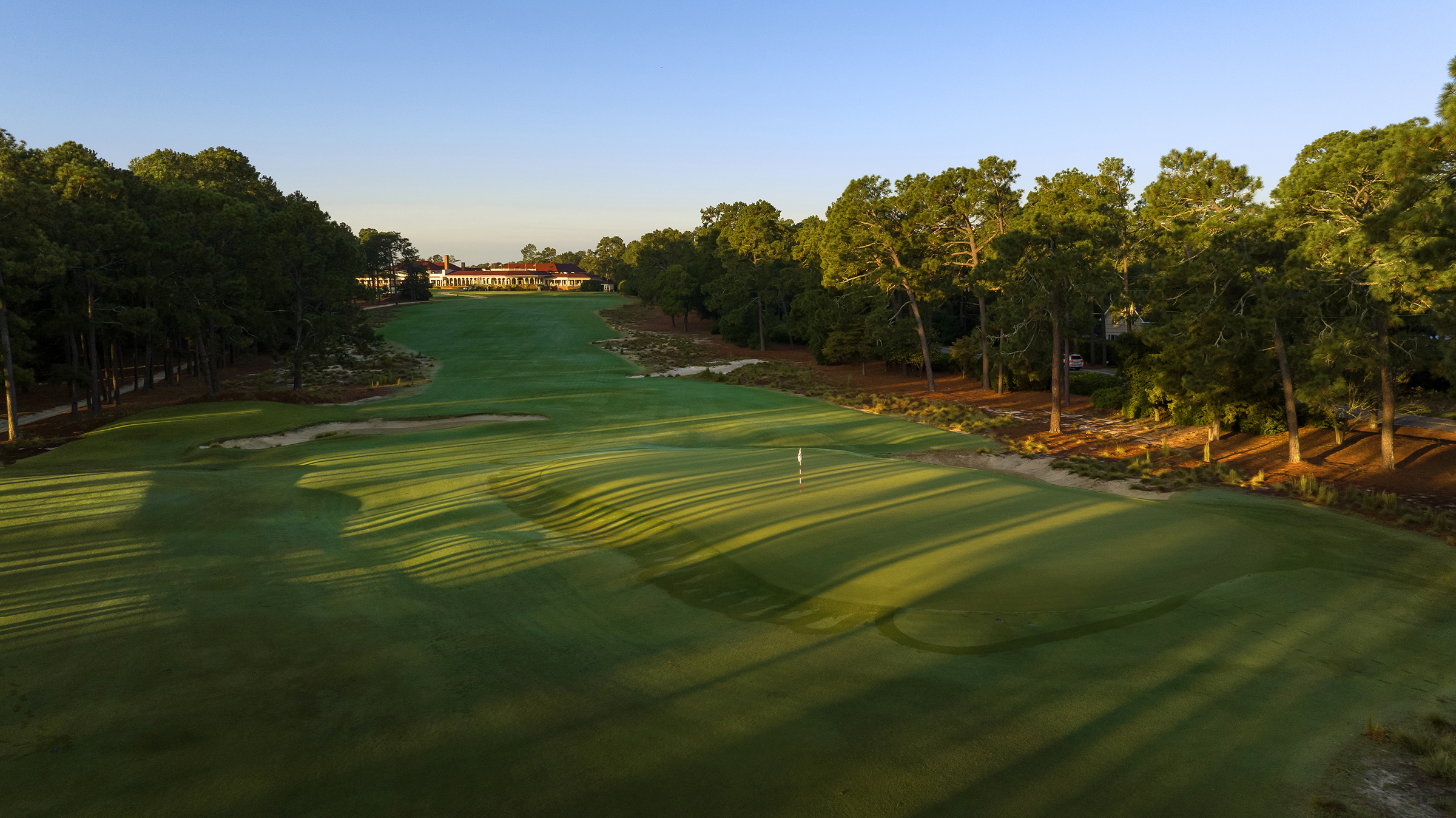
The true character of No. 2, however, reveals itself not in the tee shot, but when you approach the green. This is where Ross’s “turtleback” greens come alive, presenting a challenge unlike almost any other. These greens, with their pronounced crowns and fall-offs, demand an approach shot of surgical precision. As the source aptly points out:
“Such emphasis is due to the turtleback greens that are receptive only to certain approach shots. Miss the green and players face one of the fiercest tests of chipping in golf, where almost any club in the bag has an equal chance of success or failure.”
I’ve played dozens of courses around the world, and few green complexes elicit such a simultaneous sense of awe and dread. It’s not about length or brute force; it’s about angle, spin, and touch. You’ll find yourself reaching for every club in your bag for those delicate up-and-downs, often playing away from the pin, using the subtle slopes to funnel your ball towards the target. It’s a testament to Ross’s philosophy that golf is as much a mental game as a physical one.
This enduring challenge, despite a lack of punitive water hazards or forced carries, is what truly sets No. 2 apart. The course, even for the tour professionals, remains a formidable opponent. It’s a design that respects the average golfer, promising a round where you’re unlikely to lose a dozen balls, yet still capable of humbling the game’s elite.
“Pinehurst continues to prove that it doesn’t take forced carries and water hazards to test the game’s best; the average golfer will likely finish the round with the same ball that they launched on the first tee.”
The Sandhills Experience
Beyond the architectural brilliance, the setting of Pinehurst No. 2 is an integral part of its allure. The fairways roll gently through a forest of towering pines, their needles creating a soft, aromatic carpet. The natural sandscapes, restored beautifully in recent years, define the edges of play, giving the course a true “Sandhills” feel. This restoration, aided by Kyle Franz (who also worked wonders at Mid Pines, another exceptional Ross layout nearby), has re-emphasized Ross’s original vision of width and strategic angles, rather than narrow, tree-lined corridors.
Playing Pinehurst No. 2 is an immersive experience. There’s a palpable sense of history at every turn, from the moments of intense focus on those famously crowned greens to the quiet walks between holes, surrounded by the serene beauty of the North Carolina landscape. It’s a course that rewards thoughtful play, strategic positioning, and a deft short game. It encourages you to think your way around, a hallmark of Golden Age design.
Practicalities for the Duffer
For those looking to experience this piece of golf history, Pinehurst Resort offers various stay-and-play packages. It’s a destination that caters to golfers, with multiple courses, practice facilities, and a charming village to explore. While No. 2 certainly commands a premium, the opportunity to walk in the footsteps of legends and contend with one of Donald Ross’s finest creations is, for any golf architecture enthusiast, an absolute must. You’ll leave with a deeper appreciation for strategic design and, quite possibly, a more refined short game.
In a world of ever-longer courses and increasingly dramatic designs, Pinehurst No. 2 stands as a quiet reminder of what makes golf truly great: thoughtful architecture that leverages the land, challenges the mind, and constantly asks you to elevate your game. It’s accessible, it’s historic, and most importantly, it’s an absolute joy to play, an enduring testament to the Golden Age of golf course architecture.
