

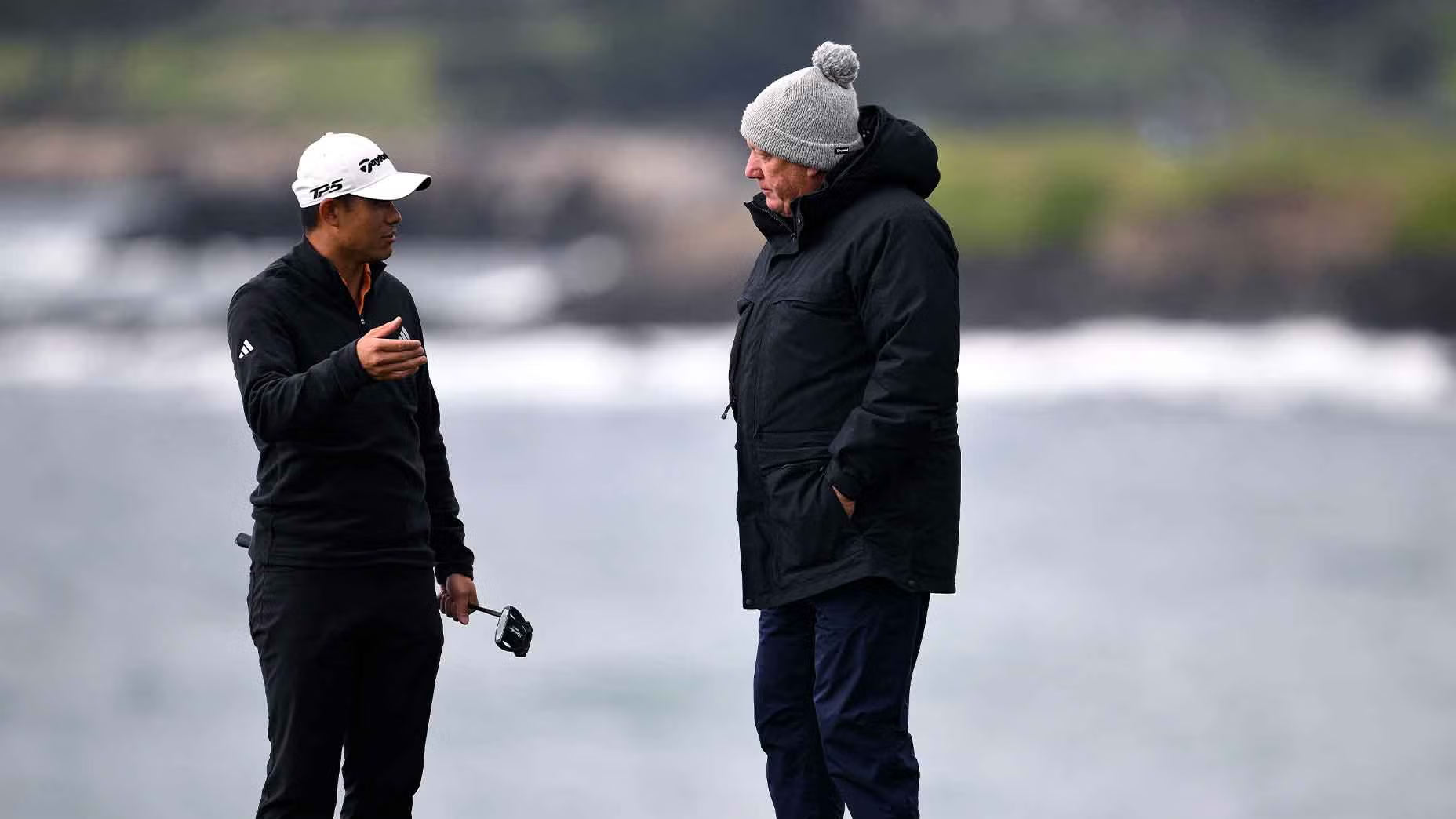

The roar of the Pacific is a constant companion at Pebble Beach, a soulful bass note underpinning every swing, every putt, every moment of contemplation. There are few places on Earth where golf feels so intrinsically tied to the natural world, where the drama of land meeting sea unfolds with such breathtaking grandeur. For a golf architecture enthusiast like myself, Pebble isn’t just a collection of holes; it’s a living, breathing testament to how a course can both challenge and inspire, a masterpiece carved from a canvas of rugged coastline.
My latest visit, albeit from the comfort of my armchair, was prompted by Collin Morikawa’s victorious turn at the AT&T Pebble Beach Pro-Am. While the headlines rightly focus on Morikawa’s mental fortitude and breakthrough win, my gaze, as always, drifted beyond the player to the stage itself. Pebble Beach, that venerable icon, once again proved its mettle as a championship venue, even as its 18th hole offered up a dose of unexpected, rules-infused drama.
The true genius of Pebble Beach lies in its routing, a dance that strategically weaves inland before making its final, spectacular embrace of the coastline. The opening holes, while not without their charm, serve as a gentle prelude, building anticipation. It’s around the sixth and seventh that the course truly unveils its magic, plunging players into an intimate relationship with the ocean. The par-5 sixth, with its cliff-edge green, and the iconic, diminutive par-3 seventh, a tiny jewel perched precariously above the crashing waves, are architectural wonders. They demand precision and respect, not just for the elements, but for the inherent beauty of their design.
What sets Pebble apart, design-wise, is its masterclass in strategic hazards. Unlike many modern courses that rely on brute force and sheer length, Pebble frequently asks you to consider the consequences of your choices. The ocean, of course, is the ultimate hazard, ever-present and always hungry. But beyond the obvious, there are subtle contours, deceptive greens, and strategic bunkering that reward thoughtful play over reckless abandon. The greens, often smaller than average and boasting internal slopes that can send even well-struck putts astray, are a study in nuanced challenge.
The 18th hole, a sweeping par-5 that hugs the crescent of Stillwater Cove, is arguably its most famous. It’s a hole that lives rent-free in the minds of golf fans, a dramatic amphitheater where championships are decided and legends are made. It’s also a hole that, as Collin Morikawa can attest, tests every fiber of a golfer’s being, blending strategic options with the ever-present threat of the Pacific. It’s here, amidst the Monterey cypresses, that Morikawa navigated an unexpected interlude involving Jacob Bridgeman and a particularly tenacious rules official.
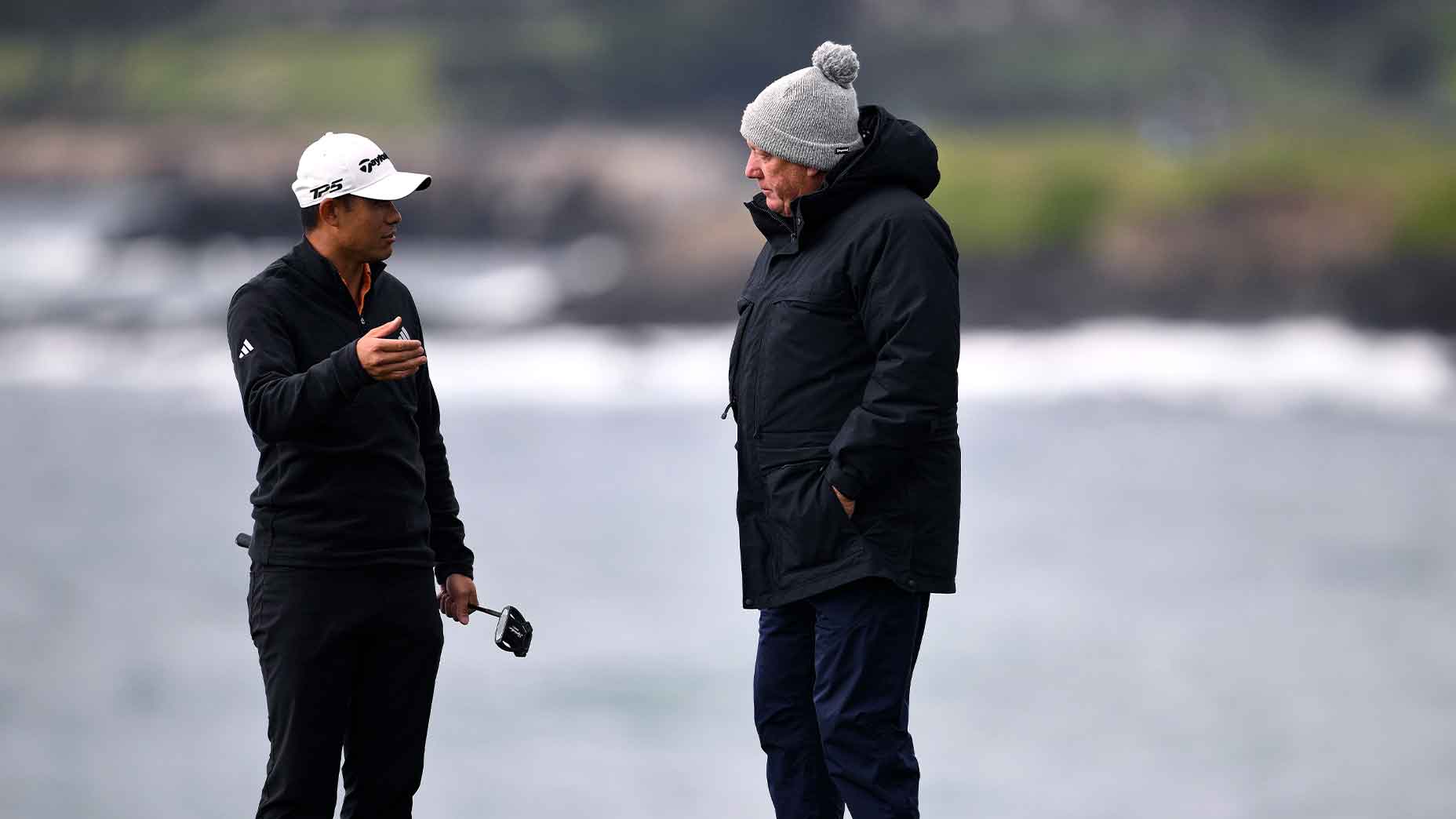
The incident with Bridgeman on the 18th was, in some ways, a microcosm of the unpredictable beauty of links-style golf. The element of the unexpected, the wind, the rules, all converging to create a moment of high tension. Morikawa’s reaction, pacing to the ocean’s edge, perfectly illustrates the mental game required at a place like Pebble.
“I knew what I had to do,” Morikawa said later. “I think I paced all the way to the ocean, like, 10 times at least. I just had to keep moving. You know, it’s weird to say, but these long breaks. I mean, it’s just not good for anyone to stand still.”
This prolonged wait on the precipice of victory, on one of golf’s hallowed grounds, only heightened the drama. The wind, not just a gentle breeze but an “intensifying” force, further complicated matters, even causing Bridgeman’s ball to oscillate on the green. This is the magic of Pebble: it’s not a sterile tour course; it’s a course where nature plays an active role.
“When I first came out and turned pro, like I didn’t care about honestly making cuts or top-20s, I came out to win,” Morikawa said. “I wanted to come out and win, win the weekend, win the tournament.”
That winning mentality, coupled with the raw, untamed beauty of Pebble, provided the perfect crucible for Morikawa’s moment. His final approach, carrying “over the famed tree in the 18th fairway,” was not just a shot; it was a statement. It’s a shot that will, no doubt, be replayed and revered, adding another layer to Pebble’s rich tapestry of iconic golf moments.
Pebble Beach is a public course, a rarity for a course of its stature, allowing everyday golfers to walk in the footsteps of champions. Located on the Monterey Peninsula in California, it’s a bucket-list destination for anyone who cherishes golf. Yes, it’s an investment, both in time and finances, but it’s an experience that transcends a mere round of golf. It’s a journey through architectural brilliance, natural splendor, and a deep appreciation for the game’s heritage. Before you go, prepare not just your clubs, but your camera and your senses. Every hole offers a postcard view, and every shot is played to the symphony of the Pacific. It’s moments like Morikawa’s, playing out on this unforgettable stage, that remind us why places like Pebble Beach are truly special.
